Amelia Dyer: The Ogress of Reading – Notorious Murder Case
Sagsdetaljer
Quick Facts
1896 discovery in Thames reveals Amelia Dyer's crimes
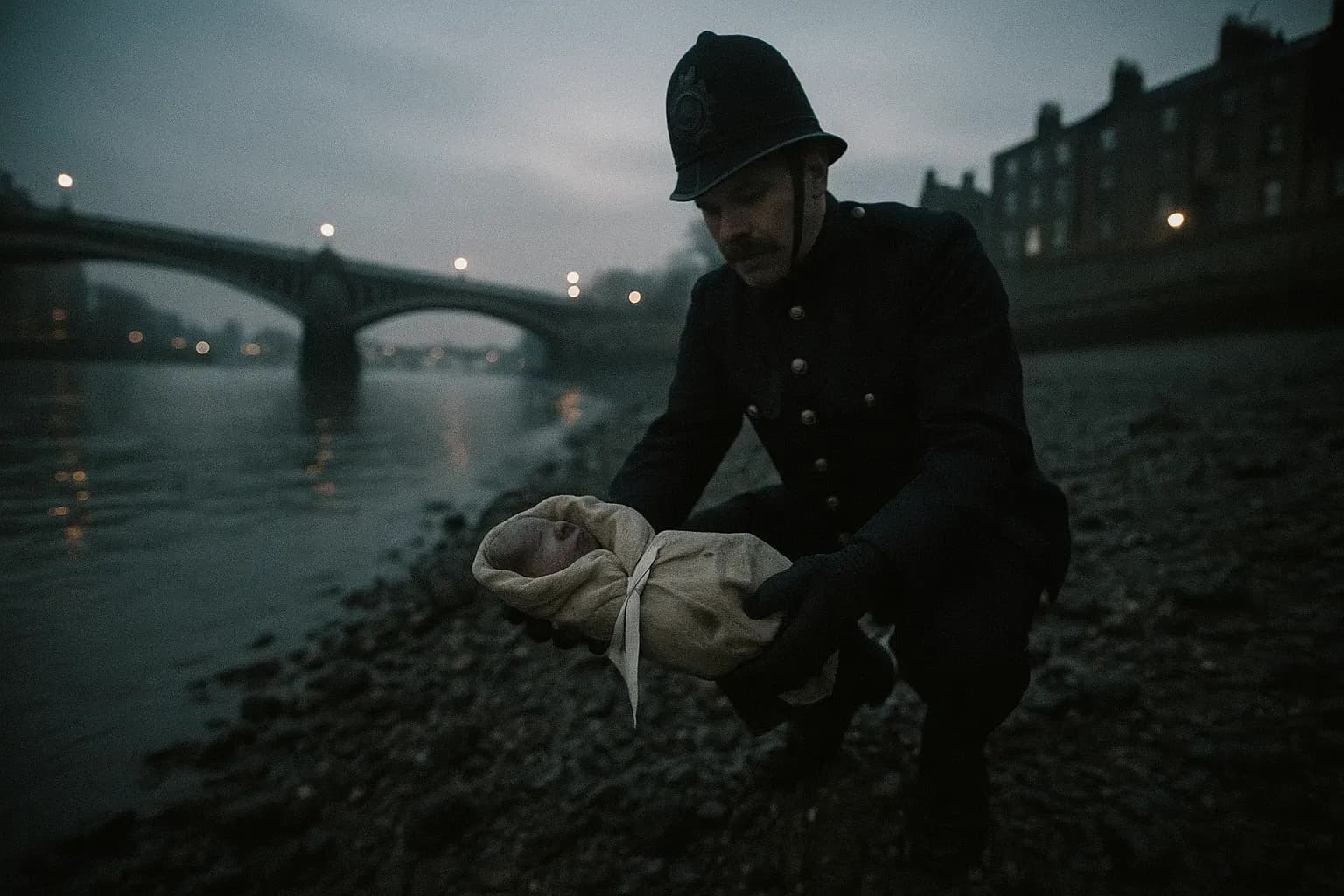
In the spring of 1896, a gruesome secret was pulled from the dark waters of the Thames when a boatman found a parcel containing the body of a little girl. This discovery in the river marked the beginning of the investigation into one of the Victorian era's most shocking crimes and the unmasking of Amelia Dyer, a woman who, under the guise of a nurse, ran a deadly business based on the desperation of unmarried mothers.
Amelia Dyer quickly became synonymous with the notorious practice known as 'baby farming.' In an era marked by social condemnation of unmarried mothers and a lack of legal support, women like Dyer became a fatal last resort for hundreds of women in need.
Amelia Dyer's youth: From tragedy to 'baby farming'
Amelia Elizabeth Hobley was born in Bristol in 1837 into a working-class family. Her childhood was marked by tragedy: her mother suffered from mental illness and took her own life when Amelia was a teenager, and her father died when she was 22. Despite training as a corset maker and midwife, her life took a dark turn in the 1860s. Here she met Ellen Dane, an experienced 'baby farmer,' who introduced Amelia Dyer to the profitable, yet deeply immoral, practice: receiving payment to take in infants, either for care or adoption. For Dyer, this business model quickly evolved into systematic violence and murder.
Dyer's murder method: White tape, bodies in the Thames
Amelia Dyer's method differed from many other 'baby farmers,' who often let children die slowly from neglect or an overdose of opium drops. Dyer's approach was more direct. From the 1870s, she operated from various addresses in Bristol, Reading, and London, often under the alias 'Mrs. Thomas.' She typically demanded £10-£12 per baby, a considerable sum, in return for a promise of adoption. In reality, the infants were murdered shortly after arrival. Her preferred method was strangulation with white tape, which later earned her the nickname 'The Ogress of Reading.' The white tape became key evidence, and Dyer reportedly said: "That was how you could recognise mine." After the murders, she wrapped the bodies with bricks and threw them into the Thames to ensure they sank.
Mistake in 1896: Marmon's case leads police to Dyer
For many years, Amelia Dyer avoided full exposure. A previous arrest in 1879 for neglect resulted in only a short prison sentence but taught her to avoid death certificates and conceal evidence. In March 1896, however, she made a fatal mistake. When young Evelina Marmon handed over her daughter, Doris Marmon, to "Mrs. Thomas," Dyer used her own name on the wrapping paper. A careful examination of this paper led Detective Anderson of the Reading police to her address. When police searched her home on Plomer Road in Reading, they found no bodies but an overwhelming stench of decomposition and a grim archive: letters from mothers, pawn tickets, and receipts indicating that at least 20 infants had been in her care in recent months.