The Phantom of Heilbronn: A DNA Mystery That Never Existed
Sagsdetaljer
Quick Facts
Quick Facts
Between 1993 and 2009, law enforcement agencies across Germany, Austria, and France believed they were pursuing one of Europe's most elusive serial killers. DNA evidence recovered from crime scenes spanning everything from burglaries to murders pointed to a single female perpetrator. The cases were bewilderingly diverse: the 2007 murder of police officer Michèle Kiesewetter in Heilbronn, Germany, the killing of three Georgian men in Freiburg, and dozens of property crimes. Investigators were baffled by a criminal who seemed to operate without pattern, motive, or accomplices across international borders.
The hunt for the Phantom became one of Europe's largest investigations. German authorities offered a 300,000 euro reward for information leading to her capture. Profilers constructed elaborate theories about the mysterious woman, suggesting she might be a homeless drifter, a traveling criminal, or even part of a violent gang. Police forces across three countries coordinated their efforts, comparing notes and crime scene evidence. The investigation consumed enormous resources as detectives tried to connect seemingly unrelated crimes through the single thread of matching DNA.
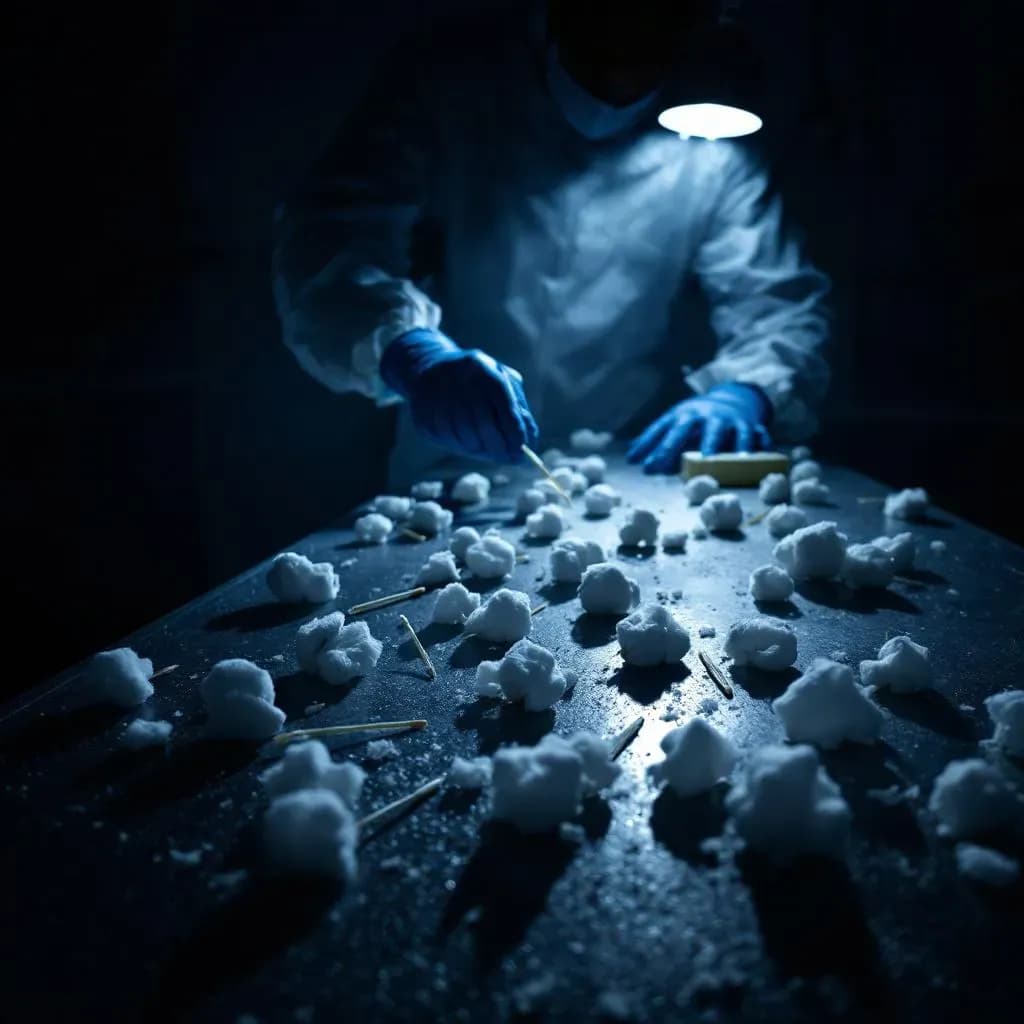
The breakthrough came not through detective work but through a routine quality control test. In March 2009, investigators collected DNA from a male asylum seeker's fingerprint sample and found the same female DNA profile. This impossible result — male and female DNA from the same source — prompted authorities to investigate the cotton swabs themselves. Testing revealed that the DNA belonged to a woman working at a factory in Bavaria that manufactured the swabs used by multiple European police forces for evidence collection.
The factory worker had inadvertently contaminated the swabs during the packaging process. She had no criminal history and no connection to any of the crimes. The swabs, intended to be sterile, were only certified free of bacteria and other microbes — not guaranteed to be free of human DNA. Different police departments across Europe had been purchasing from the same supplier for years, explaining why the same female DNA appeared at crime scenes in multiple countries. The Phantom of Heilbronn had never existed.