1974 disappearances: Beginning of a major case
On a cold January evening in 1974, 18-year-old Guðmundur Einarsson vanished without a trace into the icy darkness near Iceland's capital, Reykjavik. Ten months later, Iceland experienced another shocking disappearance when 32-year-old Geirfinnur Einarsson left his car at Keflavik harbor and never returned. These two seemingly unrelated incidents became the focal point of the Guðmundur and Geirfinnur case, one of the most controversial criminal cases in European legal history. The case evolved into a grim tale of political pressure, psychological torture, and six young lives shattered by a panicked justice system. Although the six wrongly convicted individuals were exonerated 44 years later, the fate of the two men remains an unsolved case and a profound mystery that continues to divide the Icelandic population.
Guðmundur's last night: Vanished in snowstorm
The mystery began on the night of January 27, 1974. An intoxicated 18-year-old Guðmundur Einarsson left the dance hall "Alþýðuhúsið" in Hafnarfjörður, a town near Reykjavik. Wearing only a thin coat, he braved a fierce snowstorm and temperatures of minus ten degrees Celsius on his ten-kilometer walk home. The last witness, a passing motorist, saw him staggering onto the road near Hvaleyrarvogur beach. The next day, Guðmundur's mother reported him missing, after which volunteers and rescue services systematically searched the coastline. The prevailing theory was that he had either fallen into the icy water or been buried under the snow. After three weeks of intensive searching, the search was officially called off on February 15 – unfortunately, a common procedure in Iceland, where harsh winter storms regularly claim victims.
Geirfinnur's disappearance: Call and smuggling theories
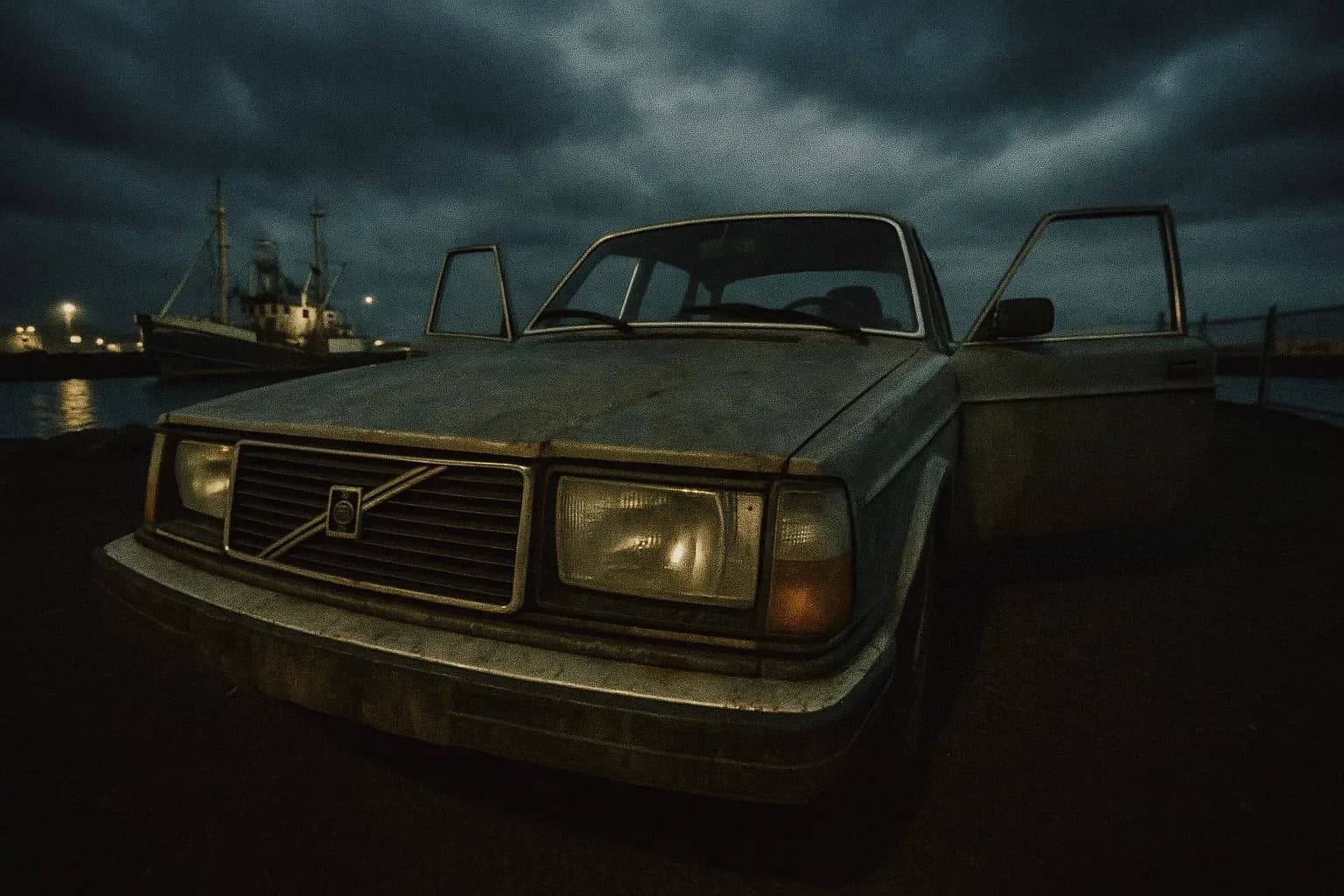
Ten months later, on November 19, 1974, Iceland was once again shaken by a mysterious disappearance. At 8:30 PM, 32-year-old Geirfinnur Einarsson received a phone call in his apartment in Keflavik. According to his wife's testimony, he poured himself a quick whisky before driving the mere 700 meters to the café at Keflavik harbor. His light blue Volvo 144 was later found abandoned with the keys in the ignition and a half-full beer on the front seat. That same evening, local fishermen observed unexplained flashes of light out at sea, which immediately sparked theories of smuggling.
Pressure on Iceland: German investigator's new methods
In a country like Iceland, which had only recorded nine homicides since 1944, the two unexplained disappearances placed enormous pressure on the small Icelandic police force. Media attention and political concern escalated, and there was a strong desire for a resolution. In January 1976, former West German police commissioner Karl Schütz, known for his role in investigating the Red Army Faction (RAF) cases, was called in. Schütz introduced controversial interrogation techniques into the Icelandic police investigation, including marathon interrogations and so-called "confrontation methods," marking a grim turning point in the Guðmundur and Geirfinnur case.
Erla's "dreams": Check fraud led to arrests
On February 17, 1976, 20-year-old Erla Bolladóttir and her boyfriend, Sævar Ciesielski, were arrested for minor check fraud. During intensive interrogations, Erla Bolladóttir began to recount fragmented memories from Guðmundur Einarsson's last night – details she later insisted stemmed from "dreams or nightmares" and which she could not possibly have known. These dubious statements proved fatal and triggered a wave of arrests in the case of the missing men.
The six arrested: Torture and medication in prison
Between 1976 and 1977, a total of six young people – Sævar Ciesielski, Kristján Viðar Viðarsson, Tryggvi Rúnar Leifsson, Albert Klahn Skaftason, Guðjón Skarphéðinsson, and Erla Bolladóttir herself – were imprisoned in connection with the Guðmundur and Geirfinnur case. They were subjected to extremely long periods of solitary confinement, in some cases up to 655 days. The cells in Sidumúli prison in Reykjavik became the scene of intense psychological torture. Forensic psychologist Gisli Gudjonsson, who later analyzed 2,000 hours of audio recordings from the interrogations, concluded that the prisoners were subjected to sleep deprivation, up to 72 hours of continuous interrogation, forced medication with sedatives and antipsychotic drugs like Mogadon and chlorpromazine, and – in the case of Sævar Ciesielski, who suffered from aquaphobia – actual water torture.
Broken by pressure: Planted ideas and false confessions
Tryggvi Rúnar Leifsson later explained how, after 100 days in solitary confinement, he could no longer distinguish between his own thoughts and the ideas the police planted in his mind. This condition has been described by experts as "memory distrust syndrome." The psychological pressure resulted in a series of contradictory and absurd false confessions. Sævar Ciesielski, for example, changed his account of Guðmundur's death multiple times: first, Guðmundur was supposedly killed with a stone, then with an axe – despite the police never finding a murder weapon or any traces of blood.
Conviction without proof: 1977 trial and fake scenes
When the trial against the six young people began in 1977, the prosecution had no technical evidence, no bodies, and only the deeply questionable false confessions obtained under extreme pressure. Nevertheless, the verdict was delivered in the Reykjavik District Court in December 1977. Sævar Ciesielski was sentenced to 17 years in prison for the murders of both Guðmundur Einarsson and Geirfinnur Einarsson; Kristján Viðar Viðarsson received 16 years, Tryggvi Rúnar Leifsson 13 years, and Guðjón Skarphéðinsson 10 years. Albert Klahn Skaftason was sentenced to 1 year in prison for complicity in disposing of a body, and Erla Bolladóttir received 3 years for perjury. During the trial, it also emerged that the police had attempted to fabricate a "crime scene" by spreading false rumors about bloodstains being found. The judges chose to ignore the many hours of deficient interrogation records, cementing the case as one of Iceland's worst examples of a miscarriage of justice.
After prison: Sævar's fate as "Iceland's Manson"
After their release, primarily in 1984, the convicted faced harsh public judgment in Iceland. Sævar Ciesielski, branded by the media as "Iceland's Charles Manson" – a label that painted him in the public eye as a dangerous individual, perhaps even with psychopathic traits – lived homeless in Copenhagen until his tragic death in 2011. In a heartbreaking letter from 2005, he expressed a deep wish to simply be recognized as a human being again.
The quest for justice: Acquittal and vindication
The fight for a legal reckoning and vindication reached a historic turning point in 2011 when then-Icelandic Minister of Justice, Ögmundur Jónasson, appointed a working group to conduct a full review of the entire Guðmundur and Geirfinnur case. After seven years of in-depth investigation, which included analyses of newly discovered diary entries and the incriminating audio tapes from the interrogations, Iceland's Supreme Court delivered a landmark ruling on September 27, 2018: all six originally convicted individuals were found innocent of the murder charges. Erla Bolladóttir, however, had to wait until December 2022 before she received an official apology from the Icelandic state and compensation of 32 million ISK for the wrongful solitary confinement and suffering she had endured. For Erla and the others, however, it was less about the money and more about the acknowledgment that the state of Iceland had destroyed their lives.
The mystery persists: Drowning, smuggling, bodies
Although the miscarriage of justice has been acknowledged and the convicted individuals' names cleared, the central mystery of the Guðmundur and Geirfinnur case – what actually happened to Guðmundur Einarsson and Geirfinnur Einarsson – remains unsolved. Over the years, numerous theories have emerged. Some suggest that Guðmundur may have drowned while intoxicated, while others speculate that Geirfinnur might have fallen into the water during potential smuggling activities at Keflavik harbor. Furthermore, Geirfinnur's wife confidentially disclosed his depressive tendencies leading up to his disappearance, opening the possibility of suicide. German documentaries have investigated possible links to organized hashish smuggling in the North Sea during the 1970s. Most recently, an Icelandic podcast in 2023 presented unconfirmed claims from anonymous sources that a local fisherman in the 1980s allegedly found a body related to the case but destroyed the evidence out of fear.
Legacy of injustice: Trauma and reform demands
The Guðmundur and Geirfinnur case has left deep scars on Icelandic society and is widely regarded as one of the most serious miscarriages of justice in the country's history. A 2024 opinion poll showed that a majority of Icelanders believe the case underscores an urgent need for judicial reforms and a critical review of police methods and powers. For the survivors, like Erla Bolladóttir, and their families, the wounds are indelible. Shortly before her death in 2023, Erla stated that although they got their names back, they never got back the 40 stolen years, a bitter reminder that justice often follows its own slow timeline. To this day, the search for truth continues; a group of volunteer archaeologists uses metal detectors and new satellite technology along the original 1974 search boundary at Hvaleyrarvogur beach, in a faint hope of finding crucial clues. While the truth about Guðmundur Einarsson's and Geirfinnur Einarsson's fates may forever remain buried, this tragic legal case stands as an eternal reminder of the fatal consequences that arise when the rule of law is sacrificed at the altar of panic in the pursuit of a resolution.
Shaken by the Guðmundur and Geirfinnur case? Follow KrimiNyt for more in-depth analyses of miscarriages of justice and complex criminal cases.