True crime news logo
  • Krimidex

Sign up for our newsletter and get the latest stories

Never miss the latest true crime news, reviews and top lists — plus new podcasts, series, films and books.

You can unsubscribe with one click from any email.

True crime news logo

The international true crime destination. Cases, documentaries, podcasts and travel routes.

© 2026 truecrime.news. All rights reserved.

Krimidex/cyberangreb
Concept

cyberangreb

Unauthorized intrusion into computer systems, networks, or data, prosecuted under federal law primarily through the Computer Fraud and Abuse Act
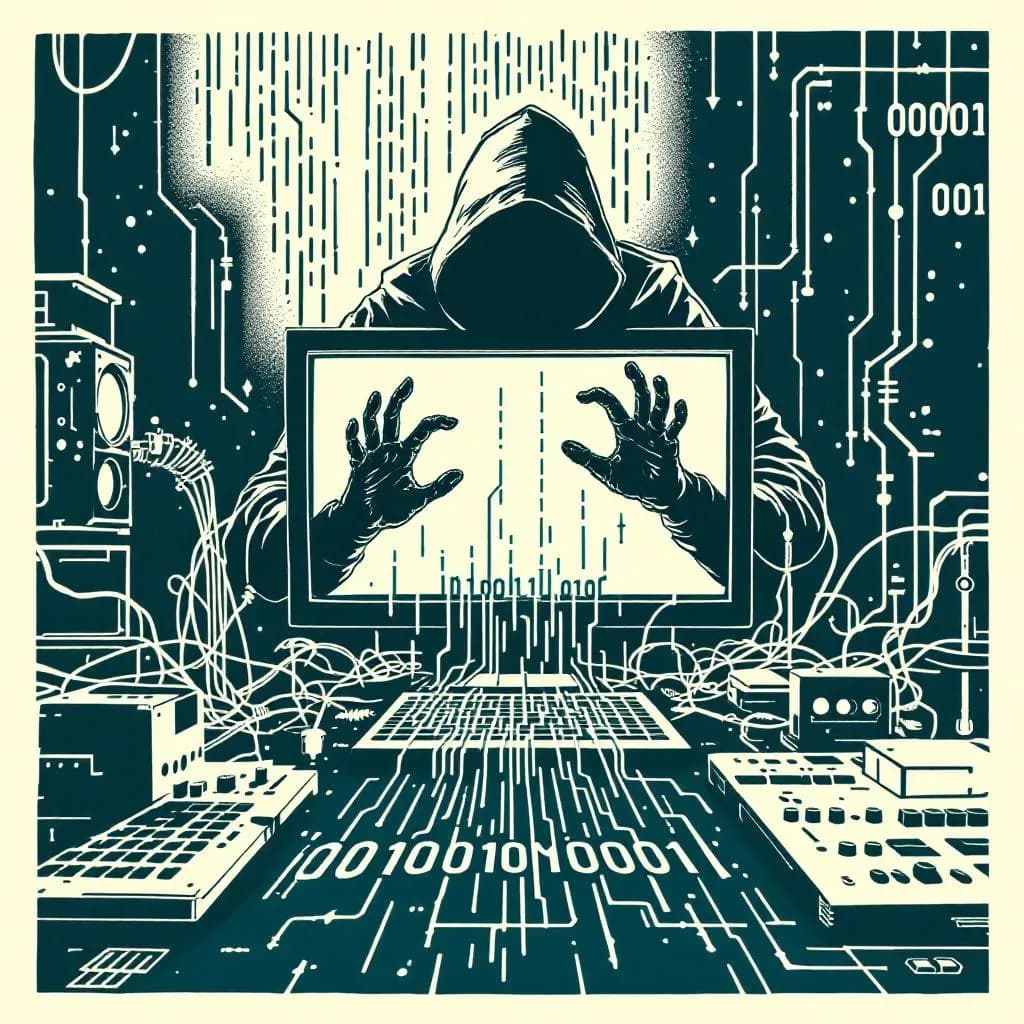
cyberangreb — Krimidex illustration

Definition

A cyberattack refers to any deliberate, unauthorized action targeting computer systems, networks, or digital data with intent to access, damage, disrupt, or steal information. While not a formally defined statutory term, it encompasses a range of criminal conduct prosecuted under federal computer crime statutes, most notably the Computer Fraud and Abuse Act.

The Computer Fraud and Abuse Act serves as the primary federal framework for prosecuting cyberattacks. Originally enacted in 1984 and amended several times since, the statute criminalizes seven categories of computer-related offenses, including accessing a computer without authorization, exceeding authorized access, transmitting malicious code, and trafficking in passwords. Protected computers under the act include those used in or affecting interstate commerce, which effectively covers most internet-connected devices in modern practice.

Federal prosecutors distinguish between accessing a computer "without authorization" and "exceeding authorized access." The former applies when an individual has no permission whatsoever to access a system, such as an external hacker breaking into a network. The latter covers insiders who access data beyond their permitted scope, though courts have interpreted this provision inconsistently across jurisdictions. Both forms constitute the foundation of cyberattack prosecutions.

Penalties under the CFAA vary significantly based on factors including the defendant's intent, prior convictions, and whether the attack caused damage or involved obtaining information for commercial advantage or private financial gain. Maximum sentences range from one year for simple unauthorized access to twenty years for attacks causing death or threats to public health or safety. The statute also provides for civil remedies, allowing victims to sue for damages and injunctive relief.

In true crime contexts, cyberattacks encompass high-profile cases of ransomware deployment, distributed denial-of-service attacks, data breaches exposing personal information of millions, and nation-state sponsored intrusions into critical infrastructure. The Department of Justice treats computer fraud cases as priority matters, reflected in dedicated prosecutorial resources and specialized training for handling digital evidence and international cooperation in cybercrime investigations.


Related entries

cyberangreb

Related articles

Ransomware-Angriff Uniklinik Düsseldorf 2020

The Düsseldorf University Hospital Ransomware Attack 2020

On September 10, 2020, Universitätsklinikum Düsseldorf, one of the Rhineland's leading university hospitals, was hit by a massive ransomware attack attributed to the cybercriminal group Netwalker. The attack forced the hospital to turn away emergency patients and resulted in at least one death, marking one of Europe's most serious cyberattacks on critical infrastructure.

A figure resembling Edmund Kemper stands outside a suburban California house, towering ominously with a vacant stare, while neighbors pass by unaware, symbolizing the hidden horrors lurking beneath the surface.

Edmund Kemper: From Troubled Child to Serial Killer

Edmund Kemper murdered his grandparents at age 15 in 1964, then spent fewer than five years in detention before being released. A decade later, he would kill seven college students, his mother, and her friend in one of California's most disturbing serial killing sprees.

A worn purple scarf lies at the foot of a memorial plaque at Korsør Station, surrounded by wilted flowers and small candles flickering in the wind.

Danish Marketing Manager Convicted of Murdering Missing Teen

Philip Patrick Westh, a 33-year-old Danish marketing manager, was found guilty on 28 June 2024 of murdering 17-year-old Emilie Meng, who disappeared from Korsør station in July 2016. A jury at Næstved Court House delivered a unanimous verdict, sentencing Westh to life imprisonment for the killing and multiple other serious crimes against minors.

A table at Roscoe's diner is surrounded by flowers and candles as a makeshift memorial for PnB Rock, with his photo resting among the tributes.

Man Sentenced to 31+ Years for Ordering Son to Kill Rapper PnB Rock

Freddie Lee Trone was sentenced to 31 years and 4 months to life in prison on September 23, 2024, after being convicted of orchestrating the murder of Philadelphia rapper PnB Rock. The killing occurred during a robbery at Roscoe's Chicken & Waffles in South Los Angeles on September 12, 2022, when Trone's 17-year-old son fatally shot the artist.

A figure resembling Kim Jong-un watches a scene from "The Interview" on a laptop screen, the Sony Pictures logo visible in the background, symbolizing the motive behind the North Korean cyber attack on Hollywood.

North Korea's Hack on Sony: A Cyber Attack on Free Speech

In November 2014, North Korean state-sponsored hackers infiltrated Sony Pictures Entertainment, stealing millions of files and threatening theaters showing the comedy film 'The Interview.' The attack marked the first time the U.S. government publicly attributed a cyber assault to a nation-state—and raised urgent questions about digital security and censorship.

A weathered map of the world pinned to a wooden wall, red strings connecting various cities, with small photos of notable United Bamboo Gang leaders around it

United Bamboo Gang: Taiwan's Criminal Empire

The United Bamboo Gang, also known as Bamboo Union, has operated as Taiwan's largest criminal triad since its founding in 1956–1957, commanding approximately 20,000 members across 13 divisions and 68 branches. What began as a local protection racket has transformed into a sophisticated international criminal enterprise involved in drug trafficking, human smuggling, cyber fraud, and money laundering—with operations spanning California, Las Vegas, and mainland China.

Facts

Type
Concept
Legal reference
18 U.S.C. § 1030 (Computer Fraud and Abuse Act)
Last updated
22 May 2026