teknologi og jura
The intersection of technological tools and legal rules governing their use in criminal investigation, evidence collection, surveillance, and prosecution under federal law
Definition
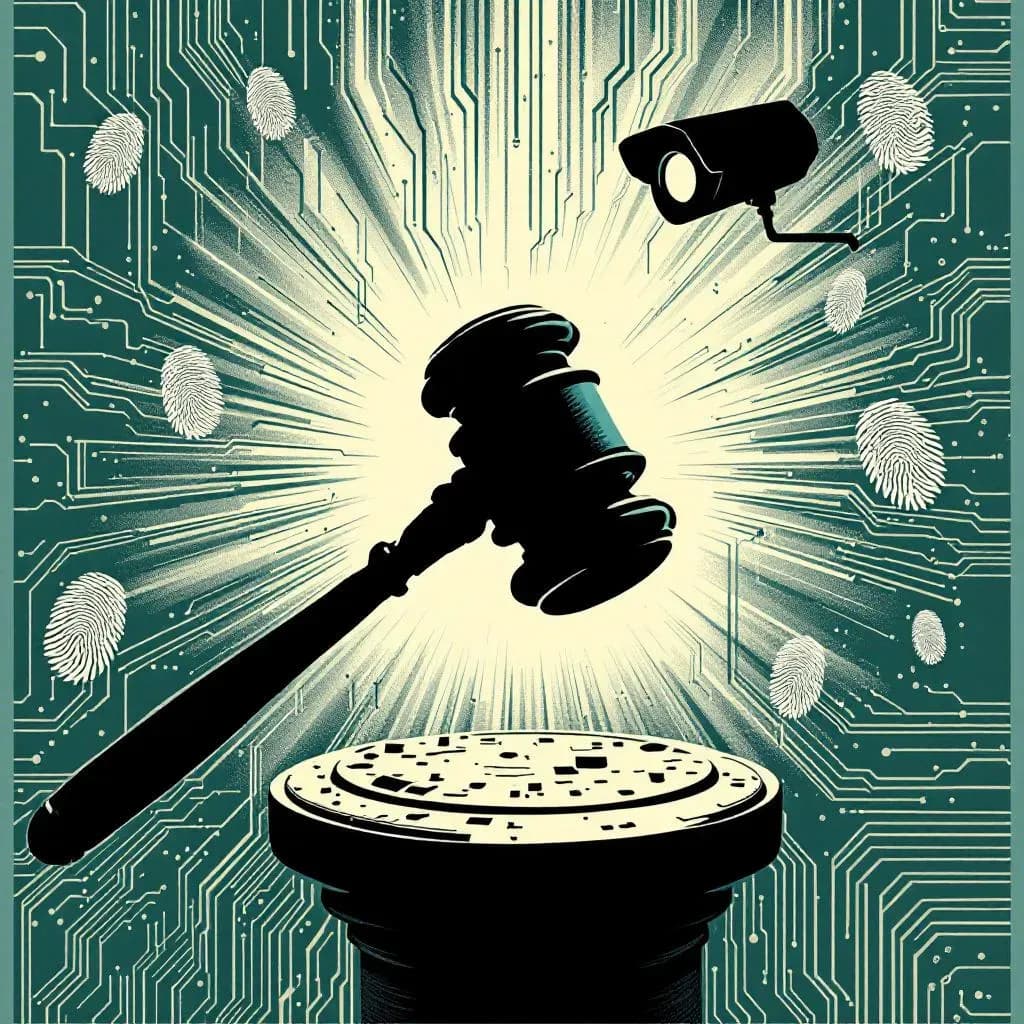
Technology and law in the American federal criminal justice context refers to the regulatory and constitutional framework that governs how technological tools may be used in crime detection, investigation, prosecution, and adjudication. This encompasses digital forensics, data analysis, surveillance technologies, and software systems employed throughout the criminal justice process, balanced against constitutional protections including Fourth Amendment privacy rights, Fifth Amendment due process, and Sixth Amendment fair trial guarantees.
The Computer Fraud and Abuse Act serves as the primary federal statute addressing computer-related crimes and unauthorized access to protected systems. As modern criminal activity increasingly involves digital components—from cybercrimes to digital evidence in traditional offenses—technology has become central to both the commission and investigation of federal crimes. Law enforcement agencies employ tools ranging from cell site simulators and facial recognition to predictive policing algorithms and encrypted communications analysis.
The legal framework requires that new investigative technologies undergo evaluation for constitutional compliance before deployment. The Department of Justice emphasizes assessing legal, ethical, and privacy implications of emerging technologies, recognizing that investigative efficiency must be balanced against individual rights. Courts have grappled with applying Fourth Amendment protections to digital searches, GPS tracking, and data collection, establishing precedents like the warrant requirement for cell site location data.
Digital evidence collection and preservation follow strict protocols to maintain chain of custody and admissibility standards. Federal Rules of Evidence govern how technological evidence—including computer files, metadata, electronic communications, and digital forensics findings—may be authenticated and presented at trial. Defense attorneys increasingly challenge the reliability of forensic software, algorithmic bias in predictive tools, and the scientific validity of digital analysis methods.
The technology-law intersection also encompasses emerging challenges including encryption debates, international data jurisdiction, artificial intelligence in criminal justice decision-making, and the admissibility of novel forensic technologies. As technology evolves faster than legislation, courts often apply existing constitutional principles to new contexts, creating a dynamic body of case law that defines permissible uses of investigative technology while protecting due process rights.
