vidneforklaring
A sworn statement given by a witness under oath in federal criminal proceedings, typically in court, before a grand jury, or during a deposition, which may be used as evidence in a criminal case.
Definition
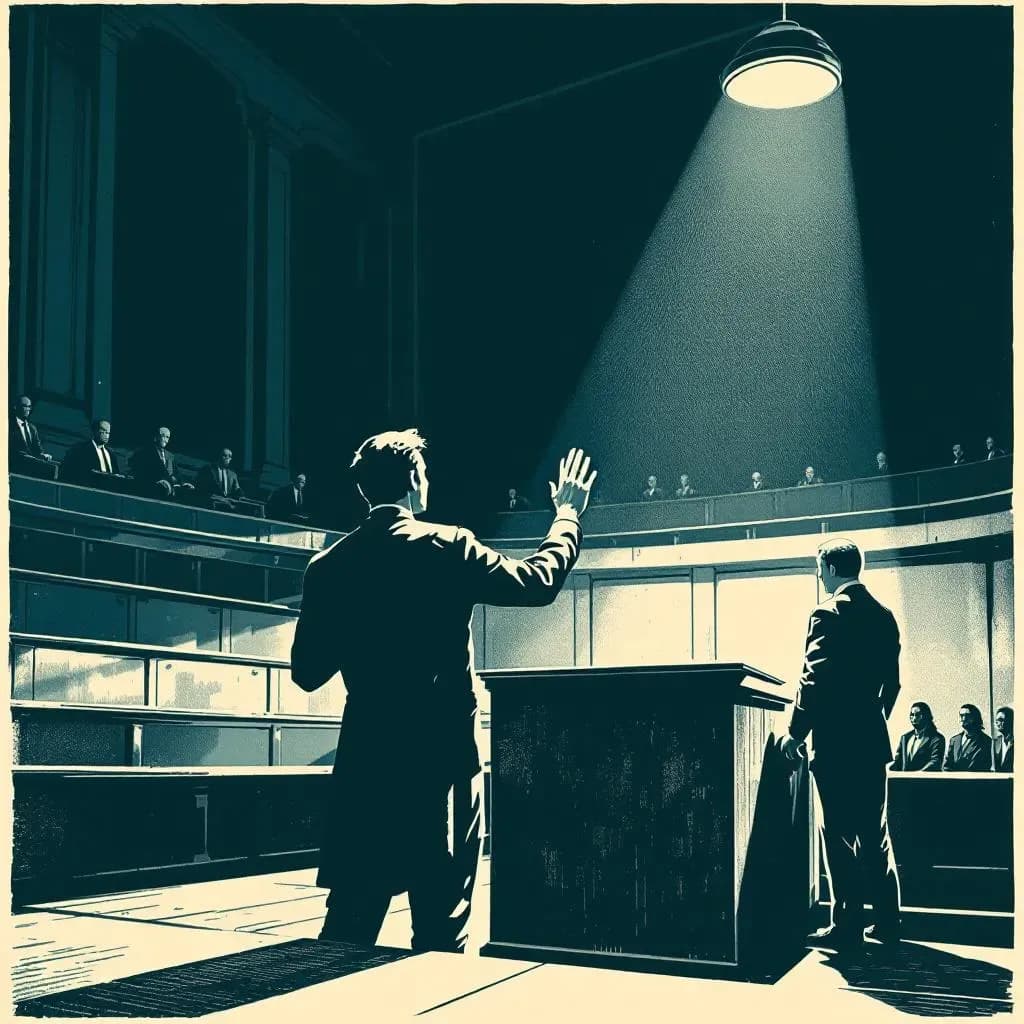
Witness testimony in U.S. federal criminal law is a formal statement made by a witness under oath regarding facts within their personal knowledge. The testimony is typically given in open court during trial, before a grand jury during an investigation, or during a deposition in the pre-trial phase. The statement becomes part of the evidentiary record and can be used to establish facts, corroborate other evidence, or impeach contradictory statements.
The fundamental requirement for witness testimony in federal court is that the witness must have personal knowledge of the matters they testify about. This requirement is codified in Federal Rule of Evidence 602, which states that a witness may testify to a matter only if evidence is introduced sufficient to support a finding that the witness has personal knowledge of the matter. This rule prevents witnesses from offering speculation, hearsay, or information they did not personally observe or experience.
In federal criminal procedure, witnesses generally testify under oath or affirmation, as specified in Federal Rule of Criminal Procedure 26. The oath requirement ensures that witnesses understand the legal consequences of perjury and are bound to tell the truth. During examination, witnesses are subject to direct examination by the party that called them, cross-examination by opposing counsel, and potentially redirect and recross-examination.
Witness testimony can be challenged on various grounds, including lack of personal knowledge, unreliability, bias, or inconsistency with prior statements. The credibility of witness testimony is ultimately evaluated by the fact-finder, whether judge or jury. In true crime contexts, witness testimony often plays a crucial role in reconstructing events, establishing timelines, and identifying perpetrators, though its reliability can vary significantly based on factors such as the witness's opportunity to observe, memory retention, and potential motivations to lie or distort the truth.
Related entries
Related articles
No related articles yet.