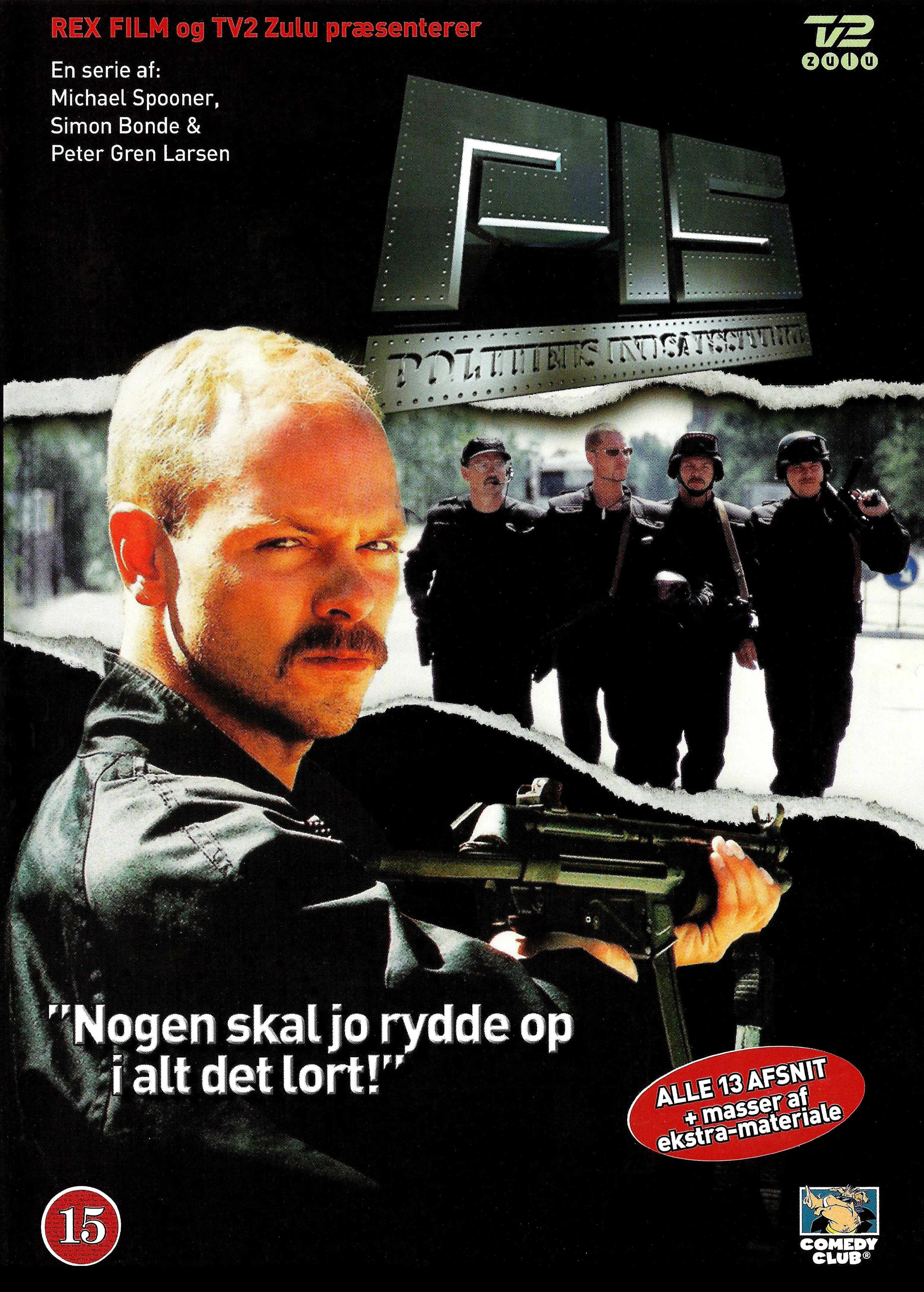
When Danish Satire Fooled Millions: The P.I.S. Case
How a 2000s mockumentary blurred the line between police drama and reality television—and what it reveals about media literacy
The KrimiNyt editorial team
★ IMDb 7,9How a 2000s mockumentary blurred the line between police drama and reality television—and what it reveals about media literacy
In September 2000, Danish television viewers tuned into what appeared to be an unprecedented documentary series about an elite police tactical unit. What they didn't know was that P.I.S. – Politiets IndsatsStyrke (literally "Police Rapid Response Unit") was entirely fictional, and thousands would spend weeks uncertain whether they were watching authentic law enforcement operations or elaborate performance art.
The series, produced by Michael Spooner alongside co-creators Simon Bonde, Peter Gren Larsen, and Rasmus Heisterberg, capitalized on a growing appetite for police procedural content across Scandinavia and Europe. But rather than document real crimes, the team crafted a sophisticated parody of Denmark's actual Politiets Aktionsstyrke (AKS)—the country's genuine tactical police unit. By adopting the visual language, pacing, and tone of legitimate documentary filmmaking, the producers created what media scholars would later recognize as a masterclass in audience manipulation through form.
The series followed Officer John Schmidt (played by Jonas Schmidt) and his colleagues through increasingly absurd scenarios. Early episodes maintained documentary realism with handheld camera work, official-sounding narration, and authentic Danish police settings. This veneer of authenticity proved devastatingly effective. Viewers flooded broadcasters with questions about whether the unit existed, whether these operations had actually occurred, and which officers were real.
Danmark's media landscape in 2000 occupied an interesting position relative to international television trends. While mockumentaries had found success elsewhere—most notably in Britain with shows like "The Day Today" (1994)—the Danish audience had less exposure to the format. This cultural unfamiliarity, combined with strong trust in public broadcasters like TV2, created conditions where satire could genuinely deceive.
The show ran for two seasons across 14 episodes totaling 290 minutes, with episodes gradually escalating in absurdity. Early skeptical viewers began to notice the increasingly ridiculous premises—scenarios that violated police procedure, impossible tactical decisions, and physical comedy that no real unit would tolerate. By the midpoint of the series, the satirical intent became unmistakable, though some viewers maintained the illusion had been deliberate from the start.
The final double episode, aired December 11, 2006, bore the revealing title "P.I.S.: Det endelige opgør" ("The Final Reckoning"), making explicit what had been implicit throughout. By then, the series had become emblematic of broader questions about media literacy, institutional trust, and the power of format to convey truth.
International media scholars have since cited P.I.S. as a case study in documentary-form satire—comparable to projects like the American "NewsRadio" (1995-1999) or the British "The League of Gentlemen" sketches, but with the unique distinction of genuinely confusing a substantial portion of its audience. The show's success lay not in being funnier than competitors, but in being more convincing.
The series has experienced renewed interest through streaming platforms including TV2 Play and Plex, where international viewers can now experience the original Scandinavian approach to procedural satire. For those unfamiliar with Danish institutional structures or police culture, the show's authenticity reads even more convincingly—a testament to how effectively it translated genuine cultural details into fictional narrative.
The P.I.S. phenomenon ultimately reflects a pre-social-media moment when institutional media could still credibly confuse audiences en masse. In an era when viewers now fact-check in real time and metadata accompanies every broadcast, the conditions that allowed thousands of Danes to genuinely question whether they were watching real police footage seem almost quaint. Yet the series remains a valuable reminder that the most effective satire doesn't announce itself—it waits patiently for the audience to catch up.