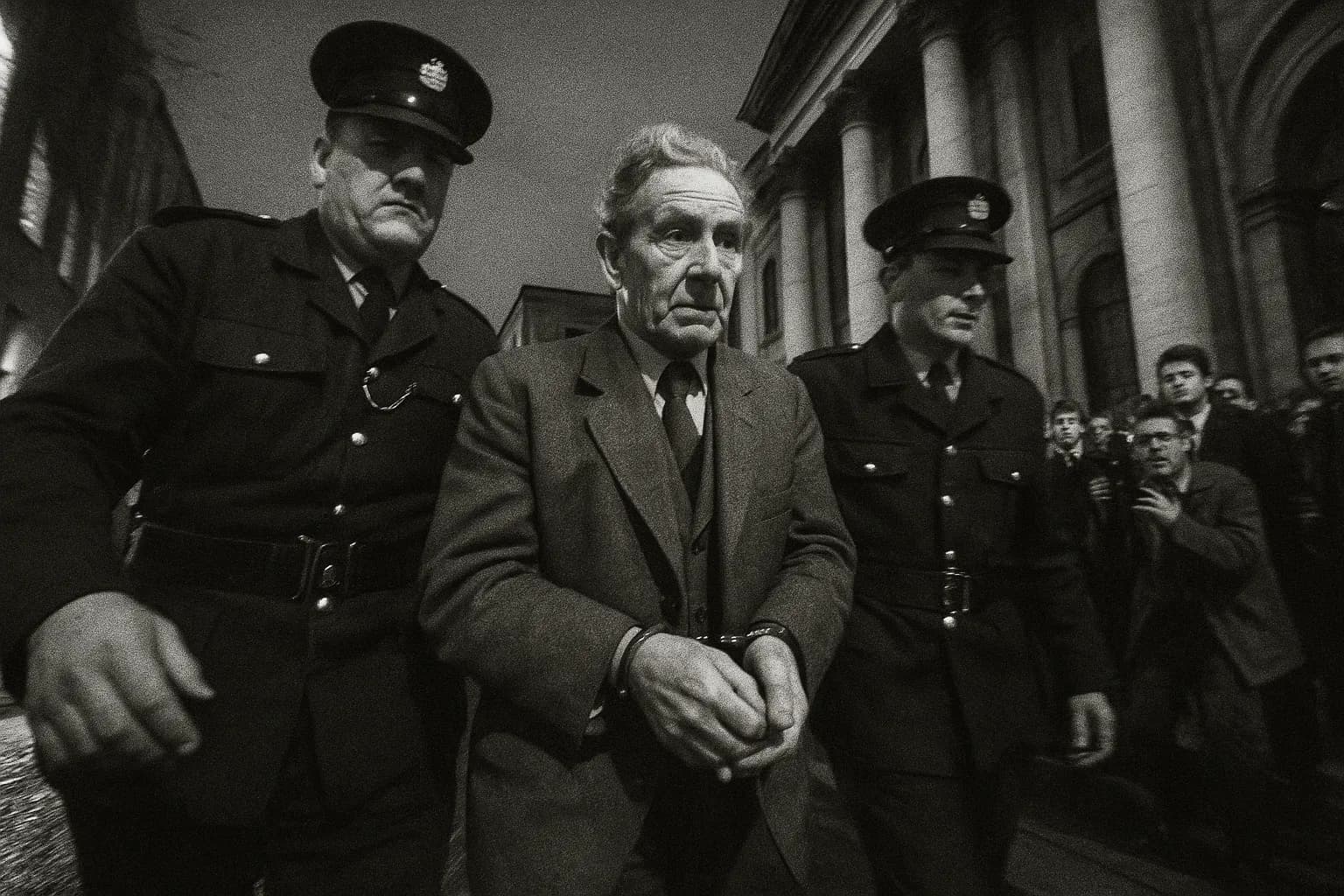
Alfred George Hinds was arrested on September 29, 1953, charged with armed robbery of the Maple Jewelry Store on a London high street. The haul was substantial—roughly £5,000 in cash and between £30,000 and £90,000 in jewels, though the bulk of the stolen goods were never recovered.
The evidence against Hinds was circumstantial. Traces of safe-blowing materials and blast residue found on his palms formed the core of the prosecution's case, with a co-accused robber identifying him as the man who blew the safe. At his trial at Wandsworth Prison, the judge excluded five key alibi witnesses. The jury deliberated for just 30 minutes before convicting him. Hinds received a 12-year sentence—and maintained his innocence from that moment forward.
After a failed appeal citing 16 errors in the trial, Hinds was transferred to Nottingham Prison in February 1955. There, his legend began.
Timeline
1 January 1953
Verurteilung wegen Juwelenraub
Alfred Hinds wird in England zu 12 Jahren Haft verurteilt, beteuert jedoch seine Unschuld
1 January 1950
Spektakuläre Gefängnisausbrüche
Hinds wird durch mehrere waghalsige Fluchtversuche als 'Houdini' Hinds bekannt
1 January 1950
Juristischer Kampf
Hinds führt einen unerbittlichen rechtlichen Kampf gegen seine Verurteilung
**The Escapes**
On November 25, 1955, Hinds slipped through a locked door using self-built wooden panels to scale a 20-foot prison wall. He evaded capture for 248 days, working as a builder-decorator across Ireland and Europe under an assumed name. While on the run, he sent letters, tapes, and statements to MPs and the press, proclaiming his innocence. He even sold his story to the *News of the World* for £40,000.
His recapture came on July 31, 1956, when he was stopped in Dublin for driving an unregistered car. He had been living as William Bishop, a car salesman, in a rented apartment purchased with proceeds from the original robbery.
But Hinds was far from finished. While fighting a libel suit in court, he orchestrated a second escape by smuggling in a padlock, which he used to lock two guards in a toilet cubicle—the hinges had been pre-fitted with screw eyes. He slipped into the Fleet Street crowd but was recaptured at an airport within five hours.
The third escape came on June 1, 1958, from Chelmsford Prison. Using keys he had made in the prison shop, Hinds vanished again. This time, he lived undiscovered for 22 months in Ireland, operating as a used car dealer named William Bishop. Another unregistered vehicle stop led to his recapture. He was transferred to Parkhurst Prison to serve the remainder of his sentence.
**Vindication**
While imprisoned at Parkhurst, Hinds pursued a different kind of escape—through the courts. He sued Scotland Yard Detective Herbert Sparks for libel. Sparks had written articles questioning Hinds' innocence claims while Hinds was a fugitive. The court ruled in Hinds' favor, and Sparks was ordered to pay approximately £800 in damages.
Despite 13 dismissed appeals, Hinds' legal knowledge and determination ultimately prevailed. He obtained a pardon, effectively vindicating his decades-long claim of innocence. The man who had earned the nickname "Houdini" Hinds for his prison escapes had finally broken free—not through a wall or locked door, but through the law itself.
Hinds died in 1991, having lived to see his name cleared. His legacy remains a complex one: a man convicted on questionable evidence who turned his fight for justice into one of Britain's most remarkable criminal sagas.