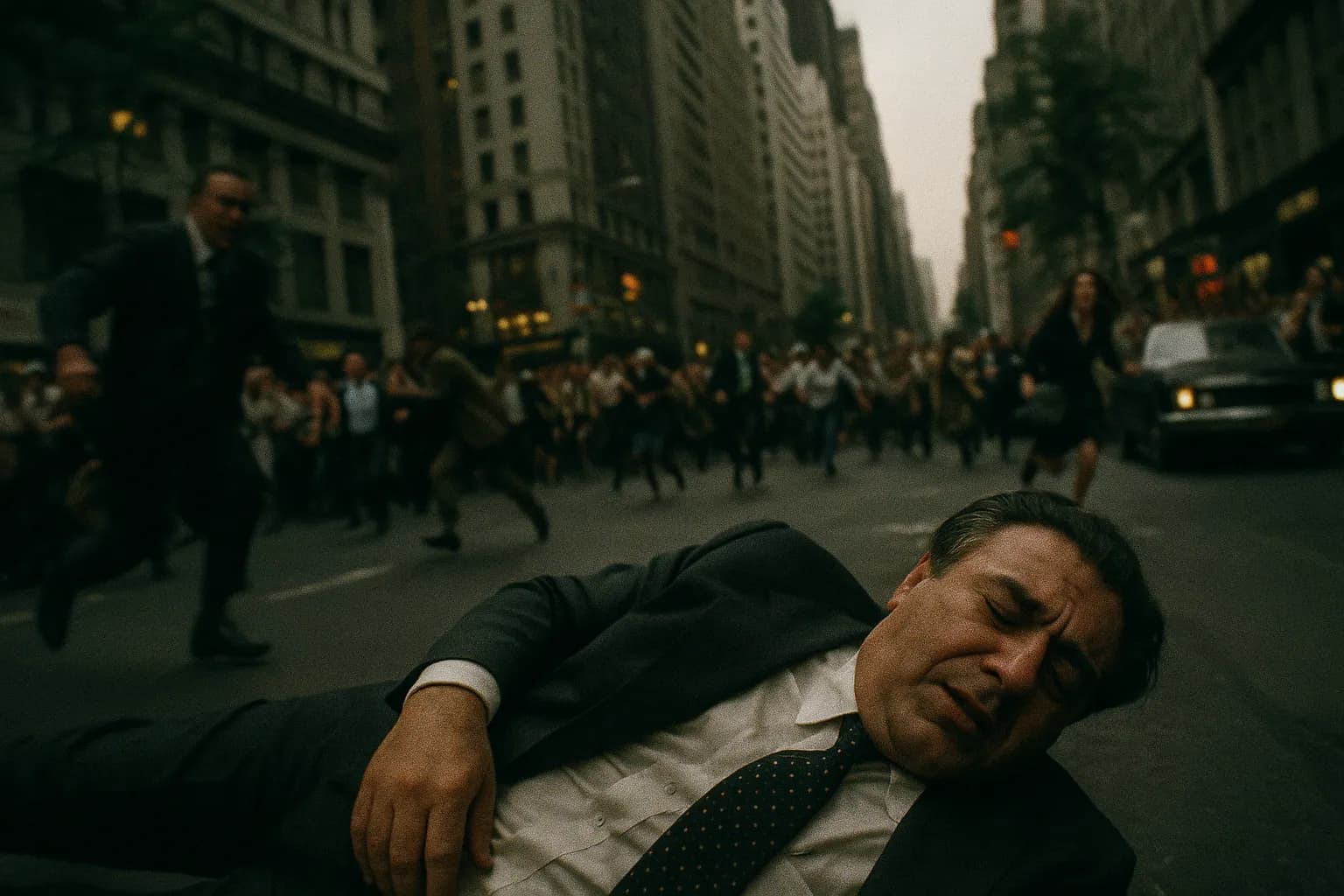
In 1928, bootlegger Joe Profaci founded what would become the Colombo crime family, establishing the youngest of New York's Five Families. What began as a small-time bootlegging operation during Prohibition would evolve into a sprawling criminal enterprise stretching across the Northeast—but also the most fractured and violently unstable of the Five Families.
Profaci's empire expanded rapidly through strategic marriages that linked the family to the Detroit mob's Zerilli and Tocco clans, as well as the Bonanno family. By his death in 1962, the Profaci organization—as it was then known—commanded approximately 150 made members and over 1,000 associates operating across Brooklyn, Staten Island, Queens, Long Island, New Jersey, Manhattan, Westchester, Connecticut, and Florida. The family's criminal portfolio was comprehensive: gambling, loansharking, hijacking, cargo theft, narcotics trafficking, labor racketeering, extortion, bookmaking, and prostitution.
Yet from the moment Profaci died, the family's history became one of almost relentless internal bloodshed. Giuseppe Magliocco, Profaci's brother-in-law, assumed leadership but quickly became entangled in an ill-fated conspiracy with Bonanno boss Joseph Bonanno to assassinate other Commission bosses. When Joseph Colombo reported the plot to the Commission, Magliocco was forced into exile. Colombo rose to leadership in 1964, rewarded for his loyalty to the Commission's authority.
Timeline
1 January 1961
Første Colombo-familiekrig begynder
Den første interne magtkamp i Colombo-familien bryder ud efter Joseph Colombos magtovertagelse, hvilket splitter familien i en omfattende intern konflikt.
1 January 1971
Anden Colombo-familiekrig
En ny stor intern konflikt opstår efter Joseph Colombo bliver skudt. Dette destabiliserer familien yderligere og fører til nye voldelige sammenstød.
1 January 1991
Tredje Colombo-familiekrig starter
Den finale og mest blodige Colombo-krig udkæmpes mellem Persico- og Orena-fraktionerne. Krigen producerer omfattende drab og arrestationer gennem 1991-1993.
1 January 1993
Massiv føderal indsats og arrestationer
Familien svækkes markant gennem omfattende arrestationer og domfældelser som følge af den tredje familiekrig.
1 January 2008
Nye føderale anklager
DOJ rejser anklager mod Colombo-medlemmer inklusive John Francesi og Joel Casachi for åger, afpresning og mord.
1 January 2021
Ledelsesanklager
Føderal tiltale rammer familiens ledelse, herunder Andrew Russo og Benjamin Castellazzo, for arbejdsmarkedsafpresning og organiseret kriminalitet.
Colombo's reign brought a dramatic pivot. In 1970, he founded the Italian-American Civil Rights League, attempting to mainstream the family's image. The strategy backfired catastrophically. On June 28, 1971, Colombo was shot and paralyzed at a league rally, setting off the Second Colombo War. Carmine Persico emerged as the new boss, but not before Joe Gallo—released from prison—attempted a takeover that left him murdered in 1972.
The family's violence, however, was far from finished. A third civil war erupted in the early 1990s under acting boss Victor Orena, claiming 24 members killed or vanished over approximately two years. The carnage was devastating: by 1993, the Colombo family had collapsed to just 75 made men, the smallest of New York's Five Families. Over 120 members had faced arrests through the 1980s and early 1990s, a combination of federal prosecution and internal betrayals.
The first of the Colombo Wars actually preceded Colombo himself. In 1961, the Gallo brothers revolted against Profaci's iron-fisted rule. Profaci ordered hits on Gallo members in August 1961, resulting in 9 murders and 3 disappearances before Joe Gallo's imprisonment later that year. The tension only subsided with Profaci's death in 1962.
By the 21st century, the family's decline continued. Ralph F. DeLeo, operating as a street boss from Boston, was charged by the FBI in December 2009 with drug trafficking, extortion, and loansharking across Massachusetts, Rhode Island, New York, Florida, and Arkansas. More recently, in 2021, boss Andrew Russo and underboss Benjamin Castellazzo faced federal indictment for labor racketeering and extortion—crimes that had long defined the family's operations.
The Colombo crime family's trajectory tells a cautionary tale within organized crime itself: rapid expansion and wealth can mask fundamental instability. The family's reputation for extreme brutality and infighting distinguished it even among the notoriously violent Five Families. What Profaci built in 1928 as a bootlegging operation became by the 1990s a shadow of its former power—a family consumed by internal warfare and decimated by federal law enforcement. Today, the Colombo name remains synonymous with 's most volatile chapter in New York City.