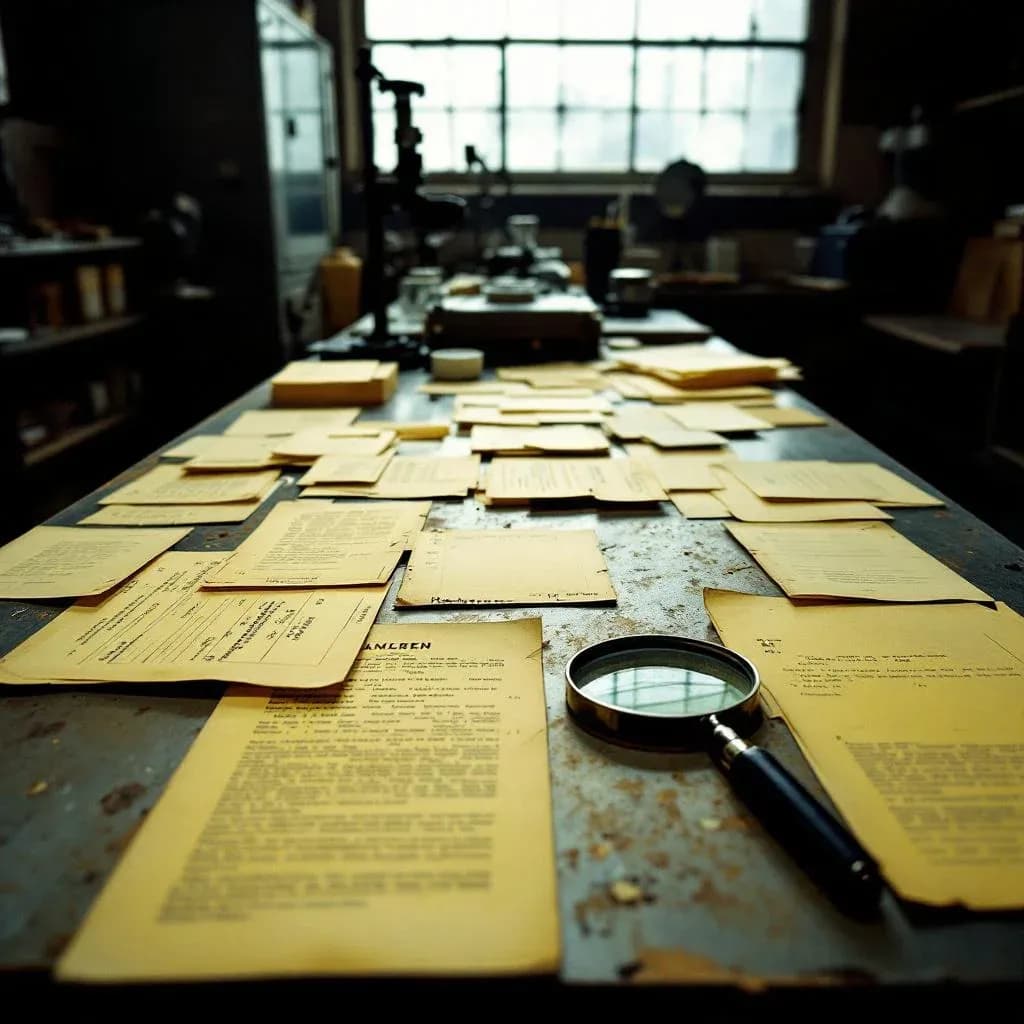
On April 25, 1983, the Germany-based magazine Stern announced worldwide a sensational discovery: they had purchased Adolf Hitler's private diaries. According to the magazine, they had secured exclusive rights to documents that historical research had long sought without success. The presentation was staged as a global event. Prominent historians were called in to authenticate the manuscripts, and media outlets around the world reported on the sensation.
But within weeks, the entire story collapsed. The 62 "diary volumes" that Stern had purchased for approximately 4.25 million Deutsche Mark turned out to be a masterclass in forgery—created by a single man with remarkable technical skill but without actual historical knowledge.
Timeline
1 January 1970
Konrad Kujau beginnt Fälscherkarriere
Der künstlerisch begabte deutsche Fälscher startet seine kriminelle Laufbahn mit der Herstellung gefälschter Unterschriften und Dokumente historischer Persönlichkeiten.
1 January 1981
Kujau fertigt die falschen Hitler-Tagebücher
Über einen längeren Zeitraum beginnt Kujau sein größtes Projekt: die Herstellung von 62 Bänden, die Hitlers private Tagebücher von 1932 bis 1945 darstellen sollen.
25 April 1983
Stern verkündet weltweite Entdeckung
Das Stern-Magazin veröffentlicht die Existenz der angeblich authentischen Hitler-Tagebücher und beansprucht exklusive Rechte an den Dokumenten.
1 May 1983
Erste Expertenkritik weckt Zweifel
Etablierte Historiker und Archivare beginnen, die Echtheit anzuzweifeln. Chemische Analysen werden eingeleitet.
6 May 1983
Bundesarchiv erklärt Dokumente für moderne Fälschungen
Deutschlands Nationalarchiv veröffentlicht einen offiziellen Bericht, der beweist, dass Papier, Tinte und Chemikalien alle aus der Nachkriegszeit stammen. Der Skandal eskaliert.
25 August 1983
Konrad Kujau festgenommen
Der Fälscher wird verhaftet und gesteht ohne Widerstand. Er scheint sogar stolz auf seinen künstlerischen Betrug zu sein.
1 January 1985
Gerichtsverfahren abgeschlossen
Sowohl Kujau als auch Heidemann werden zu Haftstrafen und Geldstrafen wegen Betrugs verurteilt. Der Stern erleidet dauerhafte Schäden an Glaubwürdigkeit und Finanzen.
Konrad Kujau—Master Forger
Conrad Kujau was a German artist and forgery specialist who since the 1970s had built a lucrative business empire forging signatures and documents from famous people. His work was technically superior—he had developed etching methods, could replicate aging processes and document paper with unusual skill. He had previously created forged works attributed to Otto Bismarck and other historical figures, which had earned him significant sums.
But the Hitler diaries were his masterpiece—and his downfall. Kujau was an unscrupulous businessman, but not a historian. His "Hitler" wrote about completely trivial everyday things: what he had eaten for lunch, irritations over seating arrangements, complaints about his health. It lacked perspective, analytical depth, and historical authenticity.
Gerd Heidemann and Stern's Greed
Gerd Heidemann was an experienced Stern reporter who had developed an obscure fascination with the Hitler era. He became Kujau's contact person and intermediary in the negotiations. Heidemann himself became financially interested in the deal and claimed the documents came from a secret NSA agent named Timerling, who had rescued them under chaotic circumstances at the war's end.
Stern's editorial team was gripped by greed. Here was the chance to own a historical sensation that would put the magazine on the world map. Some expert assessments were conducted, but the most important ones were apparently made by historians who had partisan interests in accepting the documents. Critical academic distance was sacrificed for exclusivity and prestige.
The Exposure
Once the diaries were first published, academic historians tore them apart. The Bundesarchiv (Germany's national archive) soon issued a report documenting that the paper, ink, and technical characteristics were all modern. A chemical analysis showed that some of the chemicals used in the ink were not available before 1945.
Conrad Kujau was arrested on August 25, 1983. He confessed without resistance—he was proud of his artistic work and actually thought it was amusing to see how long he had managed to deceive the world's most established media organizations.
The case became known as the "Forged Diaries Scandal" or in German "Tagebuch-Affäre." It became even worse for Stern when it was revealed that they had been aware of doubts among some experts but had chosen to ignore them to proceed with publication.