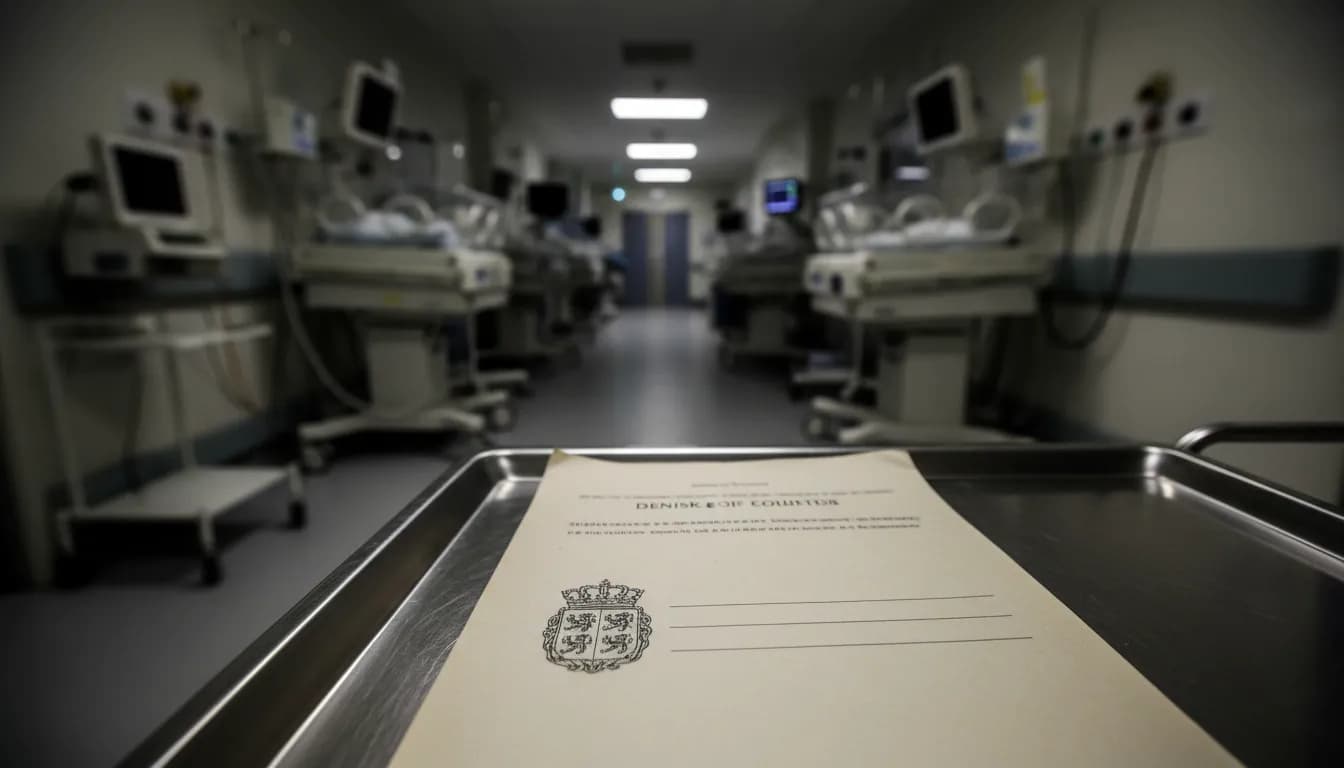
In a decision that underscores the evidentiary challenges facing prosecutors in child abuse cases, a Danish court has acquitted a father accused of severely injuring his three-month-old son—despite establishing that the infant had indeed been abused.
On February 2, 2026, Glostrup Court in the Copenhagen metropolitan area found the 31-year-old defendant not guilty of gross violence and mistreatment of his own child. The ruling concluded a seven-day jury trial that examined extensive medical testimony and hospital records documenting injuries sustained by the premature infant in July 2024.
Im Juli 2024 erleidet der drei Monate alte Säugling Verletzungen, die später als Misshandlung klassifiziert werden.
26 January 2025
Prozessbeginn
Der Geschworenenprozess gegen den 31-jährigen Vater beginnt am Gericht in Glostrup.
2 February 2026
Freispruch
Nach sieben Verhandlungstagen wird der Angeklagte freigesprochen, da die Täterschaft nicht zweifelsfrei bewiesen werden konnte.
The child in question was approximately three months old at the time of the alleged incident and had been born roughly two months prematurely. Hospital staff provided detailed testimony about the injuries identified in the infant, and medical records documented clear evidence of physical trauma.
Yet despite this clinical documentation—which prompted the court to acknowledge that abuse had occurred—prosecutors could not construct a legal case proving the defendant's individual responsibility for the injuries. The acquittal represents a rare scenario in Danish criminal law: a verdict combining confirmed child abuse with a not guilty finding.
**Legal and International Context**
Denmark, like other Nordic nations, operates under a civil law framework with evidentiary standards that require proof "beyond reasonable doubt" for criminal convictions. The distinction between establishing that harm occurred and proving who caused it can create significant prosecutorial obstacles, particularly in cases involving infants who cannot testify.
Similar challenges have emerged in other European jurisdictions. Cases involving non-verbal victims—especially very young children—often hinge on circumstantial evidence, witness testimony, or forensic analysis. When a child has been in the care of multiple individuals, or when medical evidence alone cannot definitively link injuries to a specific person's actions, courts may find insufficient grounds for conviction despite acknowledging abuse.
In countries including the United Kingdom, Germany, and Sweden, prosecutors have faced comparable hurdles. The tension between protecting vulnerable children and maintaining rigorous evidentiary standards remains a persistent debate in European criminal justice systems.
Under Danish law, the prosecution had a 14-day window from the court's February 2 ruling to file an appeal. As of the available records, it remains unclear whether authorities pursued this option. The case is registered under docket number S36-2656/2025 at Glostrup Court.
The acquittal raises unresolved questions about the child's welfare and the identity of the responsible party. Danish child protective services may pursue civil interventions separate from the criminal proceeding, though such processes operate independently and are subject to different evidentiary standards.
**Broader Implications**
The case highlights a persistent tension in child protection systems across Europe: the gap between identifying abuse and securing criminal convictions. Prosecutors in Nordic countries, known for robust social welfare and child protection frameworks, nonetheless encounter significant barriers when bringing cases against caregivers in closed domestic settings.
Experts in child welfare law have long noted that evidentiary standards appropriate for conventional criminal cases may inadequately serve child protection objectives. Some jurisdictions have experimented with modified procedures—specialized courts, trained interviewers, or adjusted burden-of-proof standards in civil child welfare proceedings—to address these challenges.
The Glostrup decision will likely reignite discussions within Danish legal and child protection circles about whether current evidentiary frameworks sufficiently protect vulnerable infants. For now, the case stands as a stark reminder that medical evidence of harm does not automatically translate into criminal accountability under existing legal standards.