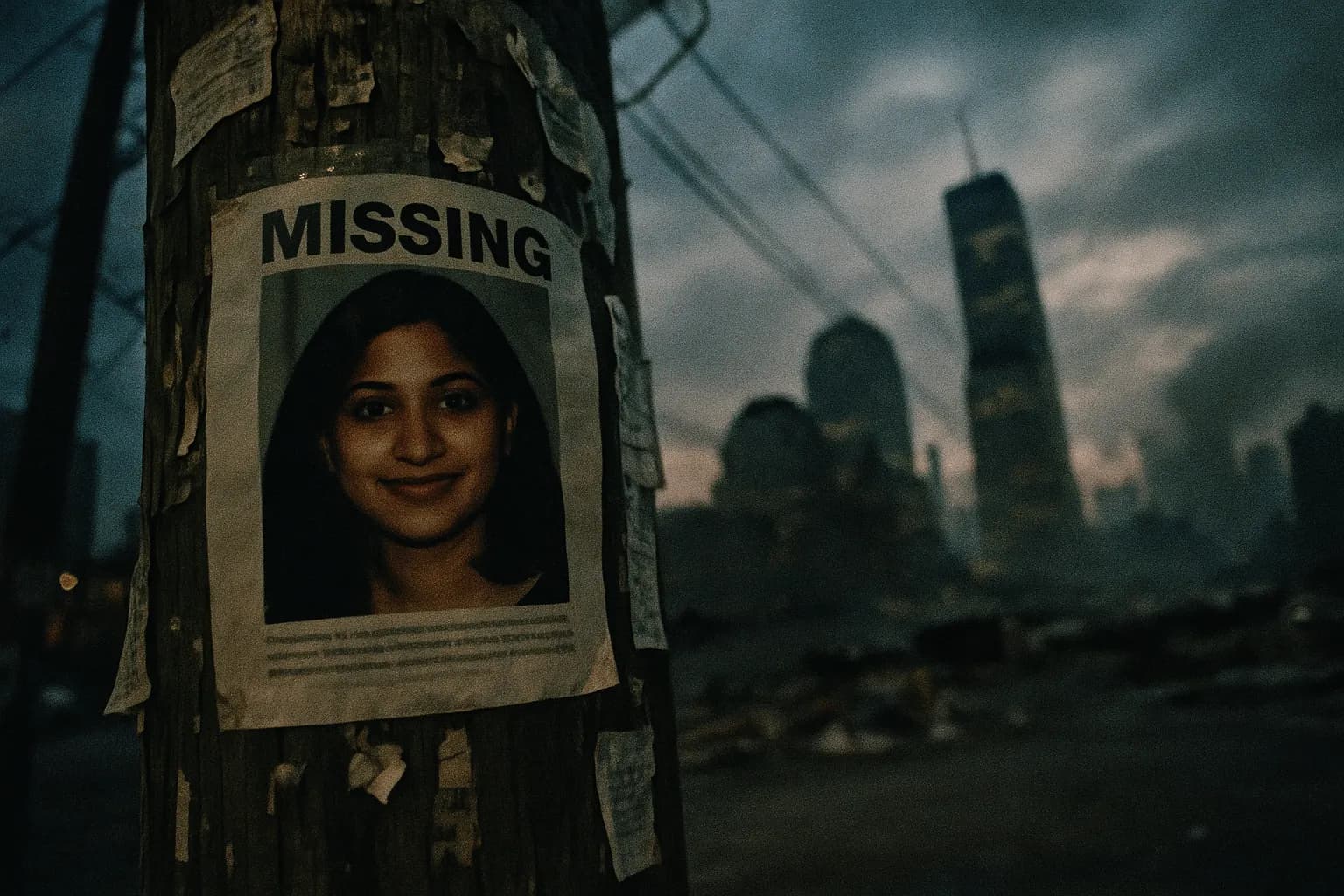
On the night of September 10, 2001, Dr. Sneha Anne Philip vanished from Lower Manhattan. The 33-year-old internal medicine resident, who lived in Battery Park near the World Trade Center, was last documented at a department store just hours before the terrorist attacks that would kill nearly 3,000 people and dominate global headlines for decades.
What followed her disappearance was a case that would be absorbed into the chaos of 9/11—officially classified as a terror victim despite circumstances that some observers find inconsistent with that conclusion.
## The Last Known Hours
Timeline
7 October 1969
Geburt
Sneha Anne Philip wird in Kerala, Indien, geboren.
10 September 2001
Letzter Kontakt
Sneha führt einen zweistündigen Online-Chat mit ihrer Mutter und wird beim Einkaufen im Century 21 gefilmt.
11 September 2001
Verschwinden und Anschläge
Sneha kehrt nicht nach Hause zurück. Am selben Tag ereignen sich die Terroranschläge auf das World Trade Center.
11 September 2001
Für tot erklärt
Sneha Anne Philip wird offiziell als Opfer der 9/11-Anschläge registriert.
On September 10, security cameras captured Philip at Century 21, a luxury department store located directly across the street from the World Trade Center. Credit card records confirm her purchases: lingerie, a dress, stockings, bedding, and three pairs of shoes—items suggesting routine shopping rather than preparation for departure.
Later that same day, Philip conducted a two-hour online chat with her mother in India. It would be the last direct contact her family had with her.
When her husband, Ron Lieberman, arrived home from work that evening, Philip was not there. Her passport and important documents remained in their apartment—clear indicators, according to investigators, that she had not planned to leave the country or flee.
That night became September 11, 2001.
## The Official Narrative
In the catastrophic aftermath of the attacks, with tens of thousands unaccounted for and remains scattered across Lower Manhattan, Philip was officially registered as a presumed victim of the World Trade Center collapse. Her name joined a tragic roster of nearly 3,000 lives lost that day.
The designation made administrative sense at the time. She had disappeared in a high-impact zone. No one had heard from her. The towers fell. The logical conclusion seemed inevitable.
But when Lieberman eventually returned to their apartment after the initial chaos subsided, he found details that complicated the simple narrative.
The window of their apartment was open. Inside, a thick layer of dust from the collapsed towers had settled across surfaces—the fine powder that blanketed much of Lower Manhattan in the days following the attacks.
What struck investigators and family members alike was the absence of human footprints in that dust. Only animal prints—likely from their cat—were visible on the contaminated surfaces.
This detail raised a troubling question: if Philip had been in the apartment when or after the dust settled, wouldn't her movements have left traces?
Police reports subsequently made claims about Philip's personal life—allegations concerning alcohol use, legal issues, and other matters—that her family has disputed. These characterizations, made by authorities, remain contested and lack independent corroboration in available records.