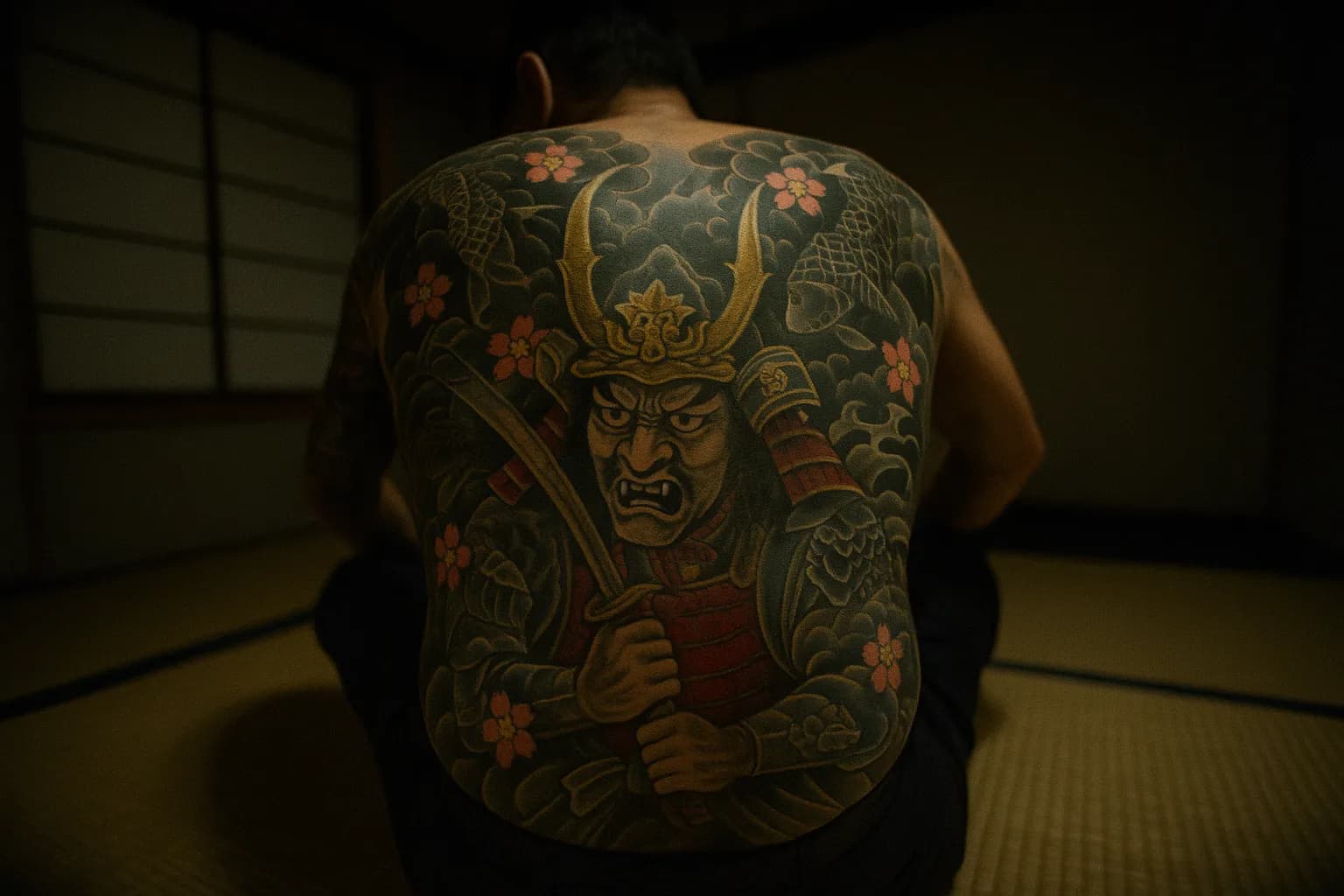
The Yamaguchi-gumi, named after founder Harukichi Yamaguchi, emerged from humble beginnings as a loose labor union protecting dockworkers in Kobe in 1915. Over a century later, it evolved into Japan's largest yakuza syndicate—and Forbes-ranked second among the world's organized crime groups by annual revenue.
At its peak, the organization controlled more than 10,000 members organized into over 500 bands, with operations spanning 36 of Japan's 47 prefectures. By 2014, the Yamaguchi-gumi and its associates commanded approximately 23,400 people, representing 44 percent of Japan's entire yakuza population. The scale of operations was staggering: the organization controlled approximately 2,500 businesses and generated annual revenue estimated at $6.6 billion—contributing to a combined yakuza income of roughly $45 billion across all syndicates.
The syndicate's criminal portfolio expanded far beyond its dockside roots. Extortion, gambling operations, and prostitution formed the foundation of early revenue streams. As the organization matured, it diversified into arms and drug trafficking, real estate and construction kickback schemes, stock market manipulation, and internet pornography. Despite this broad criminal reach, organizational leadership—including the influential third-generation boss Kazuo Taoka (1946–1981) and current sixth-generation leader Shinobu Tsukasa, also known as Kenichi Shinoda—formally prohibited drug dealing, though enforcement remained inconsistent.
Timeline
1 January 1920
Gründung der Yamaguchi-gumi
Harukichi Yamaguchi gründet in Kobe eine Vereinigung für Hafenarbeiter, aus der sich die spätere Yakuza-Organisation entwickelt.
1 January 1984
Gründung der Ichiwa-Kai
Die Ichiwa-Kai spaltet sich von der Yamaguchi-gumi ab — die erste größere Abspaltung in der Geschichte der Organisation.
27 August 2015
Der große Bruch
Unter Führung von Kunio Inoue spalten sich mächtige Fraktionen ab und gründen die Kobe Yamaguchi-gumi als eigenständige Organisation.
1 September 2015
Shinobu Tsukasa übernimmt
Nach der Spaltung konsolidiert Boss Shinobu Tsukasa die verbleibende Yamaguchi-gumi und verkündet aggressive Expansionspläne, insbesondere Richtung Tokio.
Leadership transitions marked pivotal moments in the organization's history. Harukichi Yamaguchi led for ten years until 1925, followed by his son Noboru Yamaguchi (1925–1942). After a gap during the post-war period, Kazuo Taoka assumed control in 1946, establishing modernized operational structures that would define the organization for decades. Yoshinori Watanabe held the fifth-generation leadership from 1989 to 2005, bridging the transition to the current era under Shinobu Tsukasa.
The Japanese government designated the Yamaguchi-gumi as a "boryokudan"—a criminal organization subject to organized crime laws. This legal designation intensified enforcement actions and social restrictions. Beginning in the early 2000s, Japanese authorities implemented increasingly aggressive anti-yakuza policies, including residential bans in certain prefectures and business restrictions targeting yakuza-controlled enterprises.
These enforcement efforts have produced measurable results. Membership data reveals dramatic organizational contraction: from 10,300 active members and 13,100 associates in 2014 to merely 3,100 active members by 2025—an 80 percent decline in core membership over a single decade. This collapse reflects both direct law enforcement pressure and internal fracturing as smaller gangs splinter from the main organization.
The decline parallels broader shifts in Japanese organized crime. Younger generations show less interest in yakuza life, urban development has reduced territorial control opportunities, and digitalization of business has disrupted traditional extortion and protection-racket models. Japanese society's cultural evolution and stricter legal frameworks have further eroded the yakuza's social tolerance.
Today, the Yamaguchi-gumi remains Japan's largest yakuza organization by membership and reach, yet it confronts unprecedented vulnerability. Once a shadow empire controlling thousands of businesses and millions of lives across an entire nation, it now represents a fraction of its former size—a dramatic reversal for what many analysts consider the most significant group of the 21st century.