The Bomb Tears Through the Crowd
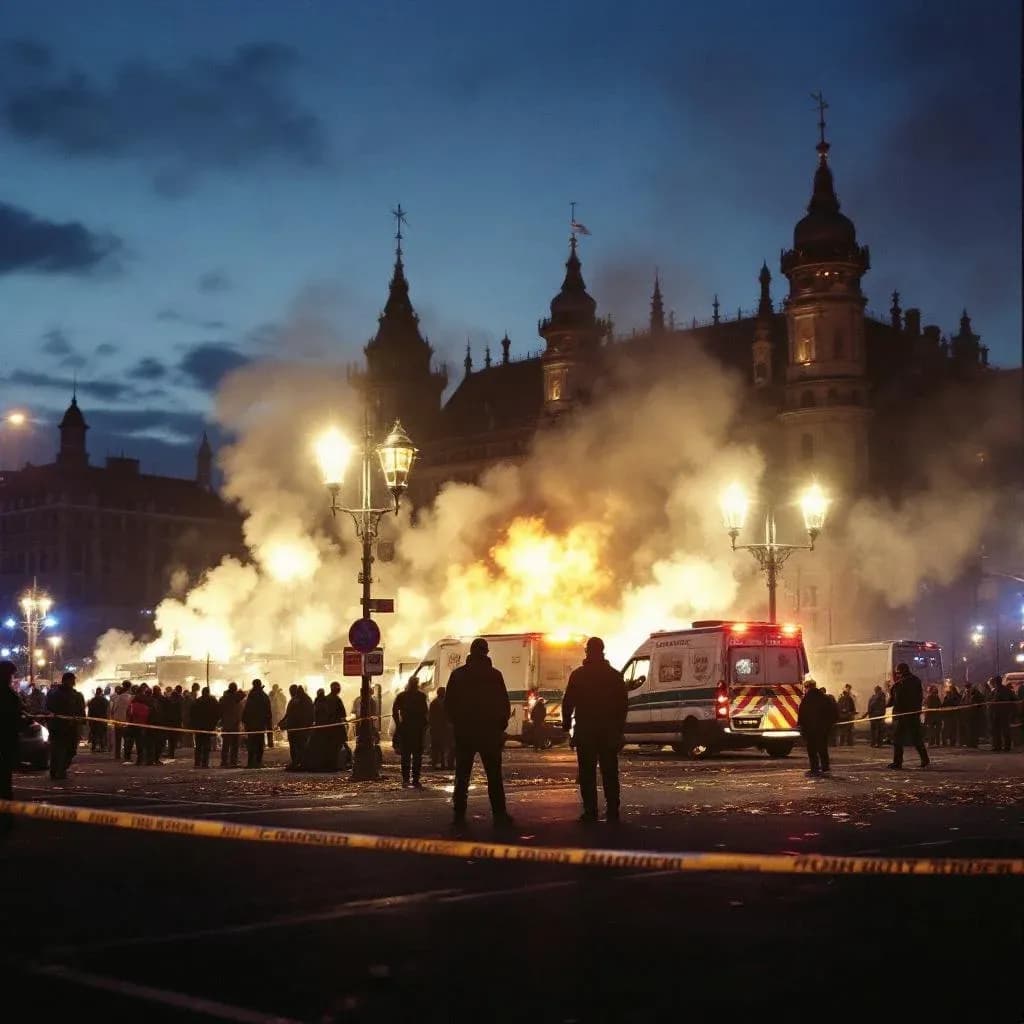
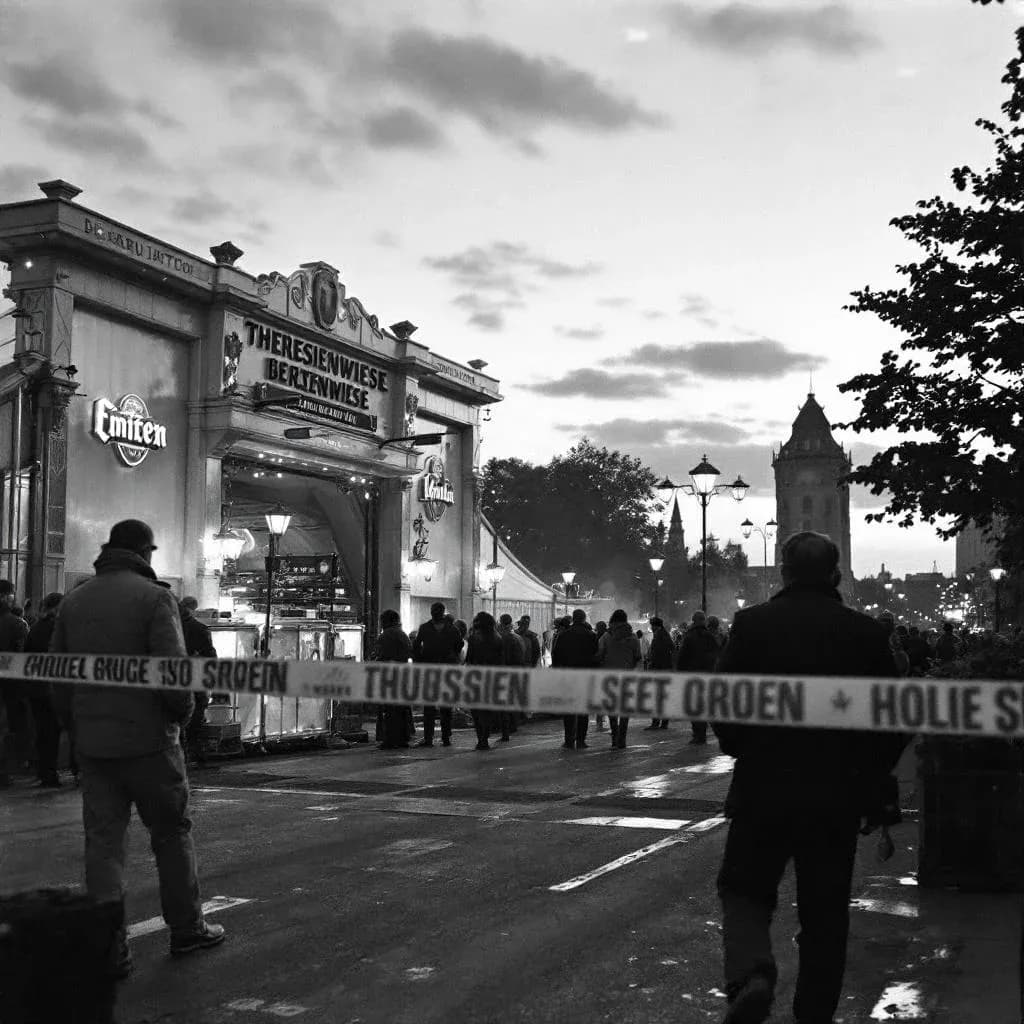
At 10:19 PM on September 26, 1980, a violent explosion detonates at the main entrance to Munich's Oktoberfest. A homemade pipe bomb filled with nails tears apart the entrance and hurls shrapnel through crowds of people who moments earlier were making their way into the festival's attractions.
Thirteen people die at the scene or shortly after—among them 23-year-old Gundolf Köhler from Thuringia, whose identity would later become linked to the attack. Over 210 people are wounded, nearly half of them seriously. It becomes the deadliest terrorist attack in West Germany's history before September 11, 2001.
Among the dead are young people like 17-year-old Claudia, 19-year-old Hans-Werner, and 18-year-old Gabriele—people who had simply come for an evening of entertainment at the world's most famous beer festival. The bomb strikes without warning at a place symbolizing Bavarian joy and apparent safety. The explosion is so violent that body parts are scattered across the entire area.
Connections to Extremist Networks
Gundolf Köhler worked as a carpenter and was a member of the right-wing extremist organization Wehrsportgruppe Hoffmann (WSG)—a paramilitary group led by Karl-Heinz Hoffmann near Bayreuth. Members learned to handle weapons and explosives. According to police investigations, Köhler had acquired precisely the skills he used to construct the bomb.
Police find pamphlets from "Deutsche Aktionsgruppe" (DAG), another right-wing extremist organization, on his body. Authorities immediately classify the attack as right-wing extremism. Köhler's role as bomb maker is quickly established, but questions about masterminds and financing remain unanswered. Witnesses reported his contacts with other WSG members and figures from neo-Nazi circles.
The Investigation Stops Too Soon
By November 28, 1980—just two months after the attack—Munich's prosecutors close the investigation. Their reasoning: Gundolf Köhler acted alone, and there is no evidence of accomplices. This assessment is confirmed the following year—despite Wehrsportgruppe Hoffmann being a known, actively operating organization with tight networks.
WSG is later banned, and its leader Hoffmann is sentenced to five years in prison for illegal weapons possession—but never for any connection to the attack. The link between the organization and the terrorism is never fully investigated. Critics argue that police and prosecutors were blind to the right-wing threat and were more interested in proving the lone-actor theory than in digging deeper into complex connections.
Hope and Renewed Disappointment
In October 2014, the WDR documentary "Das NSU-Aufdeckungsteam" shines new light on the case. New witnesses come forward with information about Köhler's connections to extremist circles, and the Federal Public Prosecutor's Office reopens the investigation.
For the first time since the attack, it seems possible that the full truth might finally emerge after more than three decades. But the hope is short-lived. On October 14, 2020—after six years of renewed investigation—the Federal Public Prosecutor's Office announces its decision: the case is closed again. There is "insufficient suspicion" of other perpetrators involved, the official statement reads. For the families of the victims, it is a devastating blow.
An Unsolved Case Without Closure
Nearly 45 years later, central questions remain unanswered: Who financed the bomb? Who knew about Köhler's plans? Why was an organization like Wehrsportgruppe Hoffmann—known for its dangerous activities—not stopped before tragedy struck?
Official documents speak of a lone-actor crime, but circumstances point to a network that was never fully revealed. The Oktoberfest bombing remains both a warning about the dangers of right-wing extremism and an example of how poorly the investigation proceeded when there was no political will to dig deeper.
The families of the 13 victims still wait for justice—a justice that was denied them long ago.