A Murder Spree Begins
Peter Kürten plunged Düsseldorf into unprecedented terror between November 1929 and May 1930. The killer, born May 26, 1883, murdered at least nine people—small children, teenagers, and adult women. He stabbed, strangled, or bludgeoned his victims to death with a hammer, and in several cases drank their blood directly from their wounds. This macabre method earned him the nickname "The Vampire of Düsseldorf."
The first known victim was five-year-old Maria Wilhelm, whom Kürten killed on November 8, 1929, in the Flehe district with 36 stab wounds. On February 13, 1930, 34-year-old Else Schüller followed, stabbed to death with scissors on Kurfürstenstrasse. Fifteen-month-old Maria Schultze was murdered on May 9, 1930, in Reisholz—her throat was slit and her body buried in a courtyard. The brutality escalated: on August 25, 1930, Kürten killed five-year-old Marie-Luise Lenzen and seriously wounded her 13-year-old sister Gertrud.
A City in Panic
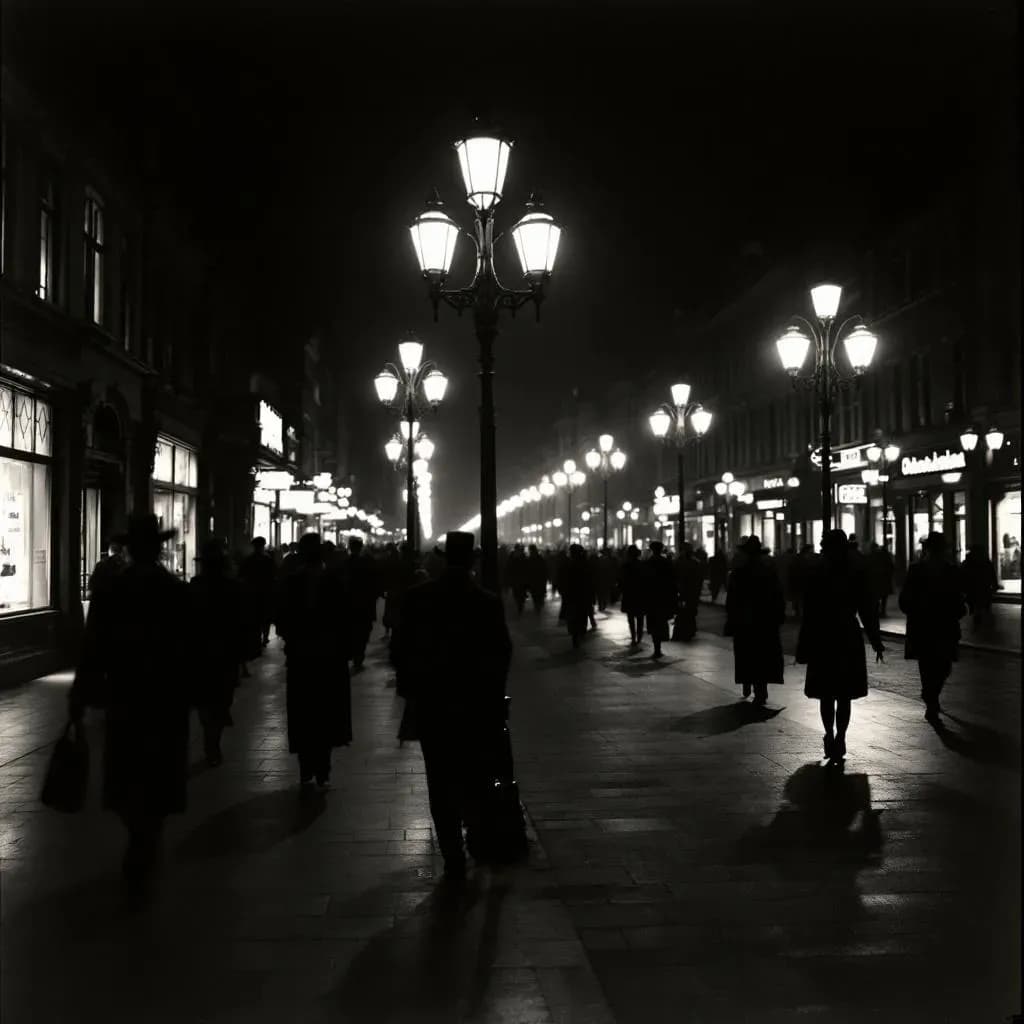
The murder series triggered unprecedented hysteria in Düsseldorf. Lord Mayor Robert Lehr imposed a curfew for children after 6 PM in 1929. Women were afraid to go out at night, and schoolchildren were picked up by armed parents. Authorities offered a reward of 10,000 Reichsmarks—the highest ever posted in Germany.
More than 1,000 newspaper articles were written about the case. The "Kölnische Zeitung" and "Frankfurter Zeitung" reported on May 25, 1930, about the "terrible crime" and the "murderer from Flehe." Prosecutor Adolf Köthe explained during the trial on April 24, 1931: "The crimes put the entire population in fear and terror." The atmosphere from these months would later inspire Fritz Lang's expressionist masterpiece.
Ernst Gennat and the Hunt for the Killer
In November 1929, Ernst Gennat, chief of Berlin's criminal police and later known as "the father of German criminology," was called to Düsseldorf. Gennat introduced modern investigative methods: centralized record-keeping, crime scene photography, and systematic mugshots. He developed a criminal profile based on footprints and tool marks—the hammer as a recurring murder weapon was a key element.
Gennat and his team investigated 900 suspects. In a report from May 25, 1930, he characterized the wanted perpetrator as a "sexually perverted sadist with a history of animal cruelty"—a description that would prove chillingly accurate. Kürten had tortured and killed animals as a child.
The arrest occurred on May 24, 1930, in an unexpected way: Kürten's wife Elisabeth, who had learned of the crimes, approached the police hoping to receive the high reward. Kürten himself had told her about his crimes and pressured her to betray him.
Trial and Execution
From April 13 to 24, 1931, Peter Kürten stood trial in Düsseldorf with Judge Heinrich Nurse presiding. He confessed to a total of 35 crimes, including murder, attempted murder, and sex crimes. The court sentenced him on April 24, 1931, to death by guillotine nine times.
On July 2, 1931, at 6:02 AM, Peter Kürten was executed in Cologne Prison by executioner Karl Gröpler. His last words were: "As soon as the blade falls, I will see whether there is such a thing as nothingness." Psychiatrist Karl Berg, who had extensively examined Kürten, published the book "Der Fall Peter Kürten" the same year, based on official court records.
Cultural Legacy and Fritz Lang's 'M'
Only nine days after the verdict, on May 11, 1931, Fritz Lang's film "M – A City Searches for a Murderer" premiered in Berlin. Lang had been explicitly inspired by the Kürten case—the panic in Düsseldorf, the child murders, the desperate search. In an interview with "Berliner Tageblatt" in 1931, Lang confirmed: "The Vampire of Düsseldorf was the starting point."
The Peter Kürten case became a symbol of the Weimar Republic's fears and had a lasting impact on German criminology. Ernst Gennat's methods became standard, and his book "M – Der Vampir von Düsseldorf" (1931) became a textbook. The name Kürten still stands today as one of the darkest chapters in German criminal history—a monster who murdered in the anonymity of the metropolis and held an entire city hostage.