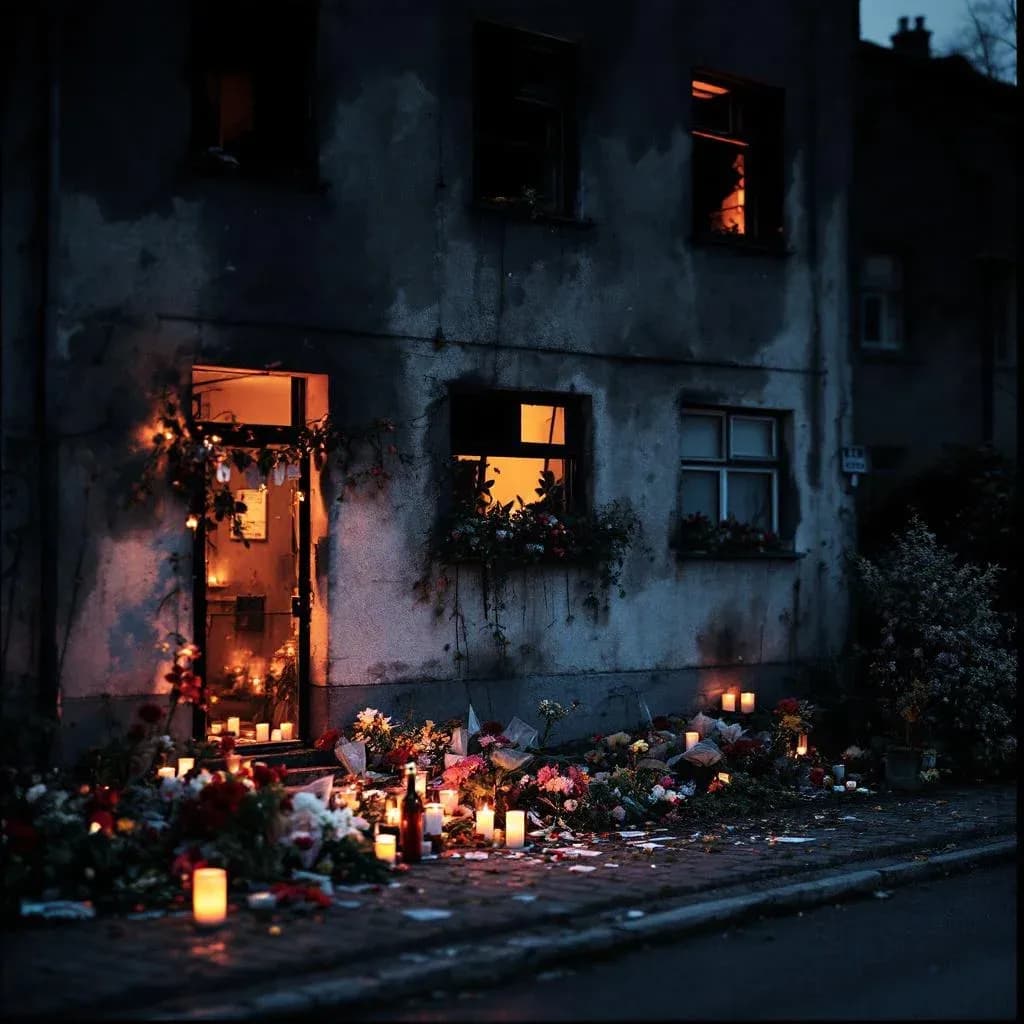
The Attack on Grünewalder Straße
On the night of May 29, 1993, four young far-right extremists set fire to the home of the Turkish Genç family on Grünewalder Straße in Solingen, Germany. The perpetrators doused the building with petrol and ignited it. Five women and girls sleeping in the house were killed in the flames with no chance to escape. The attack occurred during a wave of intense xenophobia that had swept through Germany following the fall of the Berlin Wall.
The perpetrators were radicalized young men from far-right extremist circles who acted out of racist motives. They had planned the attack as a political action targeting people with immigrant backgrounds. Xenophobic violence had surged dramatically in Germany in the early 1990s, accompanied by numerous attacks in cities including Hoyerswerda, Rostock-Lichtenhagen, and Mölln.
The Victims and Their Families
The five women and girls killed belonged to the Genç family, who had lived in Solingen for several years. The attack destroyed not only lives but also the sense of safety felt by many people with immigrant backgrounds throughout Germany. Surviving family members were left to cope with the loss of their loved ones and the physical and psychological trauma of the attack.
The attack triggered nationwide shock and grief. Hundreds of thousands of people took to the streets to demonstrate against far-right extremism and racism. The civil society's response showed that many Germans would not tolerate such crimes.
Investigation and Trial
Police arrested the four perpetrators relatively quickly. The investigation confirmed that the young men came from far-right extremist circles and had planned the attack together. In the trial, they were charged with murder and attempted murder. All were convicted and sentenced to lengthy prison terms reflecting the political motivation behind their actions and the severity of the crime.
However, the investigation faced criticism. Some sources pointed to possible shortcomings in police work, which were later examined. This criticism did not concern the perpetrators' guilt but rather how authorities handled the broader context of far-right violence.
Political and Social Consequences
The Solingen arson attack marked a turning point in German debate over racism and far-right extremism. Politicians were forced to take harder action against right-wing violence and strengthen prevention measures. At the same time, the attack led to intense discussions about asylum rights, resulting in changes to the German constitution—a decision that remains controversial today.
Memory of the attack lives on. Solingen commemorates the victims annually, and the Genç family, despite immeasurable loss, has worked toward reconciliation and dialogue. The case demonstrates the destructive power of hatred and violence and the need to remain vigilant against all forms of racism and extremism.
Solingen's Legacy
More than three decades after the attack, Solingen remains a symbol of the dangers of far-right extremism in Germany. The case is used in civic education as a cautionary example and a reminder that democratic societies must actively combat hatred and violence. The names of the victims and the Genç family's story stand for the human cost of political radicalization.
The Solingen attack was part of a series of xenophobic incidents in the early 1990s that permanently changed Germany. It underscores the importance of taking warning signs seriously and acting against extremist tendencies before they escalate into deadly violence.