True crime news logo
  • Krimidex

Sign up for our newsletter and get the latest stories

Never miss the latest true crime news, reviews and top lists — plus new podcasts, series, films and books.

You can unsubscribe with one click from any email.

True crime news logo

The international true crime destination. Cases, documentaries, podcasts and travel routes.

© 2026 truecrime.news. All rights reserved.

Sagsmappe

How a Mexican Cartel Controlled 40% of U.S. Cocaine—Then Vanished

The rise and fall of the Tijuana Cartel: A cautionary tale of vertical integration in the drug trade
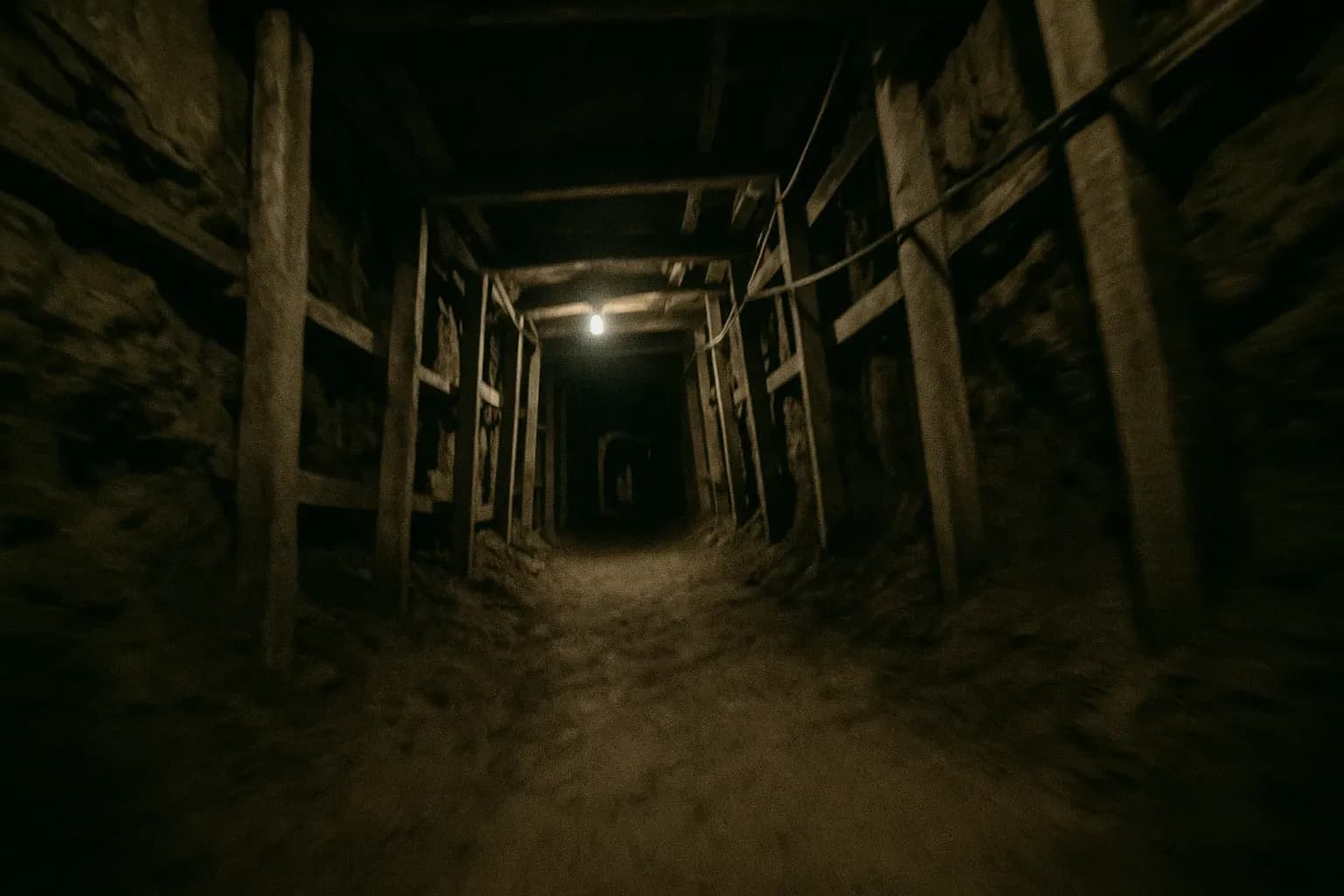
A dimly lit, clandestine tunnel beneath the U.S.-Mexico border, its walls lined with makeshift structural supports and trampled paths, symbolizes the Tijuana Cartel's smuggling operations and underground empire.
BEVIS

Sagsdetaljer

Quick Facts

Klassifikation:

Drug lord
Cartel
Violence
Mexico
USA
California
Corruption

The Tijuana Cartel operated one of the most sophisticated and ruthless drug-trafficking networks in North American history. Founded and controlled by Mexico's Arellano-Félix family, the organization grew from a regional smuggling operation into a transnational cocaine empire that at its peak controlled an estimated 40 percent of all cocaine entering the United States.

The cartel's headquarters in Tijuana, Baja California—a city directly across the border from San Diego, California—provided a geographic advantage that few criminal organizations could match. This proximity to the world's largest cocaine consumer market allowed the Arellano-Félix family to establish what law enforcement and criminologists call "vertical integration": complete control over the supply chain from production through distribution. Unlike competitors who relied on middlemen or external suppliers, the Tijuana Cartel managed cultivation, manufacturing, transportation, and street-level sales independently. This monopolistic model made the organization extraordinarily profitable and difficult to disrupt through traditional interdiction methods.

At its height during the 1990s, the cartel's influence extended across California and Nevada, with operations reaching into major cities from San Diego to Los Angeles. The organization trafficked not only cocaine but also marijuana, heroin, and methamphetamine in multi-ton quantities. Beyond narcotics, the cartel engaged in kidnapping, extortion, and contract killing—activities that generated revenue and enforced territorial control through terror.

The organization's willingness to target anyone perceived as a threat—including journalists, civilians, and law enforcement—earned it a fearsome international reputation. In one documented incident, cartel operatives ordered the execution of 18 people in the coastal city of Ensenada on a single day in 1998, a massacre that illustrated the organization's capacity for mass violence and its indifference to civilian casualties.
Domestic violence
Human trafficking
Money
Shooting
Unsolved case
Trial
fentanyl
Sagsstatus
Løst
Sted
Tijuana, Baja California, Mexico

A critical structural weakness, however, would eventually hollow out the cartel's power. By the early 2000s, internal disputes emerged over the organization's approach to violence and kidnapping. While some faction leaders, notably Sánchez Arellano, advocated for reducing kidnappings to lower law enforcement pressure, rivals like García Simental rejected restraint entirely. This ideological split fractured the organization's unity at a moment when it faced increasing competition from the Sinaloa Cartel, a rival organization based in northwestern Mexico.

The decisive blow came in 2006, when Sinaloa Cartel forces launched a major incursion into Baja California. The invasion exploited the Tijuana Cartel's internal divisions and superior military organization. Within months, key leaders of the Arellano-Félix family either died in gunfights with police or were arrested. Ramón Arellano Félix, one of the family's most ruthless commanders, was killed in a shootout in Mazatlán in 2002—a symbolic defeat that signaled the cartel's declining power.

By 2020, the Tijuana Cartel had fragmented into scattered, localized cells with no capacity to challenge regional rivals. The organization that once controlled nearly half of America's cocaine supply had been reduced to a fraction of its former reach. The Sinaloa Cartel assumed control of most territories the Arellano-Félix organization had previously dominated.

The Tijuana Cartel's collapse illustrates a paradox in transnational organized crime: vertical integration creates short-term profitability and power but can also create organizational brittleness. When leadership is concentrated and internal discipline breaks down, the entire structure becomes vulnerable. The cartel's history also demonstrates that in the modern drug war, market share and territorial dominance are fleeting—today's kingpin is tomorrow's footnote.

For policy makers and law enforcement agencies worldwide, the case remains instructive: cartels that rely on extreme violence to manage internal disputes and deter rivals often accelerate their own decline by attracting international intervention and destabilizing their criminal ecosystems.

Timeline

1 January 1989

Gründung des Tijuana-Kartells

Die Arellano-Félix-Familie etabliert das Kartell in Tijuana, Baja California, an der strategisch wichtigen Grenze zu den USA.

8 November 1992

Massaker im Lido-Nachtclub

Bei einem brutalen Angriff in Guadalajara werden drei Journalisten und mehrere Zivilisten getötet – ein Zeichen der Rücksichtslosigkeit des Kartells.

1 January 1995

Höhepunkt der Macht

Das Tijuana-Kartell kontrolliert etwa 40 Prozent des gesamten in den USA vertriebenen Kokains und beherrscht die gesamte Produktionskette.

1 January 2006

Invasion durch das Sinaloa-Kartell

Das Sinaloa-Kartell beginnt eine großangelegte Offensive in Baja California. Die Arellano-Félix-Brüder verlieren zunehmend an Macht.

1 January 2020

Komplette Machtverschiebung

Das Sinaloa-Kartell kontrolliert mittlerweile den Großteil der ehemaligen Territorien des Tijuana-Kartells. Die Arellano-Félix-Ära ist endgültig beendet.

Read more

A figure resembling El Chapo stands in front of a deep, dimly lit tunnel, symbolizing the infamous 2015 prison escape.
Case

El Chapo: From Prison Escapes to Life Behind Bars

A figure resembling Osiel Cárdenas Guillén stands in front of a map of Mexico with marked routes, surrounded by cartel members in a dimly lit room, symbolizing the Gulf Cartel's network and influence.
Case

Four Americans Kidnapped by Gulf Cartel in Mexico

Bardstown reveals dark secrets
Podcast

Five Unsolved Murders Reveal Bardstown's Dark Reality

Related Content
A figure resembling El Chapo stands in front of a deep, dimly lit tunnel, symbolizing the infamous 2015 prison escape.

El Chapo: From Prison Escapes to Life Behind Bars

A figure resembling Osiel Cárdenas Guillén stands in front of a map of Mexico with marked routes, surrounded by cartel members in a dimly lit room, symbolizing the Gulf Cartel's network and influence.

Four Americans Kidnapped by Gulf Cartel in Mexico

Bardstown reveals dark secrets

Five Unsolved Murders Reveal Bardstown's Dark Reality

COPS provokes: Police routine and ethical gray areas

How Reality TV Shaped Policing: The COPS Legacy Beyond America

Advertisement
SS

Susanne Sperling

Se alle artikler →
Del dette opslag: