Bernd W. Trier
Kriminalist und Profiler der deutschen Justiz
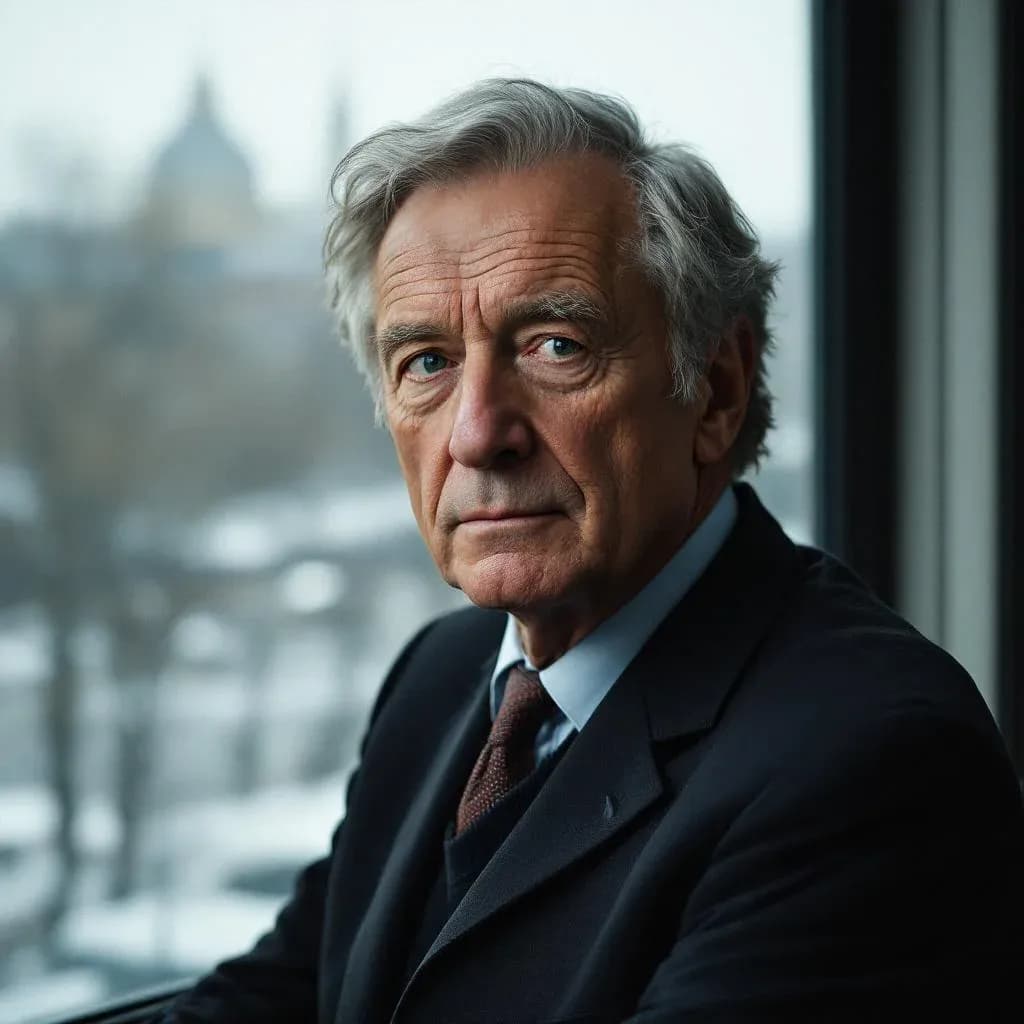
Kriminalist und Profiler der deutschen Justiz
Who is Bernd W. Trier?
Bernd W. Trier is one of the most prominent criminologists and criminal profilers in the German-speaking world. His career spans several decades, during which he has worked as an expert witness, consultant and investigator on some of Germany's most significant criminal cases. Trier is regarded as a pioneer of psychological profiling within the German justice system, and his innovative approach to violent crime has had a lasting impact on both the understanding of such offences and the methods used to investigate them.
Career and background
Over the course of his long career, Trier established himself as a sought-after expert in the analysis of serious violent crime. His methods drew on a combination of investigative experience, psychological expertise and empirical analysis of offender profiles. In contrast to the popular depictions of profiling found in television dramas, Trier's approach is grounded in systematic casework and scientific standards.
His work extended beyond direct investigative support to include the training and professional development of police officers in modern investigative techniques. Trier played a significant role in integrating psychological and behavioural science insights into the routine work of law enforcement agencies.
Most notable cases
Bernd W. Trier has been involved in solving a number of high-profile cases. His expertise was called upon particularly in the analysis of serial killers and sexual offenders. A defining feature of his work was his ability to construct psychological profiles from the methods used to commit offences — profiles that pointed investigators in the right direction. The specific cases are in some instances subject to data protection and confidentiality requirements, but his involvement in serial murder cases has been referenced in various documentaries.
Methodological innovations
Trier's approach to the analysis of violent crime differed fundamentally from older, purely statistical methods. He brought together psychological theory, behavioural analysis and forensic findings into a holistic analytical framework. His work was built on the conviction that every offence, through its specific staging, reveals something about the person who committed it.
By analysing patterns in the way crimes were carried out, Trier was frequently able to make observations about the psychosocial characteristics of offenders — their impulsivity, their fantasies, their social skills, and their likely professional and personal circumstances. These insights enabled investigators to deploy search operations more precisely and to evaluate suspects more efficiently.
Publications and media presence
Bernd W. Trier has made his mark not only through hands-on investigative work, but also through publications and lectures that have contributed to the professionalisation of criminology. His analyses have been published in specialist journals and his methods have been taught at police academies. He has appeared as an expert in various documentaries and true crime productions, explaining the background and principles of criminal profiling to a broad audience.
Trier's public profile has grown alongside German true crime productions, in which his case analyses and his deep understanding of criminal behaviour have been documented. His analytical approach has frequently offered fresh perspectives on cases that seemed otherwise unsolvable.
Legacy and influence
Bernd W. Trier is regarded within German criminology as a trailblazer of modern investigative methods. His influence continues to this day in the training of criminal investigators and forensic psychologists. The integration of psychological profiling into police work is now standard practice across European law enforcement agencies — a legacy that owes a significant debt to Trier's pioneering efforts.
His critical thinking and his scepticism toward superficial investigations helped bring many cases back under scrutiny or ensured they were examined more thoroughly from the outset. Throughout his career, Trier has consistently emphasised that forensic psychology is not a form of magic, but a structured, methodical discipline rooted in scientific principles.


