Alføred Hinds: førom Jewel Heist to Legendary Escapes
Sagsdetaljer
Quick Facts
Quick Facts
Nottingham 1955: Hinds's first escape sparks legend
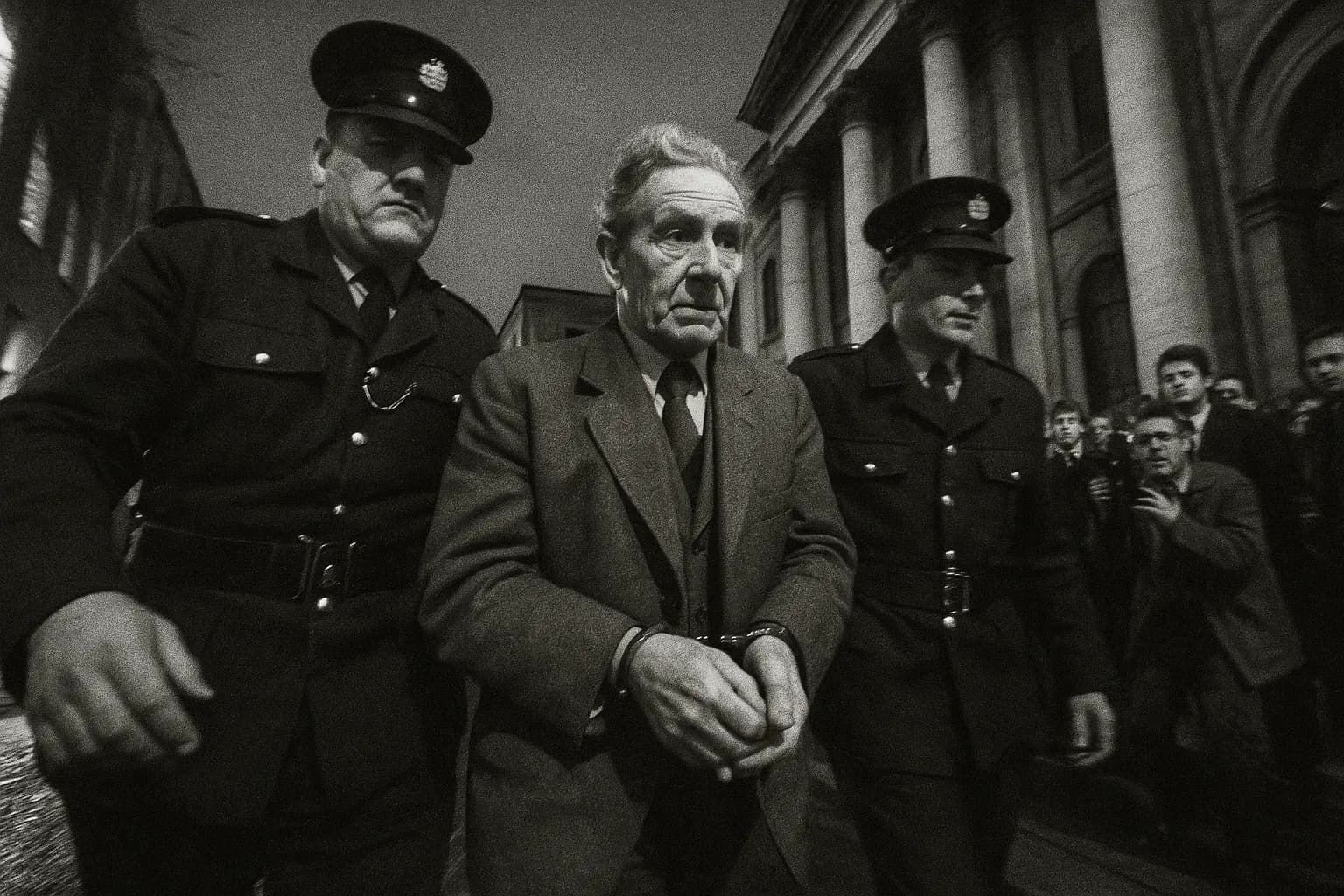
On a cold November day in 1955, Alfred George Hinds, known for his thick glasses and his insistence on innocence, faced the imposing six-metre-high wall of Nottingham Prison. He was serving a 12-year sentence for a jewel heist, a crime he adamantly denied. But for Hinds, this was not the end. It was the beginning of a spectacular battle against the British justice system and a life on the run that would soon make him a living legend in Britain – known as 'Houdini Hinds'. His first, daring escape from Nottingham Prison marked the start of a series of sensational evasions and a legal feud with Scotland Yard itself.
From London to crime: Hinds's early escape path
However, the historic tale of Alfred George Hinds's tireless struggle began long before the walls of Nottingham. Born in 1917 in London's Newington Butts district, his childhood was marked early by tragedy; his father died when Alfred was just seven years old, after receiving lashes as punishment. Hinds grew up in a children's home where abuse was rampant, and at the young age of seven, he made his first escape from there. His early career in crime started with petty thefts but quickly escalated. As a teenager, he already demonstrated his remarkable escape abilities by breaking out of a Borstal institution for young offenders.
The 1953 heist: £38,000, trial, and 12-year sentence
During the Second World War, Alfred George Hinds served in the British Army but deserted after the war and resumed his criminal career. Fate caught up with him in September 1953. He was accused of a daring jewel heist: the theft of jewellery worth £38,000 – over a million pounds today – from Maple's store on Tottenham Court Road in London. The subsequent trial developed into a high-profile case. Hinds was sentenced to 12 years in prison, a sentence he vehemently protested, maintaining his innocence. The case was surrounded by controversy; five of his witnesses were dismissed by the court, and the only tangible evidence – traces of explosives on his hands – was explained by the defence as due to his work as a construction worker.