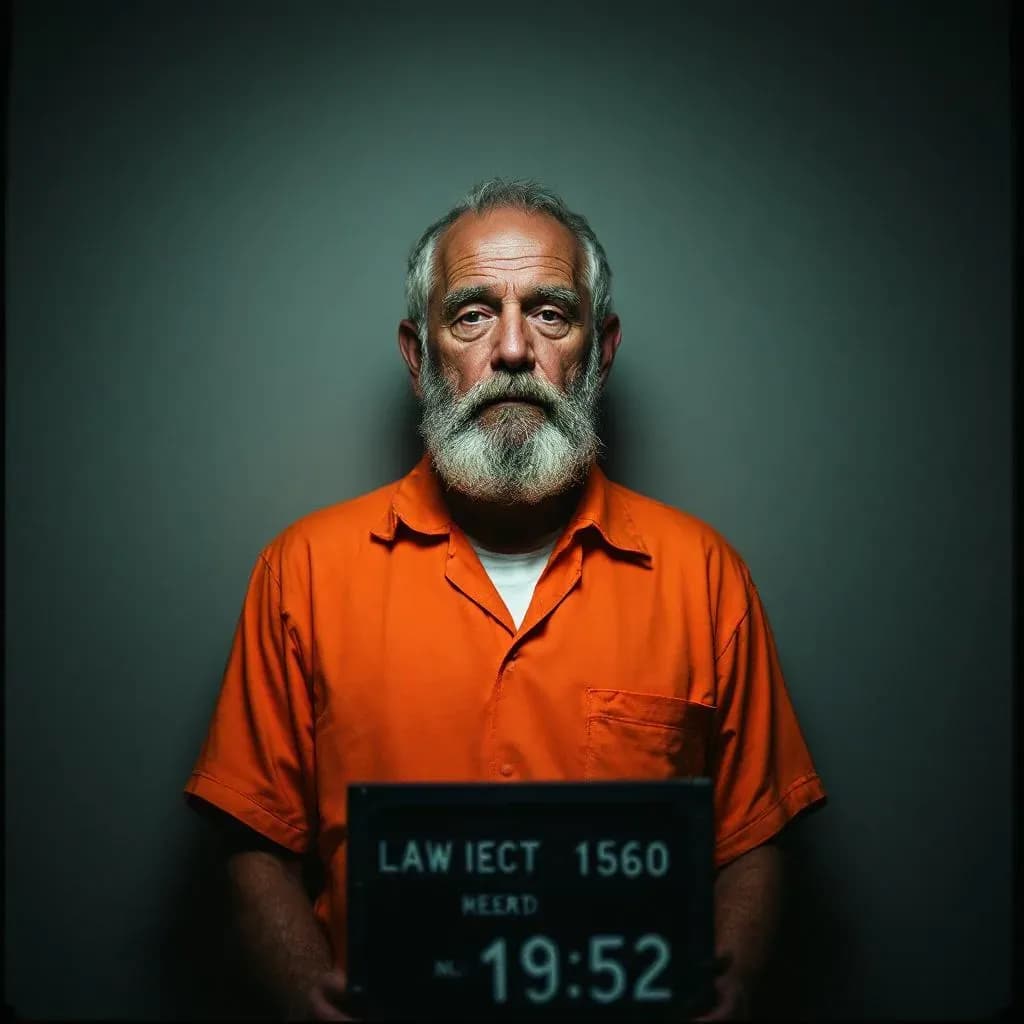
The Fundamentalist Church of Jesus Christ of Latter-Day Saints (FLDS) represents one of the most documented cases of religious cult control in modern America—a case that has drawn international scrutiny for its systemic abuse of children and women operating largely undetected across state lines.
Netflix's "Keep Sweet: Pray and Obey," which premiered in June 2022, brought the FLDS story to global audiences with unprecedented detail. The documentary series, produced by Rachel Dretzin and Grace McNally, chronicles how the organization—a breakaway sect from mainstream Mormonism—operated as a closed society where religious authority became a tool for exploitation.
At the center of this dark history stands Warren Jeffs, who rose to leadership of the FLDS and orchestrated a system of control so complete that thousands of members, including children, had no viable means of escape. Jeffs was eventually convicted of serious crimes against children and sentenced to life imprisonment. His conviction marked a turning point in U.S. religious freedom law, establishing that First Amendment protections cannot shield child abuse disguised as religious practice.
What makes the FLDS case particularly significant for international observers is how it reveals the mechanics of authoritarian control within democratic societies. Unlike cult cases in more authoritarian nations, the FLDS operated in the United States with nominal oversight, exploiting the country's protections for religious groups and decentralized law enforcement.
The documentary features two critical voices: Rebecca Musser and Elissa Wall, both survivors who escaped the sect and later testified against Jeffs. Their accounts detail practices that shock viewers in jurisdictions with strong child protection frameworks: child brides, forced marriages, systematic isolation, and financial exploitation. For Scandinavian and European audiences accustomed to robust child welfare systems, the FLDS story illustrates how vulnerable children can become when state oversight is fragmented or delayed.
Musser and Wall describe how the FLDS constructed an entire reality within its compounds in Arizona, Utah, and Texas. Members were taught that leaving the sect meant eternal damnation. Education was limited. Information from the outside world was controlled. Women had no financial independence. These isolation tactics—now recognized in international cult studies as core coercive control mechanisms—proved devastatingly effective across decades.
The FLDS case also demonstrates how religious movements can fragment yet persist. Following Jeffs' 2006 arrest and subsequent imprisonment, the organization splintered into competing factions, each claiming legitimacy through Jeffs' authority or claiming he had "corrupted" the original doctrine. This fragmentation has spawned what law enforcement describes as splinter cults potentially more dangerous than the original organization.
A newer Netflix documentary, "Trust Me: The False Prophet" (2026), focuses on Sam Bateman, described as an FLDS successor figure who emerged after Jeffs' incarceration. This continuation of the story illustrates a critical pattern: the removal of a cult leader does not automatically dismantle the infrastructure of control. Power vacuums within cultic organizations can produce competing prophets, each claiming divine authority and perpetuating abusive systems.
For international true crime audiences, the FLDS documentaries serve as a case study in how modern societies fail vulnerable populations even with legal frameworks in place. The sect operated for decades before meaningful federal intervention. Local law enforcement in Utah and Arizona faced political pressure from communities with deep ties to polygamist movements. State boundaries allowed the organization to relocate members beyond pursuing jurisdictions.
The documentaries also highlight the role of survivors in dismantling cult authority. Musser, Wall, and other former members provided testimony that courts ultimately found credible, despite defense arguments rooted in religious freedom. Their willingness to break silence—often at great personal cost—became the mechanism through which state power finally intervened.
Today, the FLDS case remains influential in international discussions about cult prevention, children's rights, and the limits of religious autonomy. It serves as a reference point for policymakers in democracies worldwide examining how to balance religious freedom with child protection.