Poisoning
The calculated crime – from covert administration to forensic discovery
Poisoning in true crime: The hidden, calculated murder method. Understand the motives, the cunning methods, and the difficult art of investigation.
The calculated crime – from covert administration to forensic discovery
Poisoning in true crime: Hidden and calculated methods
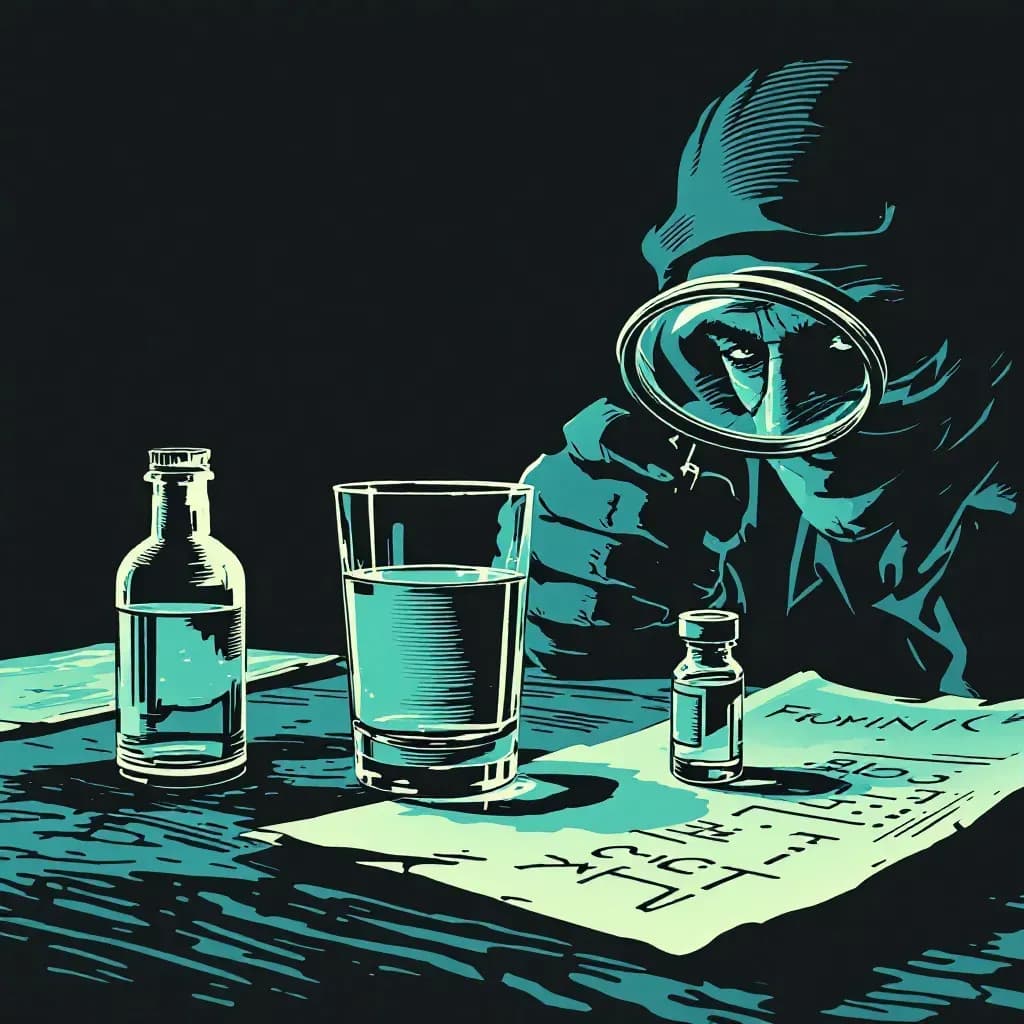
In true crime, poisoning refers to the intentional and often secretive act where a perpetrator administers a toxic substance to a victim with the intent to cause serious harm or death. This type of criminal act is particularly insidious as it is typically carried out covertly, often over time, and the victim may be unaware of the danger they are exposed to until symptoms become severe or fatal. This makes poisoning one of the most calculated and unsettling forms of murder. The methods of administering poison can range from commonly available substances like rat poison or household chemicals to rarer and more difficult-to-trace toxins, reflecting the perpetrator's meticulous planning and often in-depth knowledge of the victim's habits.
Motives behind poisoning: Greed to revenge struggles
The motives behind poisoning as a crime are wide-ranging and can include financial gain, such as insurance fraud or inheritance, eliminating a rival, revenge, or a perverse desire for control and power over the victim. Since poisoning rarely leaves clear external signs of violence, a death may initially be mistakenly attributed to natural causes or illness. This places significant demands on both police investigations and especially forensic pathologists, who must be alert to subtle signs and initiate comprehensive toxicological analyses to uncover the toxic substance used and its origin. Linking the perpetrator to the procurement and administration of the poison is often the central challenge in solving these complex criminal cases.
When trust kills: Psychological horror and forensics
Poisoning cases hold a special place in true crime narratives as they often involve a deep personal betrayal, where the perpetrator is typically someone close to the victim – a spouse, a family member, or a close friend. The slow, insidious nature of many poisoning cases, where the victim's health gradually deteriorates, adds an element of psychological horror. Understanding poisoning as a serious crime underscores the importance of thorough death investigations and the continuous advancements in forensic medicine and toxicology. These advancements are crucial for achieving justice in cases where the ultimate criminal act is committed in utmost secrecy, and where the investigation of this type of crime requires specialized knowledge.
Did this insight into poisoning pique your interest? Explore cases of cold-blooded financial gain and deep personal betrayal. Delve into real-life cases of poisoning – find our exciting cases below.