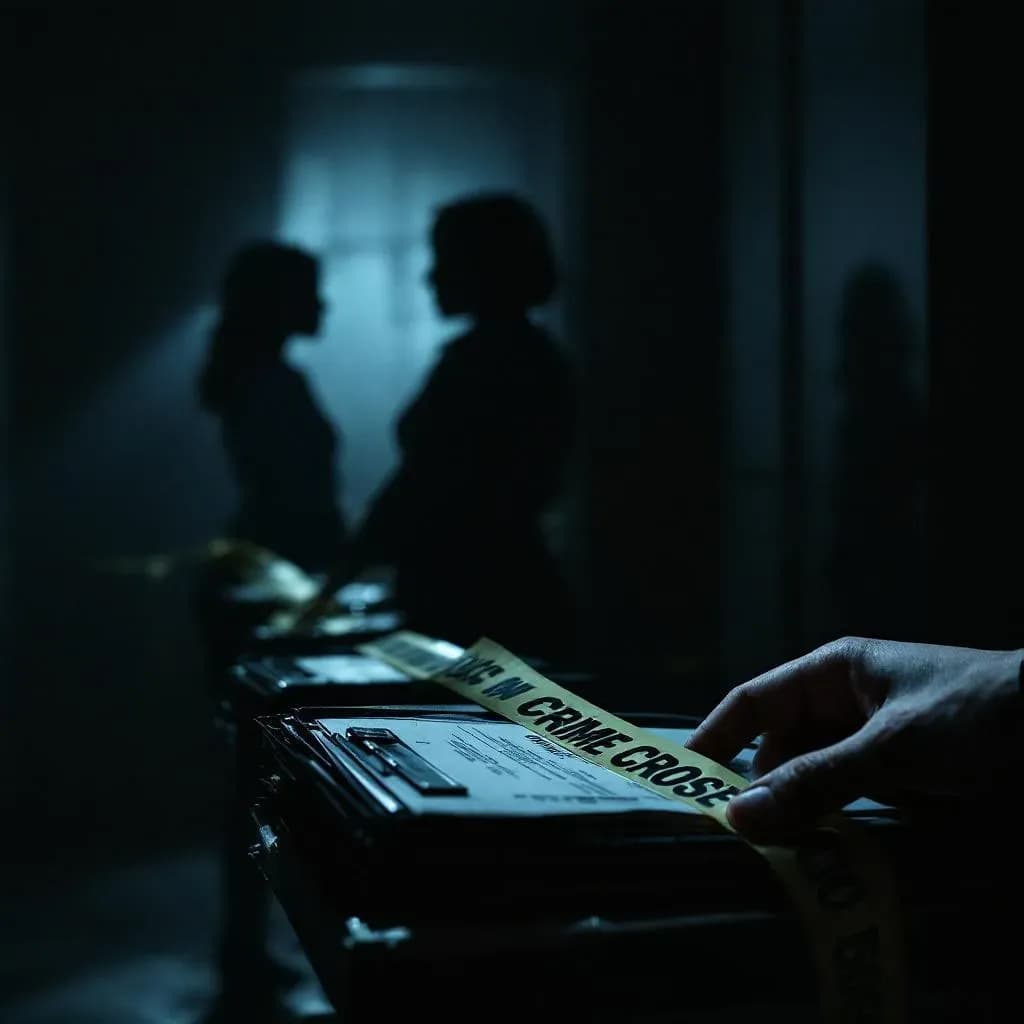
The 10 Best True Crime Documentaries About Female Killers
True crime documentaries about female killers offer a disturbing yet fascinating examination of women who defy society's nurturing stereotypes to commit murder, providing essential viewing for anyone seeking to understand the darker complexities of criminal psychology and gender. While female killers represent only 10-15% of all murderers, their cases often involve unique motivations, methods, and media narratives that distinguish them from their male counterparts, making these documentaries crucial for understanding the full spectrum of violent crime.
The Most Compelling Female Killer Documentaries
1. Aileen: Life and Death of a Serial Killer (2003) - Nick Broomfield's haunting follow-up to his 1992 documentary chronicles the final days of Aileen Wuornos, America's most notorious female serial killer who murdered seven men in Florida between 1989-1990. The film captures Wuornos's deteriorating mental state on death row, her execution in 2002, and raises profound questions about justice, mental illness, and abuse. Broomfield's unprecedented access reveals a complex portrait of a woman shaped by childhood trauma, prostitution, and a criminal justice system many believe failed her, making this HBO documentary essential viewing for understanding female serial killers.
2. Mommy Dead and Dearest (2017) - This HBO documentary unravels the shocking Gypsy Rose Blanchard case, where a seemingly disabled daughter orchestrated her mother Dee Dee's murder in 2015 after years of Munchausen syndrome by proxy abuse. Director Erin Lee Carr masterfully presents surveillance footage, Facebook posts, and interviews that expose how Dee Dee fabricated illnesses, forced unnecessary surgeries, and imprisoned Gypsy in a web of medical lies. The documentary sparked national debate about victimhood versus culpability when Gypsy convinced her online boyfriend to stab her mother to death, ultimately receiving a 10-year sentence while he got life in prison.
3. Crazy, Not Insane (2020) - Oscar-winning director Alex Gibney explores forensic psychiatrist Dr. Dorothy Otnow Lewis's groundbreaking research into the minds of murderers, featuring extensive analysis of female killers including insights into dissociative identity disorder and childhood trauma. The HBO documentary presents Lewis's 40-year career examining death row inmates, including her evaluation of Aileen Wuornos, challenging conventional notions of evil versus mental illness. Through brain scans, interview footage, and Lewis's detailed case notes, the film argues that severe abuse and neurological damage create killers, offering a scientific lens that reframes how we understand women who murder.
4. Poisoned: The Killer Caregiver (2022) - This three-part Netflix series examines the chilling case of Charles Cullen, a male nurse who killed up to 400 patients, but dedicates significant focus to similar female "angel of death" nurses including Kristen Gilbert and Genene Jones. The documentary reveals how the healthcare system's institutional failures enabled these caregivers to murder vulnerable patients across multiple facilities for decades. Through survivor testimony and whistleblower accounts, the series exposes the gendered assumptions that allowed female nurses particularly to evade suspicion, as their nurturing profession provided perfect cover for serial killing that went undetected for years.
5. Jodi Arias: An American Murder Mystery (2018) - This three-part Investigation Discovery series meticulously reconstructs the 2008 murder of Travis Alexander by his ex-girlfriend Jodi Arias, who stabbed him 27 times, slit his throat, and shot him in the head. The documentary features trial footage, interrogation videos where Arias's lies unravel, and expert analysis of her shifting narratives from denial to self-defense claims. The case became a media sensation due to explicit sexual details, thousands of text messages, and Arias's bizarre behavior including TV interviews from jail, ultimately resulting in her 2013 conviction and life sentence without parole.
6. Women Who Kill (2020) - Channel 5's British documentary series examines multiple cases of female murderers including Joanna Dennehy, who killed three men in 2013 and became only the third woman in UK history to receive a whole-life prison term. Each episode combines interviews with investigators, psychologists, and journalists to explore what drives women to commit extreme violence. The series distinguishes itself by analyzing statistical patterns showing women typically kill intimates and use poison or other "quieter" methods, while rare cases like Dennehy's sadistic knife attacks challenge every assumption about female criminality and violence.
7. The Staircase (2004-2018) - Jean-Xavier de Lestrade's award-winning documentary follows Michael Peterson's trial for allegedly murdering his wife Kathleen, who died from head trauma at the bottom of their staircase in 2001. While Peterson is male, the series gained renewed attention when prosecutors revealed he was also present when family friend Elizabeth Ratliff died identically in Germany in 1985, and when daughter Martha's allegations emerged. The 13-episode series spans 16 years, including Peterson's conviction, appeal, Alford plea, and raises questions about forensic evidence, prosecutorial misconduct, and reasonable doubt that have captivated true crime audiences worldwide on Netflix.
8. Deadly Women (2005-2021) - This Investigation Discovery series profiles three female killers per episode across 14 seasons, examining over 500 women who murdered spouses, children, strangers, or rivals throughout history and across cultures. Narrated by Candice DeLong, a former FBI profiler, each segment combines dramatic reenactments with expert psychological analysis explaining motives from jealousy and greed to revenge and mental illness. The series categorizes killers into archetypes—black widows, angels of death, revenge killers—providing a comprehensive education on female homicide patterns that distinguishes it from single-case documentaries through its encyclopedic scope and comparative analysis.
9. Love You to Death (2019) - This Lifetime movie-documentary hybrid dramatizes the Gypsy Rose Blanchard case with additional documentary segments featuring legal experts, medical professionals, and journalists who covered the 2015 murder. The production explores Munchausen syndrome by proxy in depth, showing how Dee Dee Blanchard convinced doctors, charities, and neighbors that Gypsy had leukemia, muscular dystrophy, and brain damage despite being healthy. The film examines the online relationship between Gypsy and Nicholas Godejohn that led to premeditated murder, the discovery of Dee Dee's body, and the trial that divided public opinion on whether Gypsy was victim or villain.
10. Female Serial Killers: The Untold Story (2023) - This documentary series available on major streaming platforms analyzes history's most prolific female serial killers including Aileen Wuornos, Dorothea Puente, and lesser-known cases like Miyuki Ishikawa, a Japanese midwife who killed over 100 infants in the 1940s. Criminal psychologists and historians provide context showing female serial killers often kill for profit rather than sexual gratification, target vulnerable victims like children or elderly under their care, and evade capture longer than men due to gender biases in law enforcement. The series challenges true crime's male-dominated narrative by demonstrating women's capacity for calculated, repeated violence across different cultures and time periods.
Why Female Killer Documentaries Matter
These documentaries serve crucial functions beyond entertainment, challenging gender stereotypes that assume women are inherently less violent while exposing how these same assumptions allow female killers to operate undetected for years. The cases reveal patterns in childhood abuse, mental illness, and systemic failures that create murderers regardless of gender, offering insights valuable to law enforcement, mental health professionals, and society at large. By examining women who kill, these films force uncomfortable questions about victimhood, accountability, and the complex intersection of trauma and choice that defines the most disturbing criminal cases in modern history.