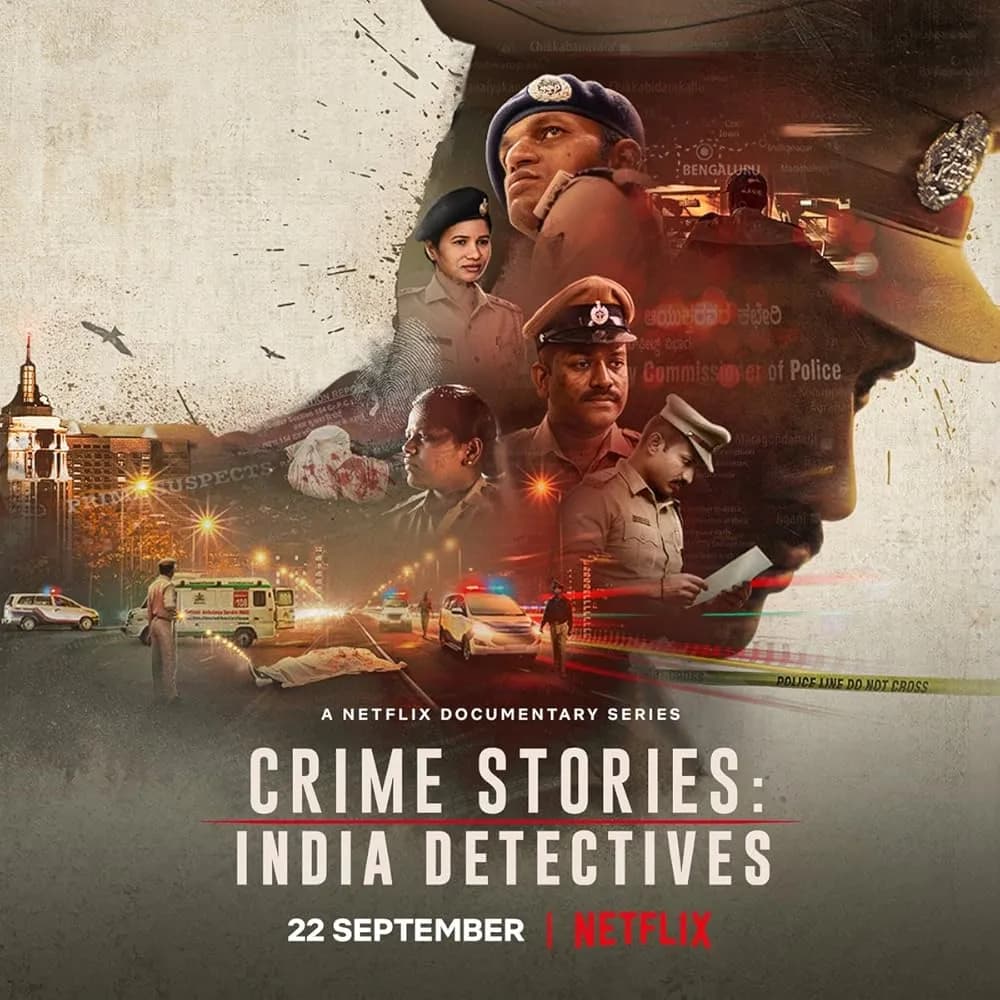
When Netflix premiered 'Crime Stories: India Detectives' on September 22, 2021, it offered something relatively uncommon in international true crime programming: an unfiltered look at how police in India's technology hub actually investigate serious violent crime.
The four-episode documentary series follows detectives from Bengaluru City Police as they work through three murder cases and one kidnapping that surfaced in early 2020—the moment before COVID-19 disrupted investigative work worldwide. Unlike many true crime productions that reconstruct cases retrospectively, this series embedded filmmakers within active investigations, capturing the procedural reality of Indian policing.
## Access and Methodology
Directors N Amit and Jack Rampling, alongside producer Claire Cahill from UK-based Minnow Films, gained rare institutional access to follow investigations led by Deputy Commissioner of Police N. Shashi Kumar and his team, including Sub Inspector Roopa K.S., Police Inspector Gopala Nayak, and others across various ranks. The decision to retain the original Kannada language—the regional language of Karnataka state—distinguished it from Anglicized crime content, grounding the series in local authenticity rather than retrofitting narratives for Western audiences.
For international viewers unfamiliar with Indian police hierarchy, the series inadvertently becomes a primer on institutional structure. India's police system differs significantly from Scandinavian models: it operates under a colonial-era framework inherited from British administration, with layers of authority that can slow decision-making. Bengaluru City Police, covering India's fifth-largest city and global tech capital, manages crime patterns ranging from organized trafficking to crimes of passion—a complexity rarely depicted in English-language media.
## Critical Reception and Reach
The series achieved a 71 percent rating on Rotten Tomatoes based on seven reviews, suggesting critical appreciation despite limited mainstream coverage. Its TV-MA rating reflected the graphic nature of the crimes depicted—an important consideration given that Indian content often faces stricter domestic censorship standards, making this series' international release noteworthy.
What made this documentary distinctive was its timing. By documenting cases from early 2020, it captured investigative work before pandemic-related lockdowns fundamentally altered how Indian police could conduct field work, witness interviews, and forensic procedures. The cases were already solved by premiere, giving the narrative closure rather than the cliffhanger format common in true crime.
## The Broader Context
International true crime programming has long centered on Anglo-American and Western European systems. Series like Denmark's 'Midnight Murders' or Sweden's crime dramas have given Nordic audiences insight into their own justice systems, while global audiences see these as models of efficiency and fairness. By contrast, Indian procedurals remain underrepresented, leaving a knowledge gap about how the world's largest democracy by population handles serious crime investigation.
India faces distinct investigative challenges: limited forensic infrastructure in many jurisdictions, language barriers across its 22 official languages, witness intimidation in certain communities, and resource constraints that differ from Scandinavian policing. The Bengaluru force, being better-resourced than many Indian departments, still operates under these broader constraints.
## Why One Season Remains
Despite its novelty value, the series has not returned for additional seasons. No announcement of Season 2 has emerged as of 2025, suggesting either insufficient viewership metrics or difficulty negotiating continued police access. This limitation is itself revealing: securing institutional cooperation for documentary filmmaking in Indian policing remains complicated by bureaucratic processes and political considerations in ways that differ from access negotiations in Western democracies.
For true crime audiences accustomed to endless procedural content, 'Crime Stories: India Detectives' offered a brief but genuine glimpse into how investigation actually functions in a non-Western context. Its incompleteness—four episodes, one season, then silence—perhaps reflects the broader challenge of sustaining international attention on crime stories outside familiar frameworks.