Israel Keyes was an American serial killer, rapist, bank robber, burglar, arsonist, and kidnapper. Born on January 7, 1978, in Richmond, Utah, Keyes led what appeared to outsiders as an unremarkable life — working as a contractor and living in various parts of the United States — while allegedly concealing a years-long campaign of violent crime. He died on December 1, 2012, by suicide while awaiting trial, leaving investigators with a case file full of unanswered questions.
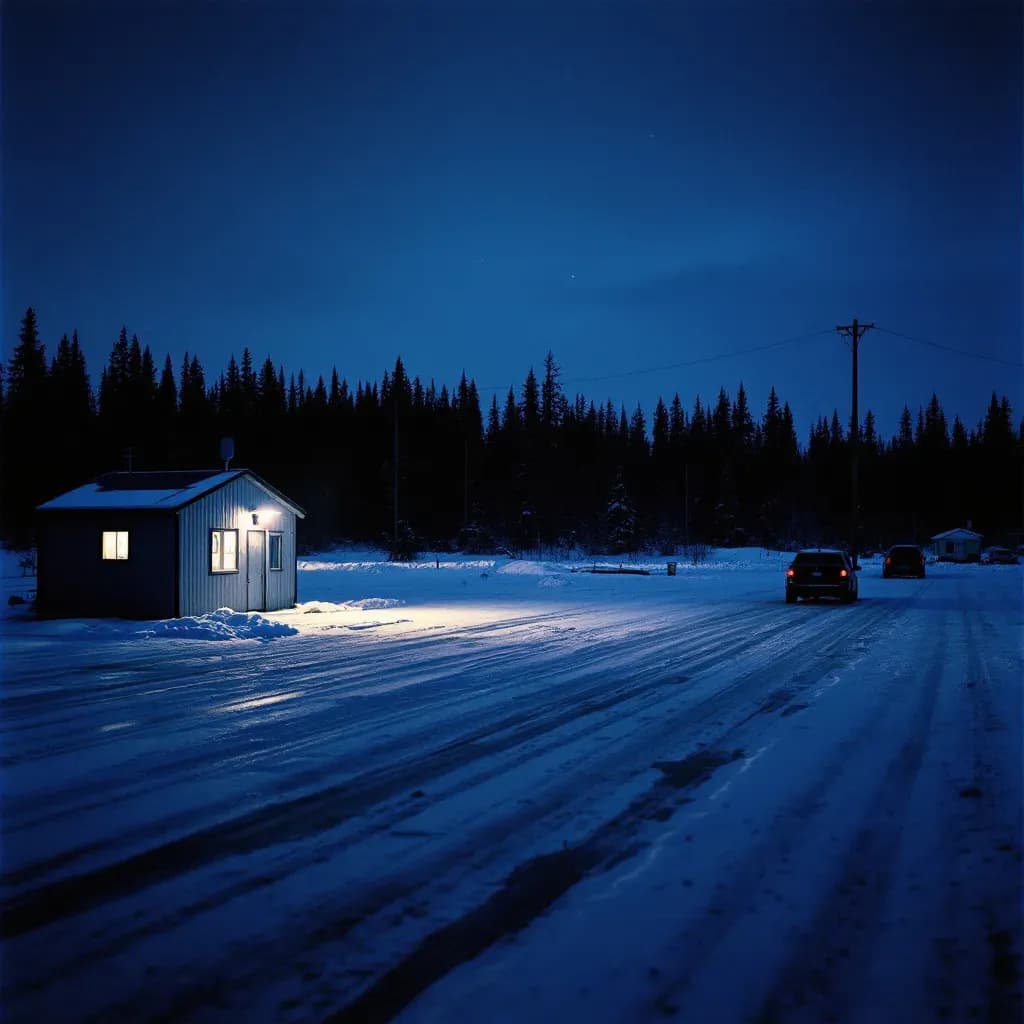
Keyes is notable not only for the breadth of his crimes but for the extraordinary degree of planning and discipline he brought to them. Unlike many serial offenders who operate within a familiar geographic comfort zone, Keyes deliberately traveled long distances across the United States to commit crimes, a strategy designed to make it nearly impossible for investigators to connect individual incidents. Those who knew him in places like Neah Bay, Washington, described his criminal history as a profound shock.
The Crimes
Keyes is believed to have been active between 2001 and 2012, a span of more than a decade during which he is suspected of committing up to 11 murders, in addition to numerous other serious offenses including rape, kidnapping, burglary, arson, and bank robbery. Only 3 victims have been formally confirmed by investigators.
Timeline
7 January 1978
Israel Keyes fødes
Israel Keyes kommer til verden i Richmond, Utah, USA.
1 January 2001
Kriminel aktivitet begynder
Ifølge tilgængelige kilder dateres Keyes' kriminelle aktivitet til begyndelsen af 2001, selvom præcise detaljer om de tidligste forbrydelser ikke er fuldt dokumenterede.
1 February 2012
Kidnapping i Anchorage, Alaska
Keyes bortfører Samantha Koenig fra hendes arbejdsplads i Anchorage, Alaska — den mest dokumenterede enkeltforbrydelse i sagen.
1 February 2012
Brug af offerets kreditkort
Efterforskningen accelererer, da Keyes anvender det bortførte offers kreditkort, hvilket begynder at pege efterforskerne i hans retning.
His modus operandi was methodical and premeditated to a degree that distinguished him from most known serial killers. He would travel far from his home base to select victims of opportunity in locations where he had no obvious personal connections. Critically, he reportedly buried weapons and supply caches — sometimes referred to as "kill kits" — in remote locations ahead of time, returning to them when he was ready to act. This practice meant that he was not carrying incriminating materials when traveling and could commit crimes with equipment that had been hidden for months or even years.
Keyes financed his criminal lifestyle through a combination of legitimate contracting work and bank robberies. The bank robberies served not only as a source of income but may also have been crimes in their own right — a further demonstration of his willingness to commit a wide variety of offenses. Investigators noted that crimes connected to Keyes spanned multiple states, with specific documented activity in Alaska and Washington, and at least five murders believed to have occurred during the period he lived in Neah Bay, Washington.
The FBI's investigation into Keyes revealed a criminal whose planning and operational security far exceeded what law enforcement typically encounters. His practice of traveling by plane, renting vehicles, and using cash to avoid leaving a digital trail made him extraordinarily difficult to track. It was only when the investigation into the Alaska killing began to yield evidence that his wider pattern of activity started to come into focus.
Israel Keyes anholdes i marts 2012; under efterfølgende forhør tilstår han mordet på Samantha Koenig samt adskillige andre drab.
1 March 2012
Tilståelser under forhør
Keyes erkender under forhørene ikke blot mordet i Anchorage, men fortæller også efterforskerne om yderligere forbrydelser på tværs af USA, hvilket får politiet til at genåbne uløste sager.
1 December 2012
Selvmord i varetægt
Israel Keyes dør ved selvmord i varetægtsfængslet i december 2012 — Wikipedia angiver den 1. december, Biography den 2. december — inden han når at stå for retten.
Victim Profile
Only three victims have been confirmed by investigators, though the total suspected number reaches as high as 11. Keyes himself suggested during interrogations that his victim count was higher than what authorities had been able to verify. The confirmed cases include a woman in Alaska whose murder directly led to his arrest in March 2012. Keyes selected victims of opportunity rather than following a highly specific victim type, which further complicated investigative efforts to identify a consistent pattern across crime scenes in different jurisdictions.
The geographic spread of suspected crimes — from the Pacific Northwest to Alaska and potentially other states — reflects the deliberate nature of Keyes's approach. By not concentrating his crimes in a single area and by targeting strangers with no prior connection to him, he created a situation in which individual cases were unlikely to be linked to a single perpetrator without a specific investigative breakthrough.
Keyes was arrested on March 13, 2012, in connection with the killing of a woman in Alaska. The arrest marked the end of what investigators came to understand as an unusually long and geographically dispersed criminal career. Following his arrest, Keyes reportedly cooperated to a degree with investigators, providing information about additional crimes and victims — though the full extent of his disclosures has never been made entirely public.
Because Keyes died by suicide on December 1, 2012, while awaiting trial, he was never formally charged, tried, or sentenced for the full range of crimes attributed to him. This means that the majority of his suspected victims have never received formal judicial recognition, and many details of his crimes remain officially unresolved. No trial was held, and no sentencing took place.
Media Coverage
The case of Israel Keyes has attracted sustained attention from documentary filmmakers and television news producers. In 2019, Investigation Discovery featured his case in Mind of a Monster: The Cross Country Killer (Season 8, Episode 1), examining the psychological and operational dimensions of his crimes. A full episode titled Tracking the Murders of Israel Keyes has also been made available on YouTube, though the production year and platform of origin are not confirmed in available sources.
In 2024, ABC News Studios produced Wild Crime: Eleven Skulls for Hulu, a documentary series season dedicated to investigating the full scope of Keyes's suspected crimes. The series title references the upper estimate of his victim count. CBS's long-running newsmagazine program 48 Hours also investigated the case in an episode titled "FBI: Serial killer was prepared for murders," available on Paramount+, which focused on Keyes's practice of pre-burying weapons caches and the FBI's findings. Additionally, his case is covered in Season 1, Episode 8 of Inside the Mind of a Serial Killer, available on Prime Video.
The combination of Keyes's methodical planning, cross-country criminal activity, and the unresolved nature of his full victim count continues to make his case one of the most analytically compelling in recent American true crime history.