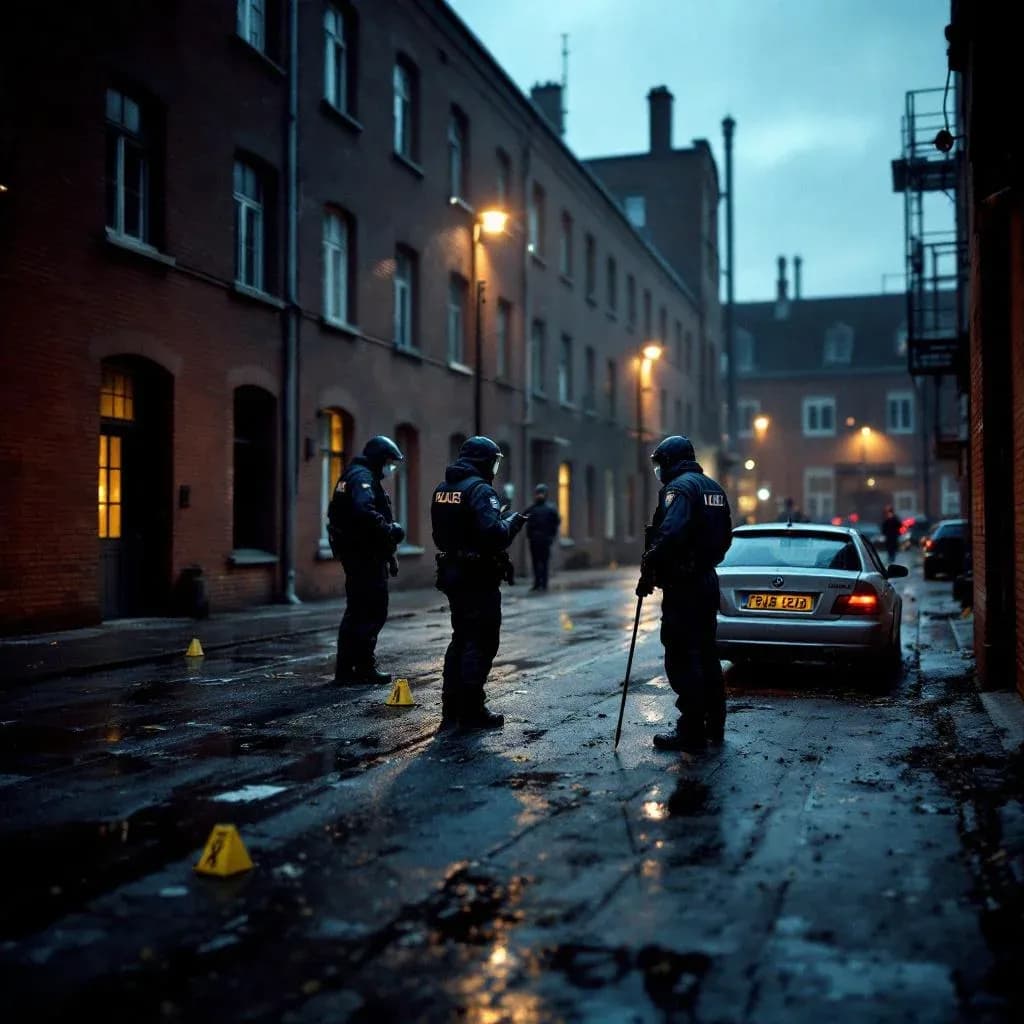
On August 15, 2007, around 10 p.m., Italian mafia members were picked up from the restaurant Ristorante da Bruno on Ferdinandstraße in Duisburg. Six men were taken to a neighboring property behind an Italian ice cream parlor. There they were shot down with military precision — some struck by numerous bullets, others executed with shots to the head. It was the year's most brutal European mafia attack.
The victims were:
Timeline
1 January 1991
San Luca-fejden begynder
Konflikten mellem Ndrangheta-klanerne Nirta-Strangio og Pelle-Vottari-Romeo i San Luca, Italien, begynder.
25 December 2006
Maria Strangio dræbt
Maria Strangio blev dræbt i et baghold i San Luca, hvilket intensiverede fejden mellem klanerne.
15 August 2007
Duisburg-massakren
Seks mænd blev skudt ned udenfor restaurant Da Bruno på Ferdinandstraße i Duisburg. De blev ført til en nabogrund og henrettet med militær præcision.
12 July 2011
Domfældelse i Locri
En domstol i Locri idømte otte personer livstid for deres roller i San Luca-fejden, herunder Duisburg-massakren. Blandt de dømte var Giovanni Strangio, Giuseppe Nirta og andre klanmedlemmer.
All were members of or associated with the Ndrangheta organization from Calabria in Italy. Most came from the town of San Luca — an area known as the Ndrangheta's stronghold and previously marked by internal mafia feuds.
Background: The Feud in San Luca
The Duisburg massacre was not an isolated event, but the culmination of a conflict that had been growing over several years between two Ndrangheta clans in San Luca: the Strangio-Nirta clan and the Pelle-Vottari clan. The feud had roots dating back to the 1980s, but escalated dramatically in the mid-2000s.
Italian mafia operators had gradually established themselves in Germany, where they conducted drug trafficking and other illegal enterprises. The Duisburg area became a central hub for their European operations. Gang members could move freely across borders without facing the same scrutiny they would encounter in Italy.
The original conflict between the clans had started over territory, trade control, and slights — classic mafia reasons. But the conflict had become more personal and brutal. One of the murdered men, Giovanni Strangio, was the son of boss Giovanni "Il Giallo" Strangio.
Identity of the Perpetrators
German and Italian police immediately launched a comprehensive investigation. German police authorities worked closely with Italian Carabinieri and the anti-mafia organization DDA (Direzione Distrettuale Antimafia).
The investigation established that the perpetrators came from the Pelle-Vottari clan. The massacre was planned and executed as an organized attack — not a spontaneous outburst. It was an execution coordinated at high levels within the organization.
In the years following, several perpetrators were identified and arrested through witness statements, telephone surveillance, and ballistic evidence. However, some of the primary shooters remained not fully identified or were not charged. Italian courts issued sentences between 2010-2012.