Offer(e)Grünes Gewölbe / State Art Collections Dresden
GerningsstedDresden, Sachsen, Tyskland
Gerningsdato2019-11-25
ForbrydelsestypeOrganiseret røveri og mordbrand
The Theft
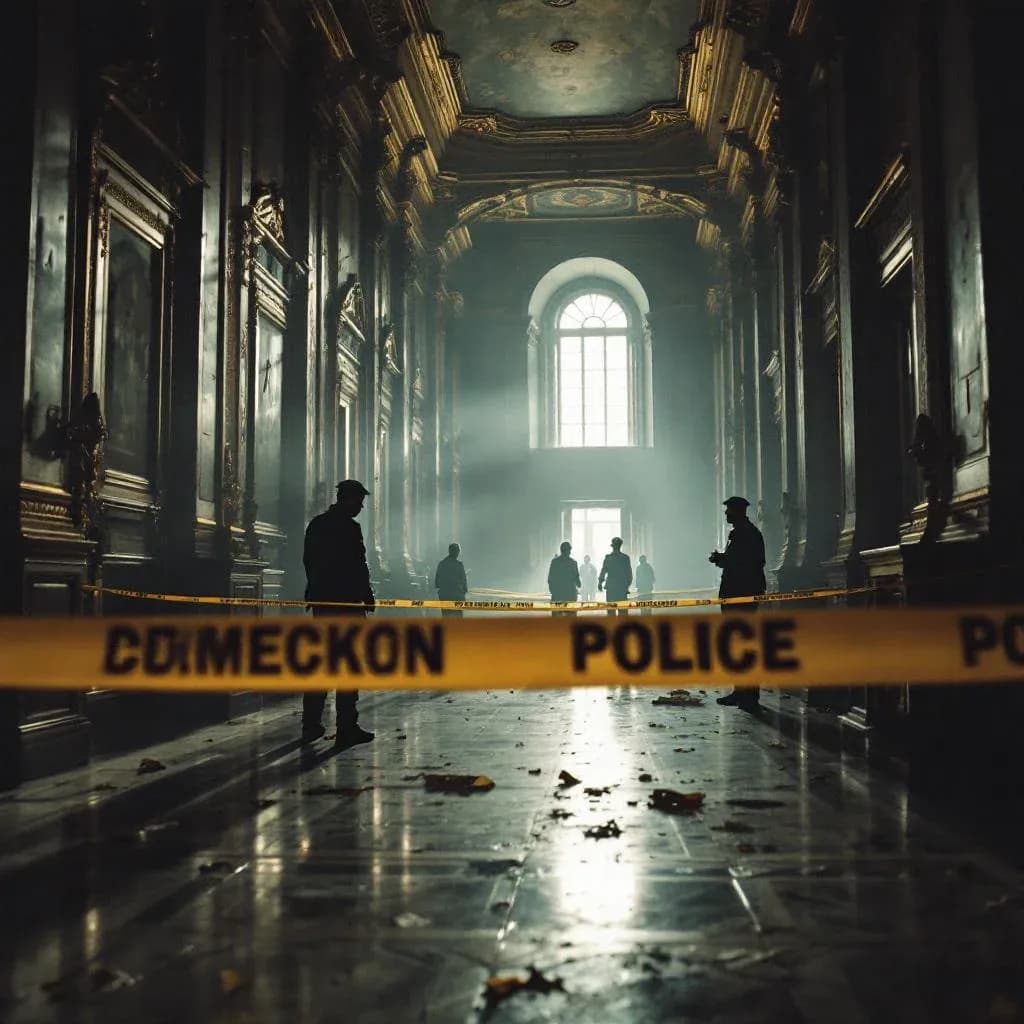
In the early morning hours of November 25, 2019, the Green Vault — Dresden's most famous art museum — fell victim to one of the most audacious art thefts in recent European history. At approximately 3:45 a.m., five men broke into the Residenzschloss, where the museum has been located since 1723.
The perpetrators targeted the jewelry collection on the first floor specifically. Using a severed power cable on the outside of the building, they switched off the main circuit breaker, which disabled both the alarm system and security cameras in most of the museum. This was no accident — it was a meticulously planned operation.
Timeline
25 November 2019
Einbruch ins Grüne Gewölbe
Gegen 3:45 Uhr morgens brechen fünf Männer in das Dresdner Residenzschloss ein und stehlen barocke Juwelen im Wert von etwa 113 Millionen Euro.
1 June 2020
Erste Festnahmen
Die Polizei nimmt drei Männer aus dem Remmo-Clan in Berlin fest. Sie werden als Hauptverdächtige identifiziert.
1 November 2021
Urteil im Prozess
Das Landgericht Dresden verurteilt drei junge Männer zu mehrjährigen Haftstrafen wegen des Einbruchs.
1 January 2023
Erste Fundstücke
Die Polizei findet erste Teile des Diebesguts – Diamanten und Schmuckteile werden durch Hinweise und Ermittlungen sichergestellt.
They stole a collection of Baroque jewelry and art objects from 18th-century Saxon court culture — including diamond-studded pearl heads, gold combs, and jewel-encrusted snuffboxes. The total value of the stolen items was estimated at approximately 113 million Danish kroner.
Massive police resources were immediately deployed to the case. The Dresden Police and German federal investigators (BKA) took over the investigation. After several months of intensive work, police identified five main suspects — all men from the Berlin area.
In the summer of 2020, three men linked to the notorious Remmo clan criminal network were arrested and charged with the theft. The investigation revealed that the group had thoroughly researched the museum and planned the break-in in detail. They had photographed the building and studied its security systems before the operation.
In November 2021, three men (all around 20-23 years old) were convicted at the Dresden Landesgericht for the theft. They received lengthy prison sentences, though the precise terms were restricted by German press law. The defense argued for their young age and potential for rehabilitation, but the court emphasized the premeditated nature of the crime and the high value of the stolen goods.
Two other suspects were not charged — their role was deemed less significant or the evidence was insufficient.
One of the most interesting aspects of the case is that virtually none of the stolen artwork has ever been recovered. Police have worked with the hypothesis that the art objects were sold on the illegal art market or handled through international art dealer circles with connections to Eastern Europe or the Middle East.
In 2023-2024, German police recovered smaller portions of the stolen material — including diamonds and individual pieces of jewelry — through tips and infiltration of criminal networks. This led to further investigation into potential fences and intermediaries in the theft.
Cultural Significance
The Green Vault reopened to the public approximately one year after the theft. The institution remained one of Europe's most important art museums, known for its unique collection from Dresden's golden age as home to the Saxon court.
The theft drew attention to security issues at European art museums — and several institutions upgraded their physical security and electronic surveillance as a result of this case. It also demonstrated that even highly secured museums are vulnerable to coordinated and planned attacks.
The involvement of members of the Remmo clan criminal network highlights the broader problem of organized crime in Germany. The Remmo clan is often associated with major art thefts and gang activity in the Berlin area. The Green Vault theft thus became part of a larger pattern of high-profile art crimes in Germany.