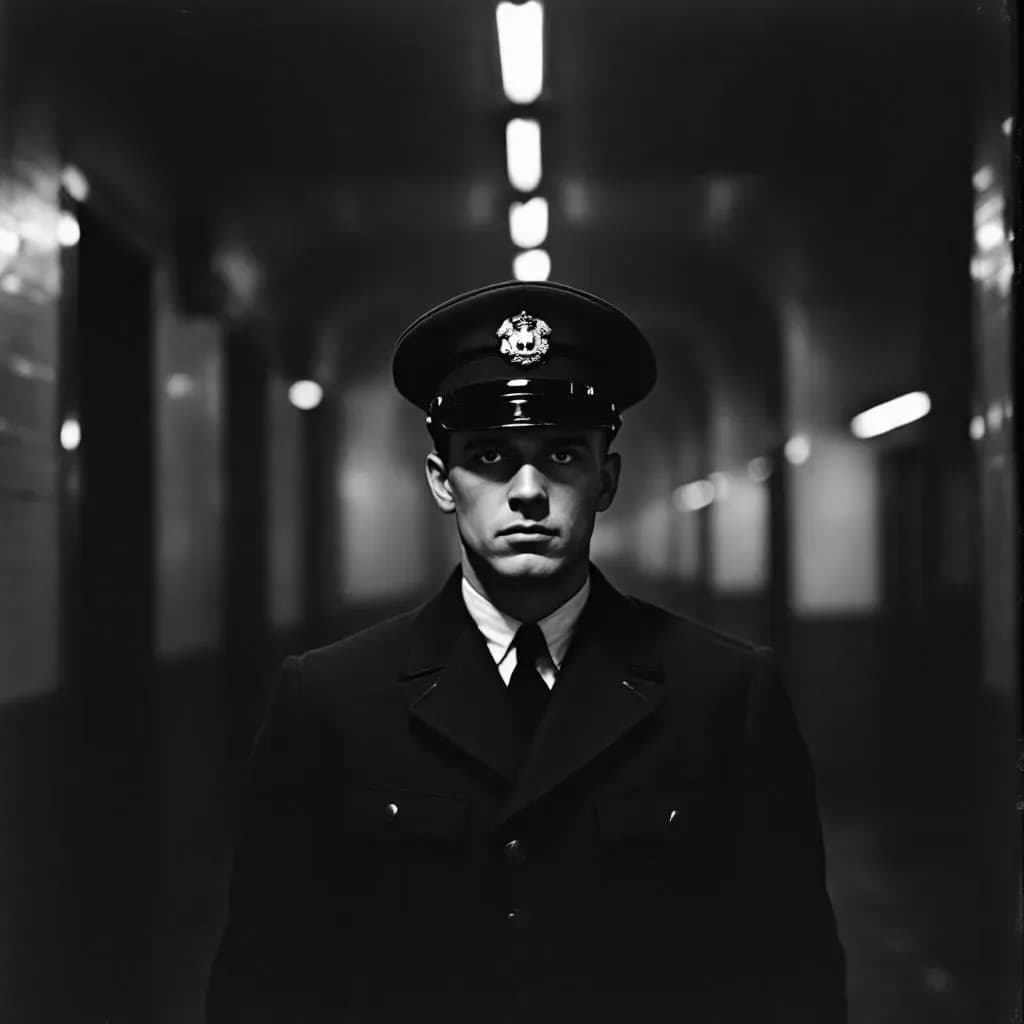
Offer(e)Flere ofre inkl. Rosa Ohliger, Christine Klein
GerningsstedDüsseldorf, Tyskland
Gerningsdato1929-02 til 1929-11
ForbrydelsestypeSeriemord
Childhood and early crimes
Peter Kürten was born on 26 May 1883 in Mülheim am Rhein into a dysfunctional family of 13 children. His father was an alcoholic and violent man, and the family lived in extreme poverty. Kürten later claimed that he had been sexually abused and subjected to constant violence as a child.
He began committing crimes as young as nine years old. He befriended a local dog catcher who allegedly taught him to torture animals. As a teenager he carried out his first killings — drowning two companions during a rafting trip on the Rhine in 1891, though those deaths were ruled accidental at the time.
Timeline
26 May 1883
Fødsel
Peter Kürten fødes i Mülheim am Rhein, Tyskland
9 February 1929
Første offer i Düsseldorf
Draber 9-årige Rosa Ohliger, indleder mordserie
23 August 1929
Dobbeltangreb
Angriber søstrene Schulte, dræber Gertrude
7 November 1929
Gertrude Albermann
Dræber fem-årige pige, sender kort til avis
14 May 1930
Sidste offer overlever
Angriber Maria Budlick, men lader hende gå
24 May 1930
Anholdelse
Arresteres efter Maria Budlicks anmeldelse
21 April 1931
Dom
Dømt til døden for ni mord
2 July 1931
Henrettelse
Guillotineres i Köln
Kürten's criminal career expanded to encompass theft, arson and rape. He spent several periods behind bars, serving roughly 20 years in prison in total before 1929.
The terror in Düsseldorf
In February 1929 Kürten launched his most intense killing spree in Düsseldorf. His victims included women, men and children. He attacked at random, using knives, scissors, hammers and, in some cases, strangulation. Kürten became notorious for returning to crime scenes and, on several occasions, drinking blood from his victims — earning him the nickname 'The Vampire of Düsseldorf'.
His first confirmed victim during this period was nine-year-old Rosa Ohliger, whom he stabbed to death before attempting to burn her body in February 1929. The attacks continued with increasing frequency through spring and summer. On 23 August 1929 he attacked two sisters, Louise and Gertrude Schulte, on the same evening at a local festival. Louise survived; Gertrude did not.
Killing methods and patterns
Kürten's methods were extraordinarily brutal and varied. He later described during interrogation how he experienced sexual gratification at the sight of blood flowing from his victims. Bodies were found bearing multiple stab wounds, blunt-force head injuries from hammer attacks, or signs of strangulation.
A particularly shocking aspect of his behaviour was his repeated return to crime scenes. After killing five-year-old Gertrude Albermann in November 1929, Kürten sent a letter to a local newspaper along with a map showing the location of her body and the remains of another earlier victim. It was one of several instances in which he actively sought public attention.
Police in Düsseldorf were under immense pressure. The city was paralysed by fear; residents avoided going out after dark. Civilian patrols were formed, and officers received thousands of tips without closing in on the perpetrator.
Kürten's capture came about by chance. On 14 May 1930 he invited Maria Budlick, a young woman who had just arrived in Düsseldorf, back to his home. He attacked her but then, in a surprising turn, let her go. Budlick had noted his address, and after telling a friend about the incident, the information reached the police.
Kürten was arrested on 24 May 1930. Following his arrest he immediately confessed to his crimes in exhaustive detail. His confessions were so thorough that investigators were able to close a number of previously unsolved cases. He expressed no remorse, recounting his actions with utter detachment.
The trial of Peter Kürten opened on 13 April 1931 in Düsseldorf and lasted ten days. The proceedings attracted enormous domestic and international attention. He faced charges of nine murders and seven attempted murders, along with a string of other offences.
Throughout the trial Kürten appeared calm and cooperative. He described his crimes without emotion, explaining his motivation as a combination of sexual sadism and revenge against a society he held responsible for his brutal upbringing and years of imprisonment. Psychiatric experts assessed him as legally sane despite his extreme behaviour.
On 21 April 1931 Kürten was found guilty on all counts and sentenced to death nine times — once for each murder. He received the verdict without any visible reaction.
Peter Kürten was executed by guillotine on 2 July 1931 in Köln. His final meal was Wiener schnitzel, fried potatoes and white wine — a serving he requested to be doubled. His last words were reportedly a question to the attending chaplain: whether he would still be able to hear the sound of his own blood gushing after the blade fell.
Legacy and cultural influence
Kürten's crimes and psychology have been the subject of extensive research in criminal psychology. His case is regarded as one of the earliest well-documented examples of a serial killer displaying pronounced sadistic and vampiric tendencies.
His story inspired Fritz Lang's landmark 1931 film M, though the film centres on a child murderer rather than retelling Kürten's story directly. The case has also formed the basis for numerous books, documentaries and true crime analyses over the decades.