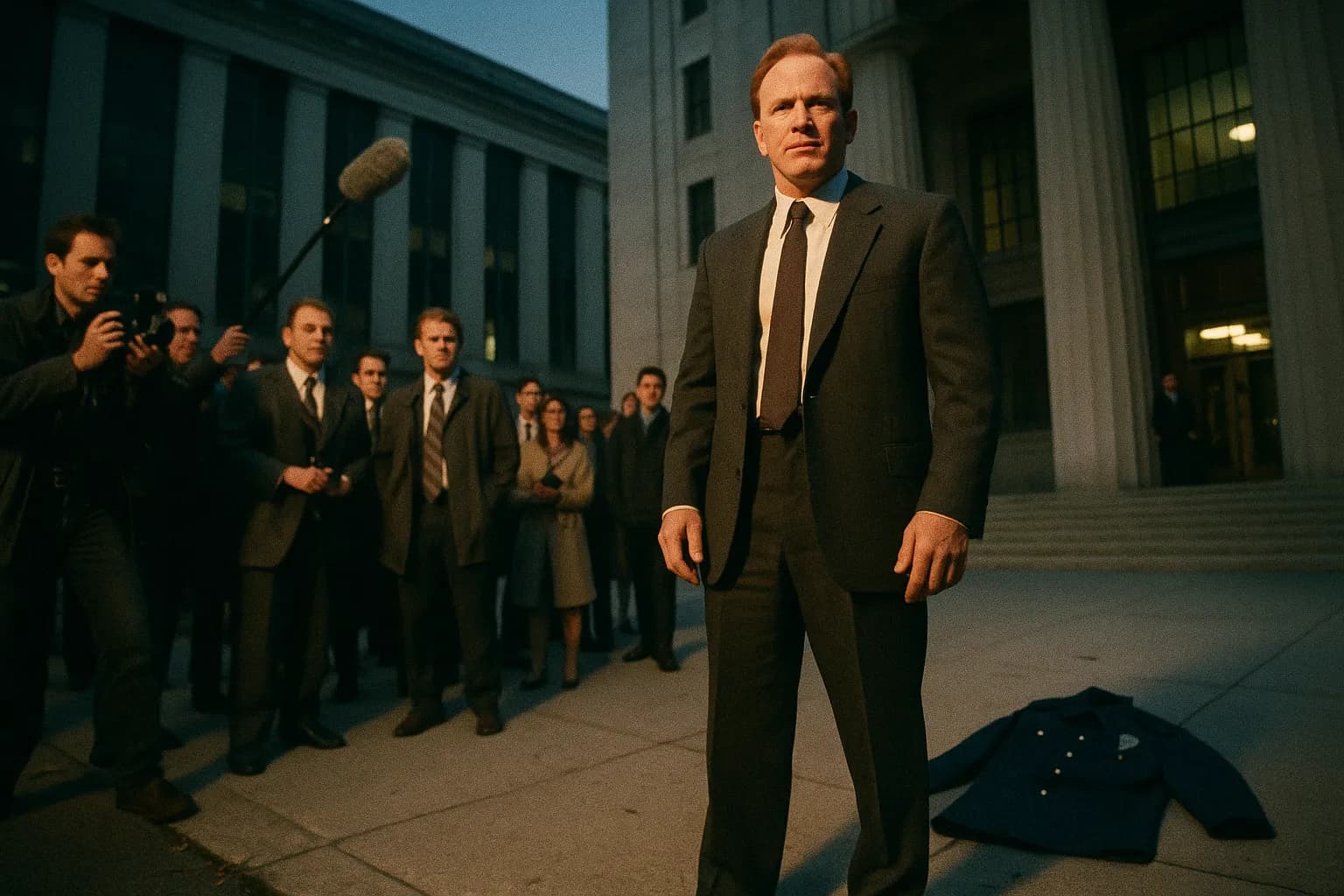
On a summer evening in 1962, one of America's boldest crimes unfolded on a Massachusetts highway. Armed men posing as police officers flagged down a U.S. Postal Service armored truck carrying cash deposits from Cape Cod banks and businesses. Within minutes, they had tied up the two guards, commandeered the vehicle, and disappeared with $1,551,277—equivalent to roughly $13–15.6 million today. It was the largest cash robbery in U.S. history at the time.
The robbery occurred around 8:00–8:30 p.m. on August 14, 1962, on Route 3 in Plymouth. The truck was transporting deposits bound for the Federal Reserve Bank in Boston when the robbers, dressed as police and armed with submachine guns and shotguns, used fake barricades to stop traffic and divert the armored vehicle. The two guards—driver Patrick Schena, 36, and guard William Barrett, 51—were subdued, bound, and forced into the truck as it was driven to multiple locations where accomplices transferred the cash into other vehicles. The guards eventually escaped and reported the crime to police in Randolph, where the now-empty truck was later found abandoned alongside Route 128.
What followed was one of the most expensive investigations in FBI history. The U.S. Postal Inspection Service and FBI pursued leads for five years, eventually offering a combined $200,000 in rewards—$150,000 from the Federal Reserve and $50,000 from the Postmaster General. The investigation ultimately cost as much as, or more than, the amount stolen.
Timeline
26 April 1962
Postraub auf Route 3
Unbekannte Täter in falschen Polizeiuniformen stoppen einen Posttransporter in Plymouth, Massachusetts, fesseln die beiden Postangestellten Patrick Schena und William Barrett und stehlen 127 Postsäcke mit 1,5 Millionen Dollar in neuen Geldscheinen.
26 April 1962
Ermittlungen beginnen
Behörden starten umfangreiche Ermittlungen zum Postraub, kommen jedoch zu keinen verwertbaren Ergebnissen. Keine Verdächtigen werden identifiziert.
1 January 1970
Mafia-Verbindung wird bekannt
Jahre später behauptet Vincent Teresa, ein Mitglied der Patriarca-Familie aus Boston, dass die organisierte Kriminalität den Überfall finanziert und einen Großteil der Beute erhalten habe. Beweise dafür fehlen.
As the five-year statute of limitations neared expiration, authorities moved quickly. In early August 1967, four suspects were indicted: John "Red" Kelley, George "Billy Aggie" Agisotelis, Thomas Richards, and Patricia Diaferio. But the case would never see a conviction.
Kelley, considered the prime suspect, was tried and acquitted. Years later, he claimed that Boston Mob boss Jerry Anguilo had supplied $7,000 for police uniforms, masks, and shotguns—and helped launder the stolen money at a rate of 80 cents per dollar, according to Boston mobster Vincent "Fat Vinnie" Teresa. Agisotelis initially agreed to cooperate with authorities but went missing before trial. Law enforcement suspected he was murdered by Mob hitman Maurice "Pro" Lerner. Richards simply vanished and never faced trial. Diaferio was acquitted.
Other names surfaced over the years. Richard Chicofsky, an FBI informant, was allegedly involved according to claims made by his daughter. Yet none of these leads resulted in prosecutions or recoveries.
The FBI estimated that approximately $1.2 million had been successfully laundered, but the remainder—and the identities of those responsible—have remained elusive. The truck's two guards lived to tell the tale, but the robbery's architects escaped justice entirely. No one was ever convicted. No one served time. The money, for the most part, vanished into the underworld.
Today, the Plymouth Mail robbery stands as one of America's most infamous heists—a reminder of an era when intersected with audacious street criminals, and when $1.5 million could simply disappear without a trace.