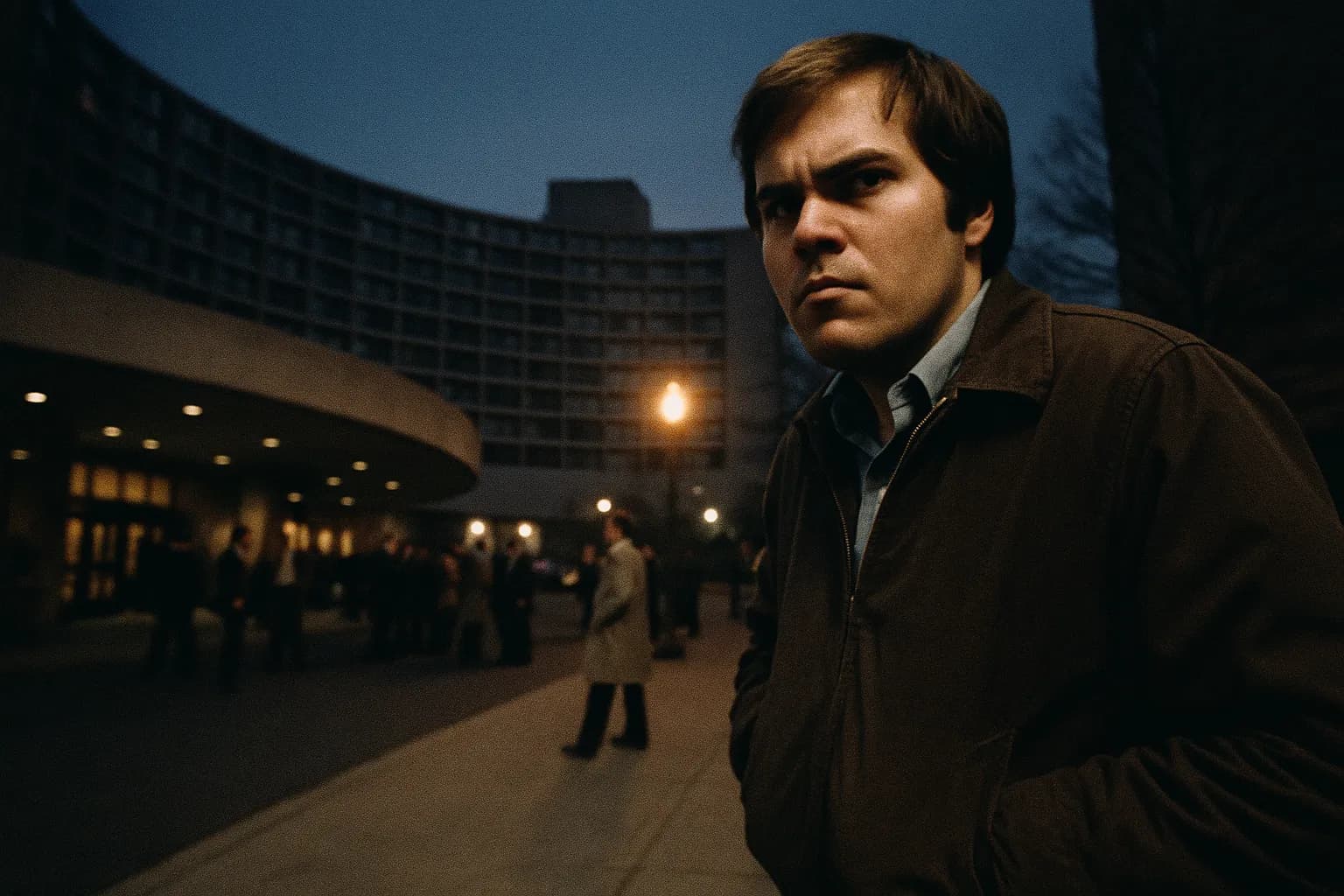
President Ronald Reagan exited the Washington Hilton Hotel on March 30, 1981, shortly after 2:27 p.m., having just addressed 5,000 AFL-CIO members inside. As he walked toward his limousine, a young man stepped forward from a roped-off press area and fired six shots in rapid succession.
The shooter was John Hinckley Jr., a 25-year-old with an obsession that would define one of the most significant moments of Reagan's presidency. Hinckley had left a letter in his hotel room explaining his motive: he was attempting to assassinate the president to impress actress Jodie Foster, whom he had become fixated on. The room also contained a map, Reagan's schedule clipped from newspapers, and a typed statement proclaiming what he called a "historic act."
The first shot struck Press Secretary James Brady in the head. The second hit D.C. Police Officer Thomas Delahanty. A third round found its mark in Secret Service Agent Timothy McCarthy, piercing his lower chest and traversing his right lung, diaphragm, and right lobe of his liver. The fifth shot struck the limousine's window glass. The sixth bullet ricocheted off the armored side of the presidential limousine.
Timeline
8 February 1976
Film Taxi Driver erscheint
John Hinckley Jr. sieht Martin Scorseses Film mit Jodie Foster und entwickelt eine Obsession für die Schauspielerin.
30 March 1981
Attentat auf Reagan
Hinckley feuert vor dem Washington Hilton Hotel sechs Schüsse auf Präsident Reagan ab. Reagan, James Brady und zwei weitere werden verletzt.
30 March 1981
Brief an Jodie Foster gefunden
In Hinckleys Hotelzimmer wird ein Brief an Foster entdeckt, in dem er das Attentat als 'historische Heldentat' beschreibt.
21 June 1982
Urteil: Nicht schuldig
Hinckley wird aufgrund von Unzurechnungsfähigkeit für nicht schuldig befunden und in psychiatrische Verwahrung eingewiesen.
14 October 1982
Gesetzesreform beginnt
US-Kongress verabschiedet den Insanity Defense Reform Act, der die Regeln zur Unzurechnungsfähigkeit drastisch verschärft.
4 August 2014
James Brady stirbt
Pressesprecher James Brady stirbt 33 Jahre nach dem Attentat an den Folgen seiner Verletzungen.
10 September 2016
Teilweise Freilassung
Nach 34 Jahren wird Hinckley unter Auflagen aus der psychiatrischen Klinik entlassen.
15 June 2022
Vollständige Freilassung
Alle Auflagen werden aufgehoben. Hinckley lebt als freier Mann.
It was that final ricochet that nearly killed the president. The bullet struck Reagan under his left armpit, grazed his rib, and lodged deep in his left lung, causing a partial collapse. Medical analysis would later reveal the bullet came within less than an inch of his heart—a margin that meant the difference between Reagan's survival and a national tragedy.
Secret Service Agent Jerry Parr made a critical decision in those seconds. He pushed Reagan into the limousine and assessed the president's condition as they raced toward George Washington University Hospital. Initially, Reagan believed the impact had simply cracked a rib from being shoved into the vehicle. Then he coughed—and the blood came up bright and frothy, a sign of severe lung damage.
Reagan underwent emergency surgery and spent 12 days hospitalized. Against the odds, and with remarkable resilience, he survived injuries that would have been fatal under different circumstances. His recovery became a defining moment of his presidency, one that energized his administration's focus on Cold War relations and U.S.-Soviet diplomacy.
The other victims also survived, though with lasting consequences. James Brady, the press secretary, suffered permanent brain damage and spent the rest of his life in a wheelchair. Timothy McCarthy recovered from his wounds but carried the physical and psychological marks of the attack. Thomas Delahanty also survived his injuries.
Hinckley was arrested at the scene without further incident. The attempted assassination sent shockwaves through the nation and raised urgent questions about presidential security, mental illness, and the accessibility of firearms.
The events of March 30, 1981, remain a pivotal moment in American history—a near-tragedy that tested the resilience of a president and ultimately influenced the trajectory of his administration and the nation itself.