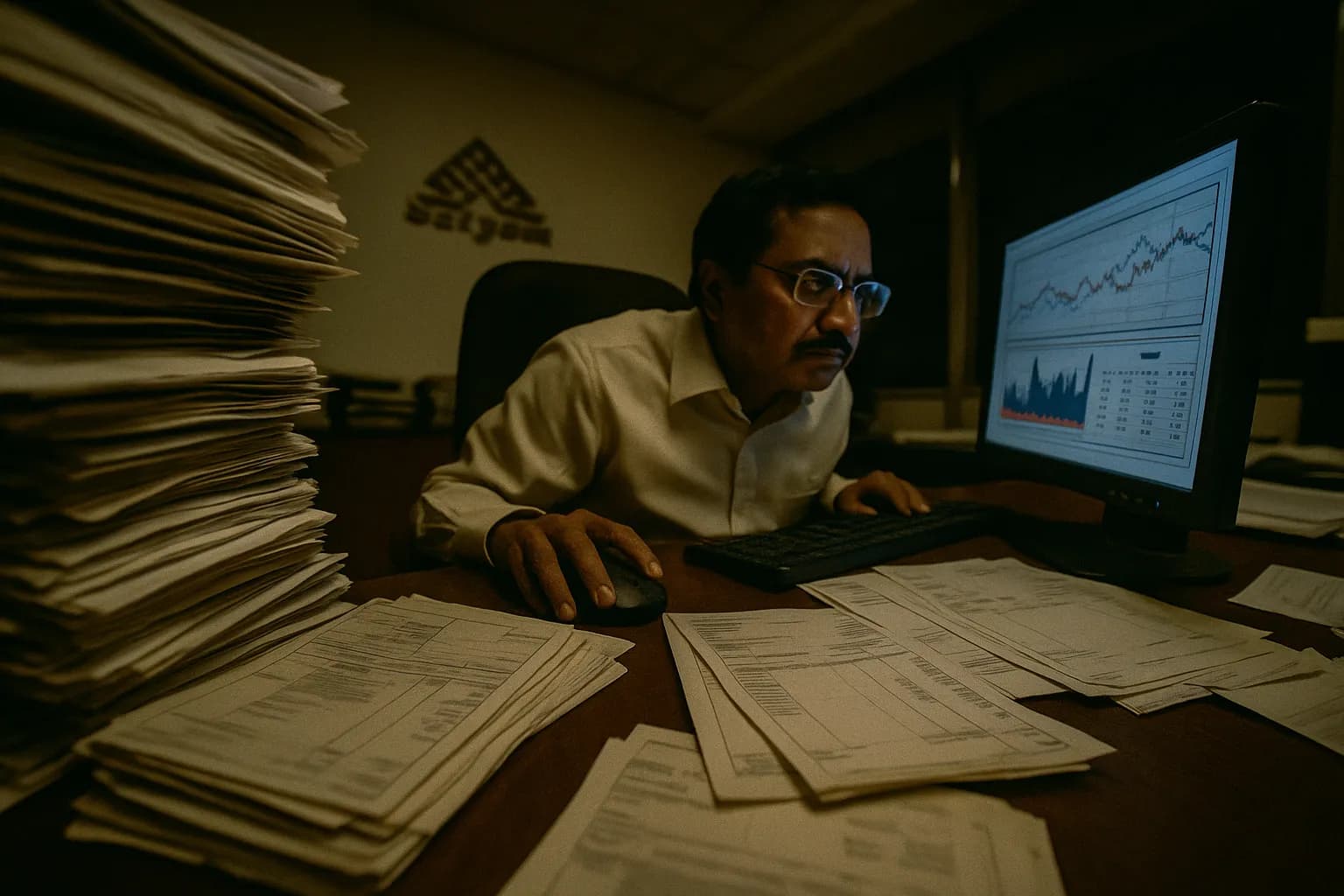
In January 2009, Ramalinga Raju, founder and chairman of Satyam Computer Services, made a shocking public confession: India's fourth-largest IT services company had been committing accounting fraud for years. The revelation sent shockwaves through the global business community—Satyam had recently won awards for corporate governance, making the discovery especially damaging.
**The Scale of Deception**
According to investigations by India's Central Bureau of Investigation and the U.S. Securities and Exchange Commission, the fraud had been running since at least 1999, escalating over a seven-year period. The scheme was staggering in scope: Satyam created over 6,000 phony invoices that appeared in the company's general ledger and financial statements. These fake transactions generated more than $1 billion in fictitious cash and cash-related balances—representing approximately half of Satyam's total reported assets.
Timeline
1 January 1999
Beginn der Manipulationen
B. Ramalinga Raju beginnt mit der systematischen Fälschung von Bilanzen bei Satyam Computer Services.
7 January 2009
Geständnis
Raju gesteht in einem Brief an den Vorstand den jahrelangen Bilanzbetrug in Höhe von etwa 7.000 Crore Rupien.
8 January 2009
Verhaftung
B. Ramalinga Raju wird in Hyderabad verhaftet. Die indische Regierung löst den Vorstand auf und setzt eine neue Führung ein.
12 January 2009
Ermittlungen beginnen
SEBI und das Company Law Board leiten umfassende Untersuchungen ein. Die Weltbank suspendiert Satyam für acht Jahre.
1 January 2013
Companies Act 2013
Als direkte Folge des Satyam-Skandals verabschiedet Indien den Companies Act 2013 mit strengeren Corporate-Governance-Regeln.
The manipulation involved fabricating entire client relationships and projects. To make the scheme credible, executives created forged bank statements purporting to show payments for these non-existent contracts. Each layer of deception was designed to withstand scrutiny from auditors and regulators.
**Raju's Confession and Defense**
When Raju confessed, he portrayed himself as trapped by circumstances beyond his control. In his confession letter, he claimed he did not personally profit from the fraud and described the situation using a telling metaphor: "like riding a tiger, not knowing how to get off without being eaten." He characterized the manipulation as an effort to "keep the company going," suggesting the fraud was born from desperation rather than greed.
However, Raju later faced criminal charges in India. His confession, while appearing candid, did little to mitigate the damage or fully explain how such a massive deception had gone undetected for so long.
**Auditor Failures**
The role of PricewaterhouseCoopers (PwC), Satyam's independent auditor, became a central focus of post-scandal investigations. The U.S. SEC later sanctioned PwC for violations of federal securities laws and improper professional conduct spanning audits from 2005 through January 2009. The auditors, investigators found, had relied almost entirely on management-provided documents and failed to conduct the level of scrutiny necessary to detect the fraud.
This reliance on management documentation without independent verification represented a critical failure in the audit process. Critics in India and internationally highlighted how PwC's approach—accepting Satyam's own records at face value—had essentially allowed the fraud to flourish under the cover of certified financial statements.