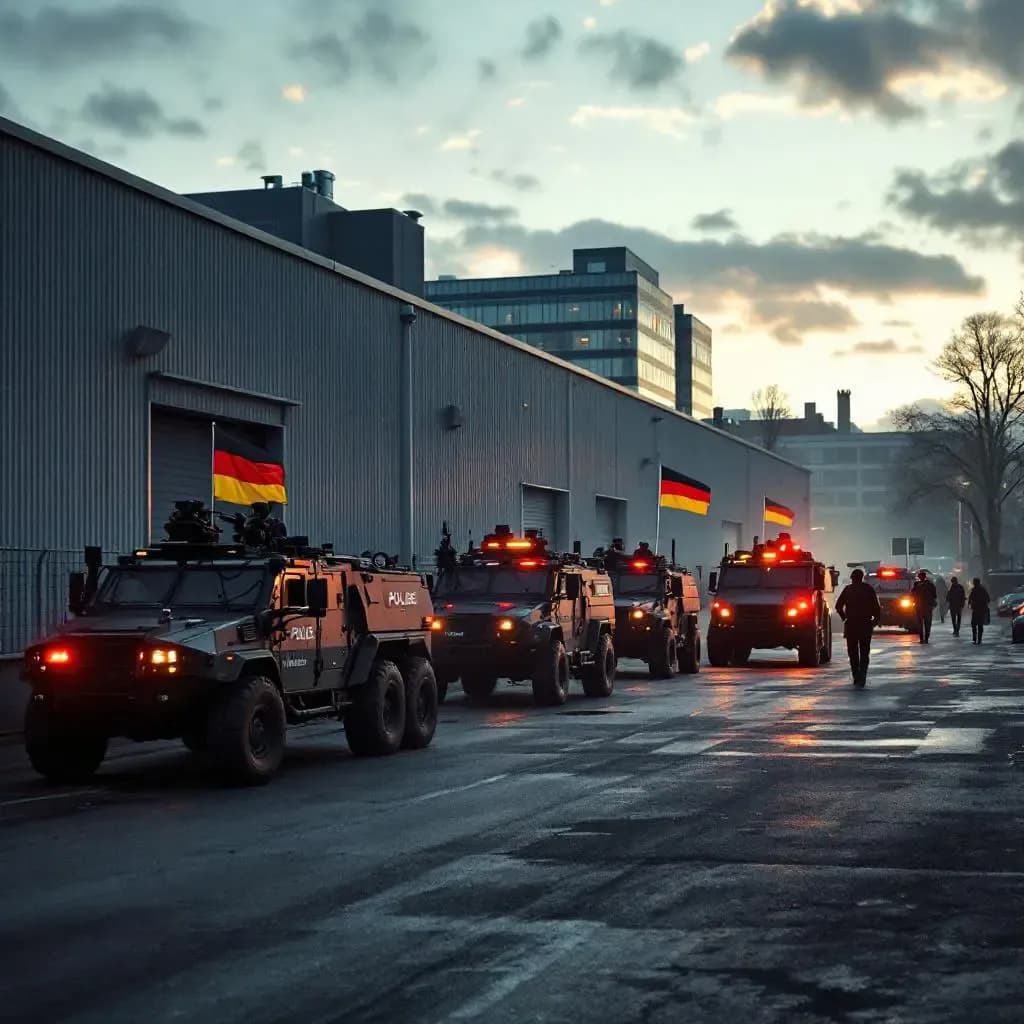
One of Europe's largest gang conflicts draws to a close
The so-called Stuttgart feud represents one of the most extensive and violent gang wars Europe has witnessed in recent times. With the conviction of 43 people to a combined 137 years in prison, Stuttgart Landesgericht has brought the case to an initial conclusion — one that underscores the severity of organised crime in southern Germany.
The feud grew out of a power struggle between competing outlaw motorcycle clubs and criminal networks fighting for control over territory, drug trafficking and other illicit revenue streams in and around the Stuttgart area. Over the course of several years, the conflict escalated into widespread acts of violence that threatened public safety and demanded massive law enforcement responses.
Timeline
1 January 2014
Fejdens begyndelse
Konflikten mellem rivaliserende bandegrupperne i Stuttgart-området eskalerer til åben voldsomhed med skuderier og angreb.
15 June 2016
Politiets storoffensiv
Tyske myndigheder intensiverer efterforskningen og etablerer særlige taskforces for at håndtere bandevolden og identificere hovedaktørerne.
20 September 2018
Større anholdelser
Politiet foretager større anholdelser af ledere og aktive bandemedfølgere baseret på efterforskningen, hvilket leder til anklager mod 43 personer.
10 March 2019
Retssagen begynder
Retsforhandlinger mod de 43 tiltalte starter ved Landesgericht Stuttgart med omfattende bevisførelse.
15 November 2021
Dommene afsiges
Stuttgart domstol afslutter sagen ved at domfælde 43 personer til samlet 137 års fængsel for deres roller i fejden.
Shootings and bombings
Throughout the feud, the region was marked by drive-by shootings, gang clashes in public spaces and premeditated attacks. Bombings of premises and vehicles were used as tools of intimidation between the rival factions. These acts resulted in deaths among gang associates as well as injuries to innocent civilians who became incidental victims of the violence.
The 43 convicted individuals include both leaders of the gang groups and active members who directly participated in or supported the criminal operations. Building the prosecution's case and documenting each person's role in the feud demanded an extensive investigative effort, including the analysis of communications, witness testimony and security camera footage.
The investigation into the Stuttgart feud was extraordinarily resource-intensive and involved both local and federal authorities. Police were forced to establish dedicated task forces to manage the day-to-day violence and identify those responsible for the various attacks. The complexity of solving the individual cases was compounded by the closed nature of the gang environment and the fear that gripped potential witnesses.
The legal proceedings were equally extensive, with court hearings stretching over a prolonged period. The court was required to assess the evidence against each individual defendant, resulting in sentences of varying lengths that reflected the degree of each person's involvement and their role within the organisation.
Implications for organised crime in Germany
The Stuttgart feud and its conclusion have had significant consequences for the broader debate around organised crime in Germany. The case has demonstrated both the capacity of law enforcement to dismantle large-scale criminal networks and the ongoing need for sustained resources to combat gang-related violence.
The verdicts sent a clear signal that Germany will not tolerate this level of organised violence. The sentence lengths — which in individual cases sometimes approach or exceed ten years — reflect the gravity with which the court treated the proceedings.
Aftermath
Although the primary phase of the feud has been concluded with the convictions, police continue to monitor the groups involved. Historically, gang conflicts tend to resurface or transform if the underlying drivers are not addressed through a combination of criminal justice measures and preventive initiatives.
Communities in Stuttgart have lived under the shadow of years of gang violence, and the convictions represent hope that the area can return to greater safety and normality. However, a lasting solution will require continued efforts across criminal justice, social programmes and the fight against drug trafficking.