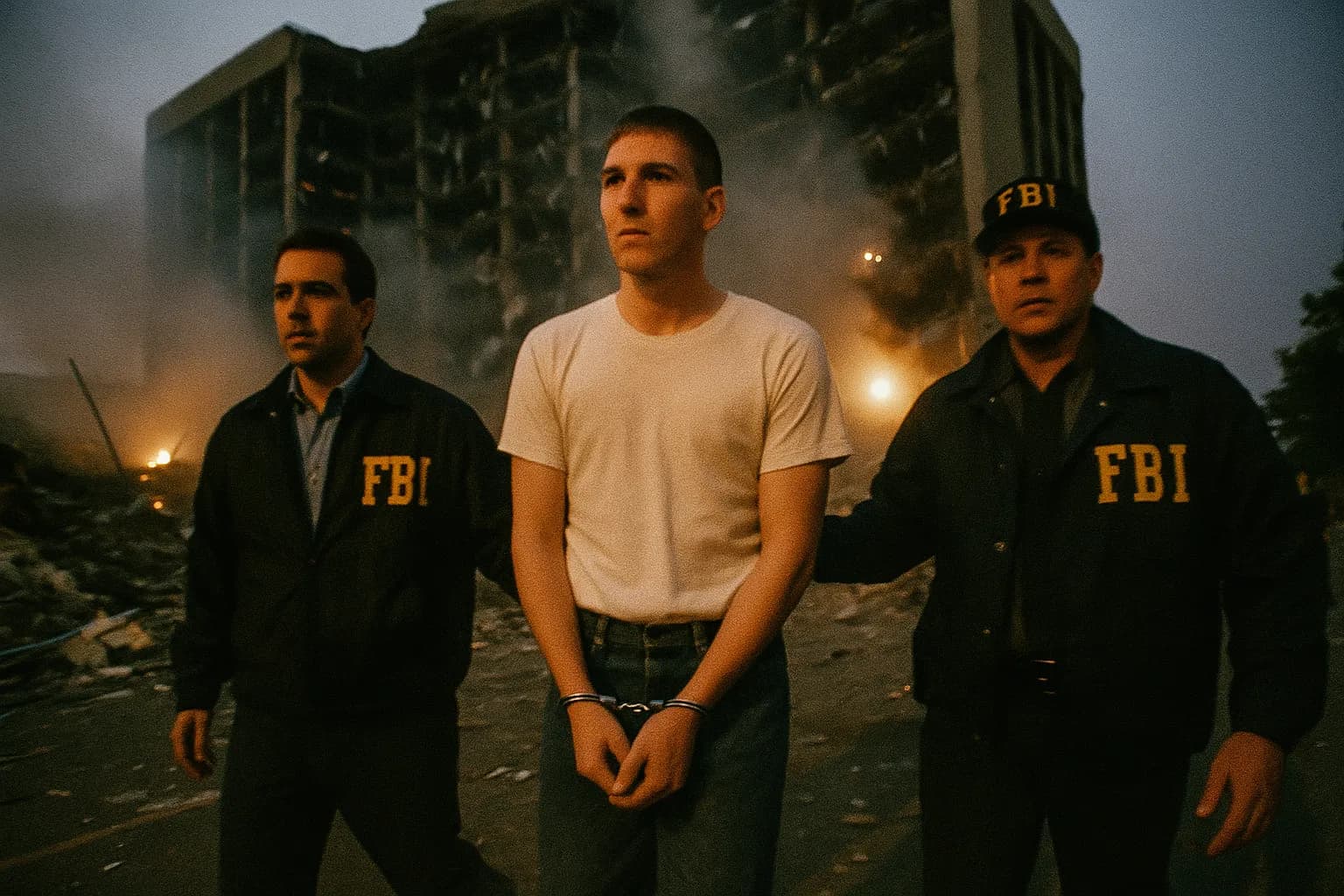
On the morning of April 19, 1995, at 9:02 a.m., Timothy James McVeigh parked a rented Ryder truck in the handicap zone outside the Alfred P. Murrah Federal Building in Oklahoma City. Inside was approximately 5,000 pounds of ammonium nitrate and nitromethane—an improvised explosive device that would level one-third of the building and reshape American understanding of domestic terrorism.
When the bomb detonated, it killed 168 people, including 19 children. Another 684 were injured. More than 300 buildings in the surrounding area sustained damage. The attack would remain the deadliest act of domestic terrorism in U.S. history until September 11, 2001.
McVeigh, born April 23, 1968, was a former U.S. Army soldier with ties to the extreme right-wing Patriot movement. According to prosecutors, he had assembled the bomb at Geary Lake State Park in Kansas alongside Terry Nichols, an accomplice who would later be convicted of conspiracy and involuntary manslaughter. A third figure, Michael Fortier, had advance knowledge of the plot but was convicted only for failing to inform authorities.
Timeline
23 April 1968
Timothy McVeigh geboren
Timothy McVeigh wird in Lockport, New York, geboren.
19 April 1995
Bombenattentat in Oklahoma City
Um 9:02 Uhr explodiert der mit Sprengstoff beladene Lastwagen vor dem Murrah Federal Building. 168 Menschen sterben.
19 April 1995
Festnahme von McVeigh
77 Minuten nach dem Anschlag wird McVeigh wegen eines Verkehrsverstoßes angehalten und später als Hauptverdächtiger identifiziert.
2 June 1997
Schuldig gesprochen
Timothy McVeigh wird in allen Anklagepunkten für schuldig befunden.
14 August 1997
Todesstrafe verhängt
Das Gericht verurteilt McVeigh zur Todesstrafe.
11 June 2001
Hinrichtung
Timothy McVeigh wird hingerichtet – die erste Bundeshinrichtung seit 1963.
The motive was rooted in rage. McVeigh was avenging the deaths of more than 70 people killed during the Waco siege exactly two years earlier, on April 19, 1993. His ideology was shaped partly by *The Turner Diaries*, a white supremacist novel that served as a blueprint for anti-government violence.
McVeigh's capture came swiftly. Within hours of the bombing, he was pulled over on Interstate 35 for having no license plate. Already in Noble County jail on unrelated charges—carrying a concealed handgun and lacking vehicle registration—he was linked to the bombing as a 2,000-member federal investigation team quickly pivoted from initial suspicions of Middle Eastern involvement.
Before his arraignment, McVeigh admitted to his attorneys: "Yes, I did the bombing." He later recanted publicly but eventually owned the attack, quoting *A Few Good Men*: "You can't handle the truth! Because the truth is, I blew up the Murrah Building."
The trial began in 1997. A federal jury convicted McVeigh on 11 counts: murder, conspiracy, and use of a weapon of mass destruction. Eleven days later, he was sentenced to death—a verdict that would make him the focal point of a national debate about capital punishment that intensified as his execution date approached.