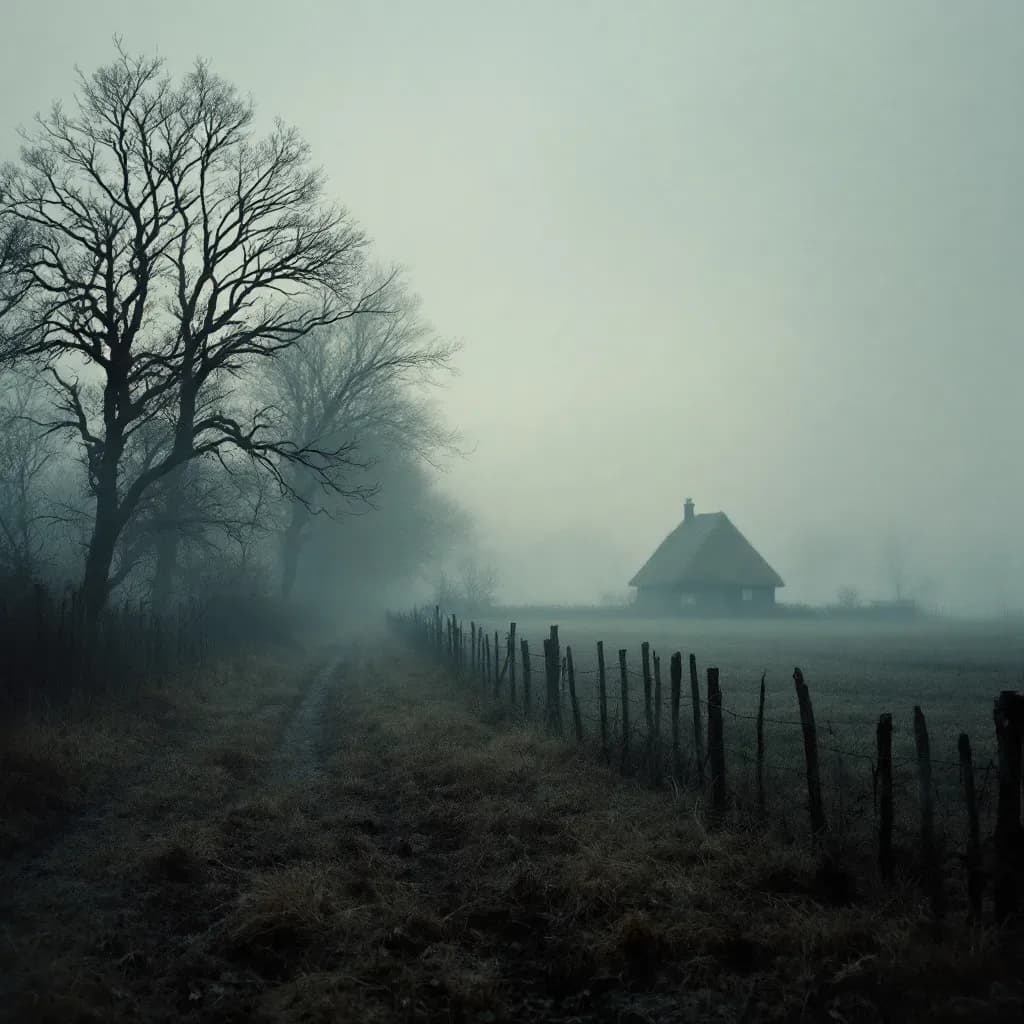
, such private acts of vigilantism reflected a parallel world of justice that existed alongside, and in defiance of, the formal courts of the Danish state.
The Victim
Anna Klemens was born in 1718 and lived to the age of 82. Little is documented about her personal life, but as with many elderly women accused of witchcraft across early modern Europe, her age and social position likely made her vulnerable to suspicion. In small rural communities, an old woman living on the margins could become a scapegoat when illness, crop failure, or sudden deaths struck the village. The accusation against her — that she had practised sorcery — fits a pattern documented across Scandinavia and Northern Europe for centuries.
Her death stands as a tragic bookend to the long history of witch persecution in the Nordic region, a history that included thousands of trials and executions across early modern Europe.
Because the killing took place before Denmark's modern penal code and outside the formal criminal justice system of the time, there is no police investigation in the contemporary sense. What is known comes from later historical reconstruction by Danish folklorists and historians who have traced the case through parish records, oral tradition, and 19th-century accounts.
Unlike the earlier 1722 case in Øster Grønning in Salling — where villagers tied up Dorte Jensdatter and burned her house down with her inside, after which several were later sentenced to death for her murder — the documentary record concerning the perpetrators in the Anna Klemens case is less complete. The lynching at Brigsted has been preserved primarily as a milestone in the history of Danish folk belief rather than as a fully reconstructed criminal case.
Trial and Verdict
There was no modern trial. The case predates Denmark's straffelov (penal code) in its current form, and the killing was a community act rather than a state execution. Whether anyone was held legally accountable for Anna Klemens's death is not clearly established in the available sources — a contrast to the earlier Salling case, where the formal courts later intervened against the lynch mob.
The case sits in a historical grey zone: officially, witchcraft was no longer a crime in Denmark, and killing an alleged witch was murder under the law of the time. Yet enforcement in remote rural communities was uneven, and folk belief continued to shape local behaviour well into the 19th century.
Today
Anna Klemens is remembered today as a symbolic figure marking the end of witch persecution in Scandinavia. Her case is cited in academic and popular histories of Nordic witchcraft beliefs, alongside other late victims of folk justice such as Krystyna Ceynowa and Barbara Zdunk elsewhere in Europe.
The story has been discussed in Danish historical writing, including work by Charlotte S.H. Jensen on the persistence of witch belief and by Uwe Brodersen in his study of midwives, witches and cunning women. The case continues to attract attention from researchers studying the slow transition from early modern magical worldviews to the rationalist legal order of the 19th century — a transition that, for Anna Klemens, came too late.