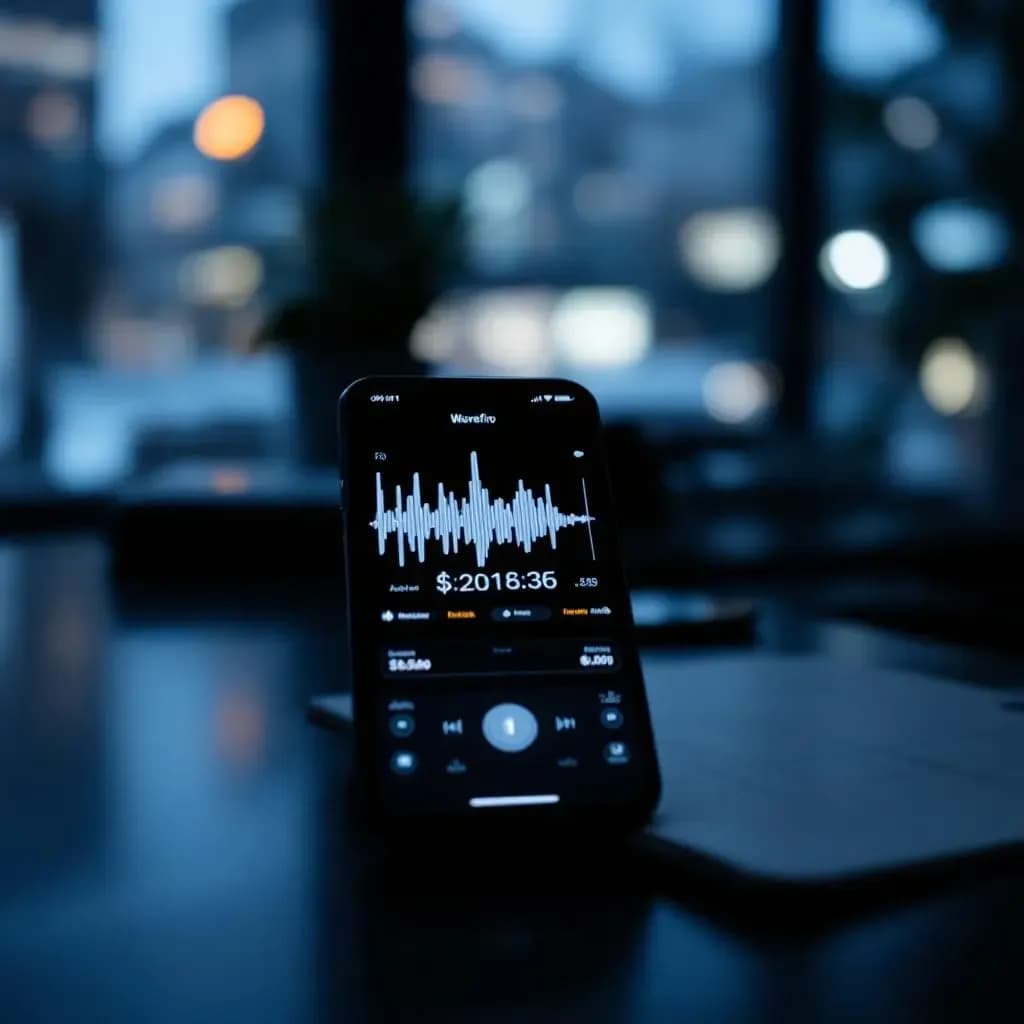
AI Voice Clones Are Authorizing Fraudulent Bank Transfers
Verification systems built to tell two human voices apart have a blind spot: they cannot detect whether a voice is human at all.
Financial institutions worldwide are authorizing transactions based on voice recognition — and criminals have found a way to forge exactly that verification. The International AI Safety Report documents real cases in which AI-generated audio clips of victims' voices have been used to approve money transfers the victims never requested.
Your Voice Is No Longer Proof of Identity
For years, banks and financial institutions have used voice as one of several biometric security factors protecting accounts and approving large transactions. The logic seemed airtight: your voice is unique, and replicating it accurately enough to fool an automated system seemed practically impossible.
That logic no longer holds. Modern voice cloning technology can reconstruct a person's voice from just a few seconds of authentic audio — a voicemail, a social media post, a recorded interview. The resulting audio file is not a rough imitation. It is a precise copy that even advanced verification systems consistently misidentify as genuine.
This is not a theoretical threat. It is a documented attack method.
Autonomous Agents Are Making the Problem Worse
What separates the current wave of voice cloning fraud from earlier phone scams is its combination with autonomous financial AI agents. Several banks and fintech platforms have deployed systems capable of executing complex financial actions — transfers, approvals, investment orders — without human involvement, acting solely on instructions from an authorized user.
When these systems accept voice input as an authorization method, a critical security gap opens: an AI agent can be instructed to transfer large sums of money by another AI impersonating the account holder. No human banker reviews the transaction. No alarm is triggered. The money is gone.