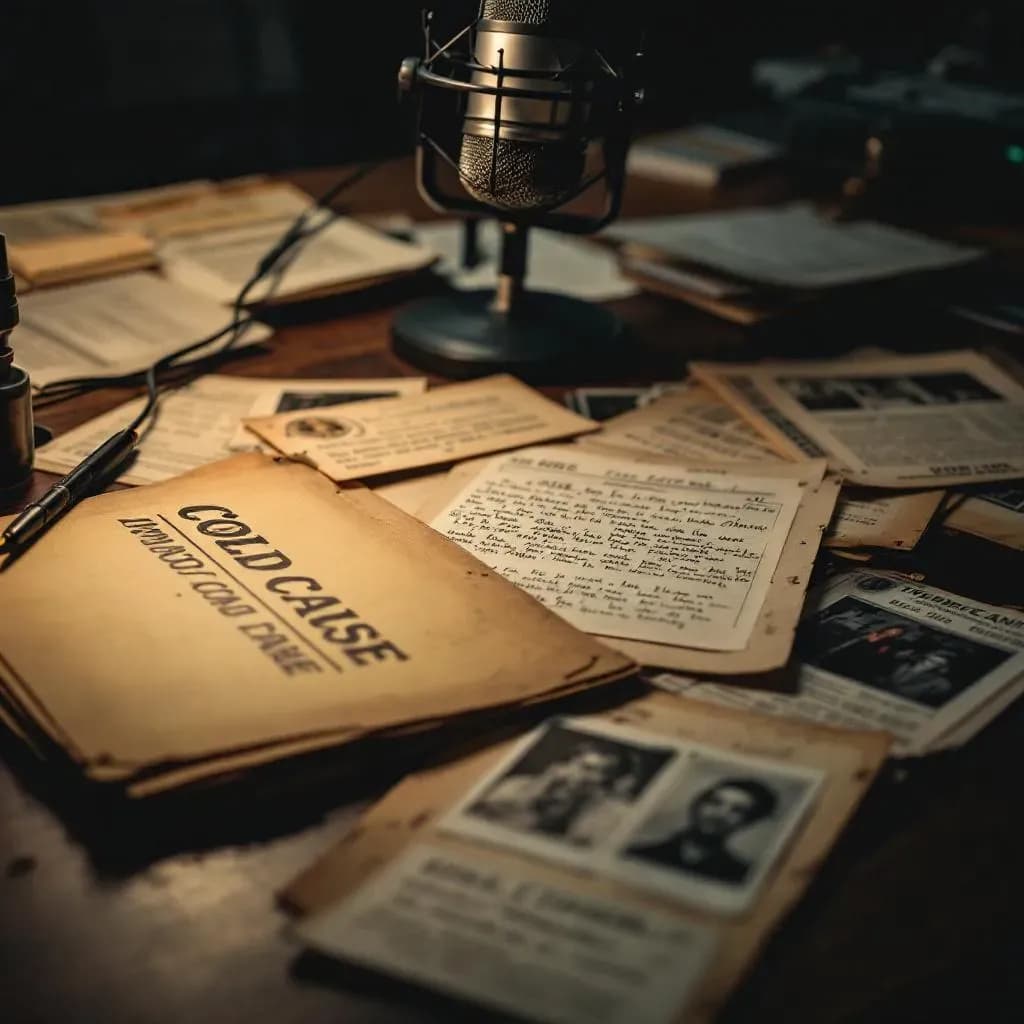
The 10 Best True Crime Podcasts About Cold Cases
True crime enthusiasts seeking deep-dive investigations into decades-old unsolved cases can find compelling storytelling and genuine breakthroughs through podcasts dedicated to cold case examinations, offering families hope and bringing public attention to forgotten crimes.
The Most Impactful Cold Case Podcasts
1. Your Own Backyard - Chris Lambert's investigative podcast about the 1996 disappearance of Kristin Smart from California Polytechnic State University became a cultural phenomenon that directly contributed to arrests in the case. Lambert spent years interviewing witnesses, analyzing evidence, and uncovering new leads that law enforcement had overlooked. The podcast's 11-episode first season generated massive public interest and pressure that helped revive the investigation. In 2021, Paul Flores and his father Ruben were arrested and charged in connection with Smart's disappearance, with prosecutors crediting the podcast's role in bringing forward new witnesses.
2. Bear Brook - This New Hampshire Public Radio production investigates the discovery of four bodies found in barrels in Bear Brook State Park in 1985 and 2000. Host Jason Moon explores how investigative genetic genealogy finally identified the victims and the killer decades later. The podcast combines traditional investigative journalism with cutting-edge forensic science, documenting how DNA technology revolutionized cold case investigations. The series spans eight episodes and reveals the identity of serial killer Terry Peder Rasmussen, who had used multiple aliases. It won a Peabody Award for its meticulous reporting and emotional depth in telling the victims' stories.
3. Cold - Journalist Dave Cawley spent years investigating the disappearance and death of Susan Powell, who vanished from her Utah home in 2009 while her husband Josh Powell claimed she had abandoned the family. The podcast features thousands of hours of source material, including police records, home videos, and recorded conversations. Cawley meticulously reconstructs the case through 17 detailed episodes, examining the dysfunction in the Powell family and the failure of the system to protect Susan and her children. The podcast became one of the most downloaded true crime series and demonstrated how comprehensive reporting can keep cold cases in public consciousness.
4. In the Dark (Season 2) - APM Reports investigates the case of Curtis Flowers, a Black man tried six times for the same quadruple murder in Mississippi. Host Madeleine Baran and her team spent two years re-investigating the 1996 murders, uncovering prosecutorial misconduct and racial bias in jury selection. The podcast's groundbreaking reporting led to the U.S. Supreme Court overturning Flowers' conviction in 2019. The investigation revealed that the prosecution's key witness had been coerced and that critical evidence had been withheld. This series won a Peabody Award and demonstrated journalism's power to expose systemic injustice in cold case prosecutions.
5. The Teacher's Pet - Australian journalist Hedley Thomas investigates the 1982 disappearance of Lynette Dawson, whose husband Chris maintained she had abandoned her family. The podcast examines allegations that Chris was having an affair with a teenage student and explores the police's failure to properly investigate the case for decades. Released across 16 gripping episodes, the podcast generated unprecedented public interest in Australia and led to Chris Dawson's arrest in 2018. In 2022, he was convicted of murder, with the judge acknowledging the podcast's role in bringing forward new witnesses. The series became Australia's most popular podcast and sparked national conversations about domestic violence.
6. To Live and Die in LA - Host Neil Strauss investigates the 2017 disappearance of aspiring actress Adea Shabani in Los Angeles, conducting real-time investigations that unfold across the podcast's episodes. The series documents Strauss's journey from initial questions to shocking discoveries, including tracking down suspects and uncovering evidence. Unlike traditional cold cases, this investigation began shortly after Shabani's disappearance, showcasing how podcast investigations can work parallel to official investigations. The podcast's 12 episodes reveal the dark underbelly of Hollywood's aspirational culture and the dangers faced by young people pursuing entertainment careers.
7. Someone Knows Something - CBC's David Ridgen travels across Canada to investigate unsolved disappearances and murders, spending each season focusing on a single case. Season one examines the 1972 disappearance of five-year-old Adrien McNaughton, who vanished while on a family fishing trip. Ridgen's compassionate approach combines investigative journalism with intimate portraits of families living with decades of uncertainty. Each season brings new attention to forgotten cases, occasionally generating new leads for investigators. The podcast's methodical approach and emotional resonance have made it one of Canada's most respected true crime series.
8. The Clearing - This deeply personal podcast features Ernie Brown investigating whether his own father, Edward Wayne Edwards, was responsible for dozens of unsolved murders across America. Brown examines his father's confessions to five murders before his death in 2011 and questions whether Edwards was involved in other high-profile cold cases. The eight-episode series grapples with the psychological impact of being a serial killer's child while pursuing leads that law enforcement has been reluctant to follow. The podcast offers a unique insider perspective on how serial killers evade capture and the complicated legacy they leave for their families.
9. Accused - This Cincinnati Enquirer podcast investigates the unsolved 1978 murder of Elizabeth Andes, a Miami University student found dead in her off-campus apartment. Journalists Amber Hunt and Amanda Rossmann re-examine evidence, interview key witnesses, and explore why the case went cold despite investigators identifying a prime suspect. The podcast reveals how jurisdictional issues and investigative missteps can derail murder investigations. Over 11 episodes, the hosts present compelling evidence while wrestling with ethical questions about naming suspects who were never charged. The series has inspired subsequent seasons examining other Ohio cold cases.
10. The Trail Went Cold - Host Robin Warder presents a different cold case each episode, providing concise yet thorough examinations of unsolved disappearances and murders from around the world. Unlike serialized podcasts, this format allows listeners to explore numerous cases, from obscure local mysteries to internationally recognized unsolved crimes. Warder's meticulous research and balanced presentation have built a dedicated following since the podcast's 2016 launch. With over 250 episodes, the podcast serves as an extensive archive of cold cases, often introducing listeners to forgotten victims and keeping their stories alive in public memory.
Why Cold Case Podcasts Matter
Cold case podcasts have transformed from entertainment into powerful investigative tools that complement traditional law enforcement. These productions dedicate resources and time that understaffed police departments often cannot provide to decades-old cases. By engaging millions of listeners, podcasts generate new tips, bring forward reluctant witnesses, and pressure authorities to reexamine evidence with modern forensic techniques. The genre has proven that public interest, combined with quality journalism, can break through the bureaucratic and procedural barriers that allow cases to go cold in the first place.