Stephan Balliet was a 27-year-old man from Sachsen-Anhalt when, in the early morning of October 9, 2019 — the most important Jewish holiday of Yom Kippur — he put on protective clothing, armed himself with self-constructed weapons and several explosive devices, and drove to the local synagogue in Halle an der Saale.
Balliet had meticulously planned the attack. He had produced handmade weapons and explosives in his home and livestreamed the attacks on internet platforms to maximize media attention and propaganda. His intention was clear: to kill as many people as possible, especially members of the Jewish community.
Timeline
9 October 2019
Anschlag auf Synagoge und Döner-Imbiss
Stephan Balliet greift die Synagoge in Halle am Jom-Kippur-Fest an, kann nicht eindringen und wechselt zum nahegelegenen Döner-Imbiss. Zwei Menschen werden getötet, mehrere verletzt.
9 October 2019
Festnahme des Täters
Balliet wird nach kurzer Verfolgung festgenommen. Er gesteht sofort und legt seine ideologischen Motive offen dar.
10 October 2019
Umfang der Ermittlungen wird deutlich
Die Polizei findet selbstgebaute Waffen, Sprengstoff und Beweise für die langfristige Planung sowie Balliets Manifest.
21 December 2020
Verurteilung zu lebenslanger Haft
Balliet wird zu lebenslanger Haft mit Feststellung der besonderen Schwere der Schuld verurteilt wegen Mordes, versuchten Mordes und Terrorismus.
When Balliet arrived at the synagogue, he attempted to break in. The building was locked for security reasons, so he was unable to access the approximately 70 Jewish members celebrating their holiday inside. Frustrated at being stopped by the locked door, he changed targets and instead attacked a nearby kebab restaurant, where he killed two people and wounded others.
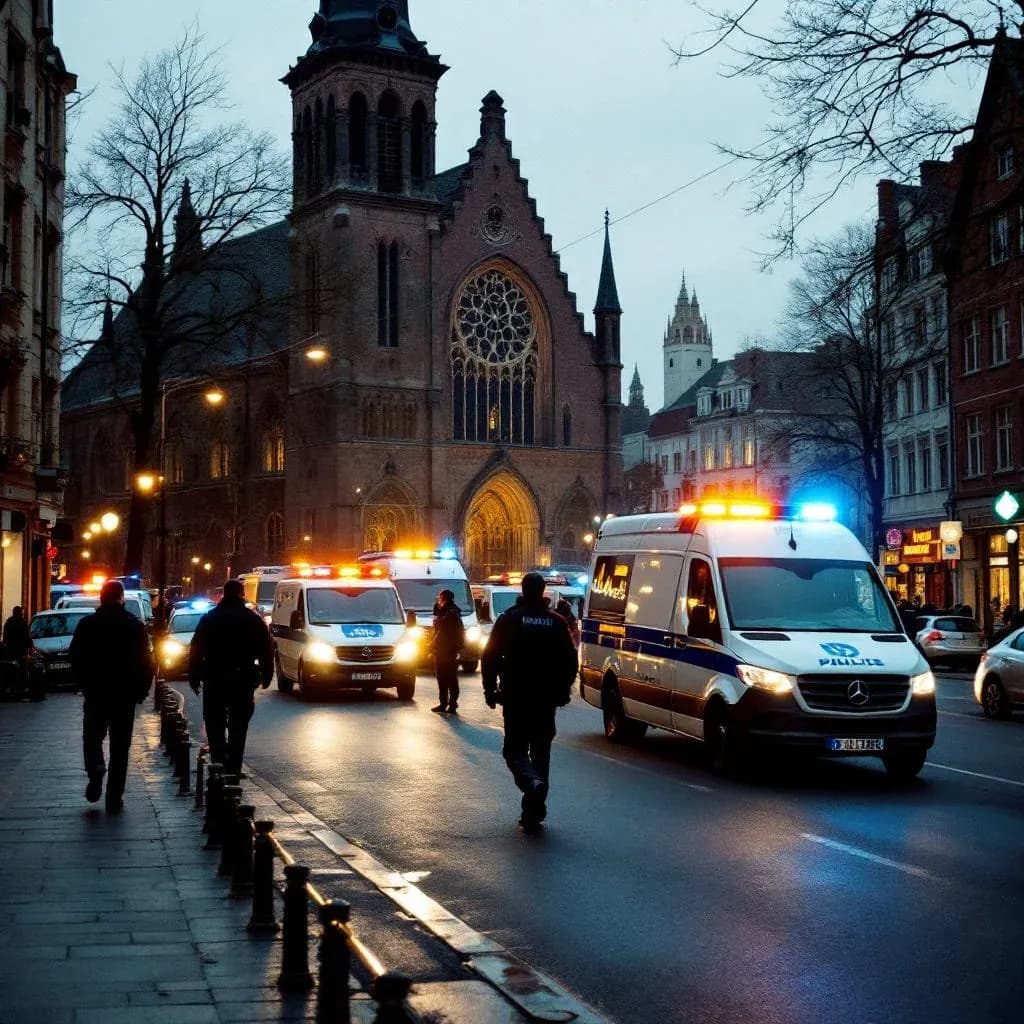
Police responded quickly to the attack. Balliet was pursued and arrested shortly after his attacks. He immediately confessed and made no attempt to hide his motives: the desire to commit a mass massacre inspired by far-right ideology and antisemitism.
Examination of his digital footprint revealed that Balliet had been an active member of online far-right extremist forums. He had released a manifesto before the attack, in which he formulated his hateful ideological views. His self-produced weapons and explosives were documented by investigators as evidence of planning and intent.
Stephan Balliet was brought before German courts charged with murder, attempted murder, and terrorism. The court determined that the attack was a terror attack motivated by far-right extremism. In October 2020, Balliet was sentenced to life imprisonment without possibility of parole under German criminal law — one of the most severe sentences possible.
The verdict was met with broad support in Germany and internationally as a clear signal that such hateful extremism would not be tolerated or excused.
Context and Consequences
The 2019 Halle attack was symptomatic of a rise in far-right extremist attacks in Germany in the years preceding it. It became a turning point in the debate over protecting religious minorities, combating online radicalization, and the increasing violence of far-right extremism.
The attack prompted the German government and security authorities to intensify efforts against far-right extremist networks online. It also served as a wake-up call for communities across the country about the importance of security around synagogues and other religious institutions.
The Jewish community in Germany expressed grief over the attack, but also hope that society would stand together against extremism and hatred. The Halle attack has since become a reference example of far-right terror in Europe — and how a single radicalized person can inflict deep harm on society.
Aftermath
In the years following the attack, Germans have discussed how to better prevent the radicalization of young people online. The Balliet case is used in educational materials about the dangers of extremism. At the same time, the attack has strengthened the Jewish community's focus on security — and on the importance of solidarity from the rest of society.
Stephan Balliet sits today in a German prison under the harshest possible conditions, convicted of one of the country's worst terror attacks of the 21st century.