Sagsmappe
Boston Strangler: A Confession That Never Convicted
Albert DeSalvo's admission to 11+ murders stood untested in court until DNA evidence emerged decades later
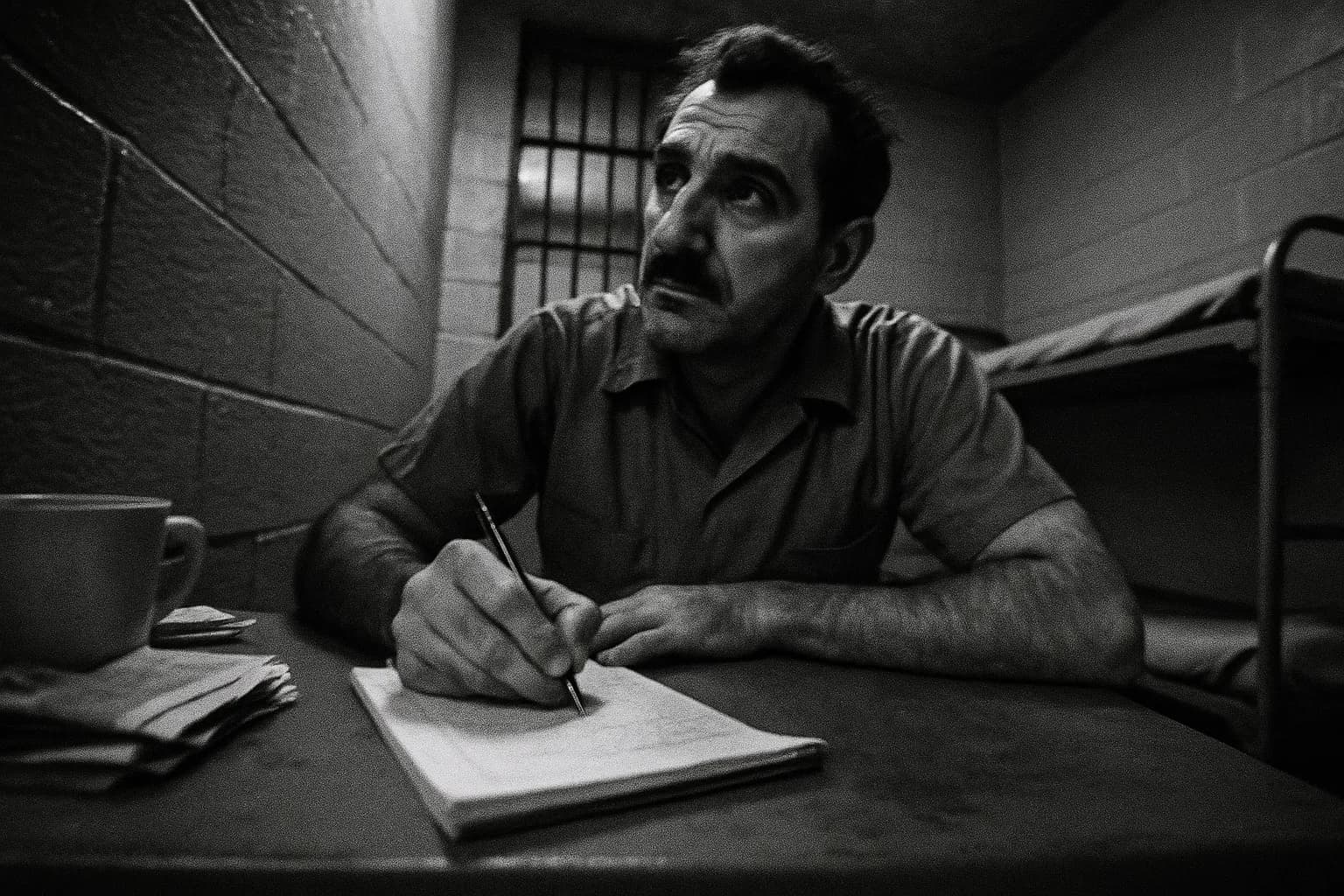
BEVIS
Sagsdetaljer
Quick Facts
Albert DeSalvo's admission to 11+ murders stood untested in court until DNA evidence emerged decades later
Quick Facts
Albert DeSalvo confessed in 1965 to being the Boston Strangler, responsible for at least 11 murders across the Boston area between June 1962 and January 1964. Yet he was never charged with any of those killings, and his confession never reached a courtroom—a legal peculiarity that would haunt the case for generations.
The murders themselves were methodical and brutal. The killer targeted women ranging from 19 to 85 years old, sexually assaulting and strangling them in their homes. A signature emerged: ligatures—stockings and pillowcases—were left artfully arranged around the victims' necks in ornamental bows. Some victims bore stab wounds alongside the strangulation marks. The first confirmed victim, a 55-year-old woman, was found sexually assaulted and strangled in her ransacked apartment on June 14, 1962.
Over eighteen months, the Boston area lived in fear. Police pursued countless leads. Then, in 1965, a man named Albert DeSalvo walked into a police station and confessed to all of it. He provided detailed accounts of the murders, seemingly validating his claim to be the killer Boston was hunting.
But DeSalvo was never prosecuted for the Boston Strangler murders. Instead, in 1967, he was convicted on unrelated rape charges. His confession to the stranglings remained unused in any courtroom verdict, a remarkable gap between admission and accountability. In 1973, DeSalvo was murdered in Walpole maximum-security prison, taking the bulk of his story with him.
The legal limbo created lasting controversy. Some investigators believed multiple killers were responsible for the murders, not a single perpetrator. Others questioned whether DeSalvo was truly guilty or had merely inserted himself into an unsolved case that dominated headlines. Adding to the intrigue: DeSalvo wasn't even a suspect initially in the investigation.
It would take modern forensic science to crack what courts never could. In 2001, DNA testing on evidence from one victim—Mary Sullivan—suggested DeSalvo was not responsible for her murder. The finding reignited debate about whether he'd killed anyone at all.
Then in 2013, authorities exhumed DeSalvo's remains and conducted new DNA analysis on his femur and teeth. The results were definitive: DeSalvo had raped and murdered Mary Sullivan, contradicting the 2001 finding. Based on this forensic confirmation and other evidence, authorities concluded DeSalvo was "most likely" responsible for the other murders in the series.
The Boston Strangler case remains a singular chapter in American criminal history—a confession that bypassed conviction, a killer never formally tried for his most infamous crimes, and a resolution that came only through the exhumation and testing of the accused's own remains, decades after his death.
## Sources
- https://www.britannica.com/biography/Boston-Strangler - https://pubmed.ncbi.nlm.nih.gov/14984214/ - https://www.cbsnews.com/boston/news/boston-strangler-alber-desalvo-george-nassar/ - https://www.crimemuseum.org/crime-library/serial-killers/the-boston-strangler/ - https://www.ojp.gov/library/publications/solving-cold-cases-dna-boston-strangler-case