Offer(e)6 dræbte umiddelbart, yderligere døde senere
GerningsstedTrier, Rheinland-Pfalz, Tyskland
Gerningsdato2020-12-01
ForbrydelsestypePåkørselsdrab
The lead-up to the tragedy
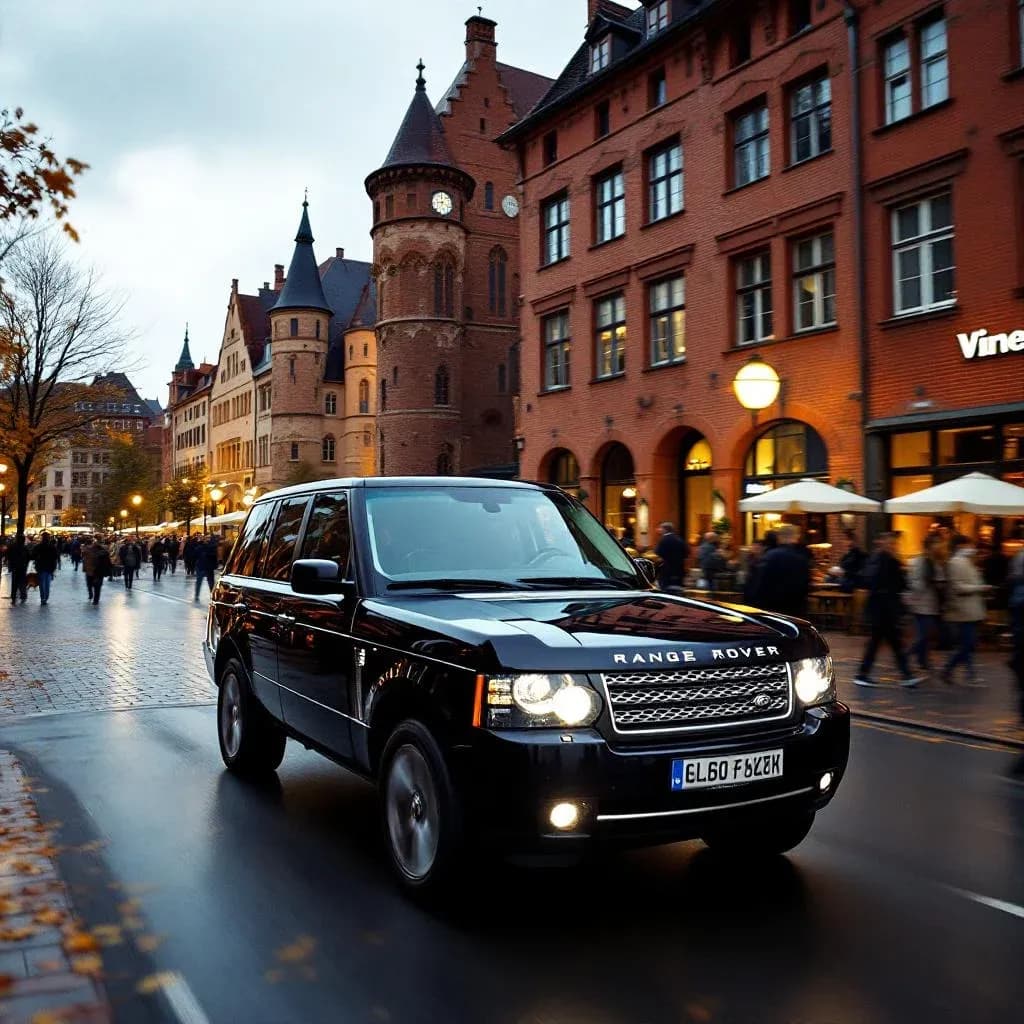
On 1 October 2020, a devastating crime was committed in Trier, Germany's oldest city. A 51-year-old man, later identified as Bernd W., got behind the wheel of his black Range Rover and drove systematically through the Fußgängerzone — the city's central pedestrian zone — where hundreds of people were shopping and going about their day.
At 1:45 p.m., the attacker steered his vehicle into the busy pedestrian area and continued without stopping for approximately 900 metres. He struck people at random — elderly, children, adults — who had no chance of getting out of the way. Police received emergency calls from witnesses and arrived on the scene around 15 minutes after the strikes began.
Timeline
1 December 2020
Amokfahrt in Trier
Bernd W. rast mit seinem Range Rover durch die Fußgängerzone von Trier. Sechs Menschen sterben, 14 werden verletzt. Er wird ohne Gegenwehr festgenommen.
2 December 2020
Beginn der Ermittlungen
Die Kriminalpolizei befragt den Täter ausführlich und sammelt Zeugenaussagen. Erste Untersuchungen deuten auf psychische Probleme und Alkoholmissbrauch hin.
23 July 2021
Urteil des Landgerichts Trier
Bernd W. wird wegen sechsfachen Mordes und 14-fachen versuchten Mordes zu lebenslanger Haft verurteilt. Das Gericht ordnet Sicherungsverwahrung und psychiatrische Unterbringung an.
The victims and the witnesses
The dead included five women and one man, ranging in age from an unborn child — a pregnant woman died along with her foetus — to a 73-year-old retiree. Among the 14 injured were children as young as five years old.
Eyewitnesses described scenes of chaos and desperation. People fled in every direction. Some believed it was a terrorist attack; others thought it was a tragic accident. Police arrived quickly, and the attacker's vehicle was stopped by officers who ordered him to exit the car.
Bernd W. was arrested without armed resistance. He offered no explanation at the scene but was subsequently questioned by criminal investigators over several days.
The attacker's background
Bernd W. was a single man with no significant prior criminal record. He was known to police for minor offences related to drink-driving and had previously had his driving licence revoked. Investigations revealed that he had a heavy alcohol consumption and had struggled with his mental health.
Various motives were speculated upon — had he done it to attract attention? Had he been radicalised? Was he attempting a form of suicide by forcing police to shoot him? During the investigation, authorities found that Bernd W. had consumed large quantities of alcohol before the attack and exhibited signs of paranoid behaviour.
A psychiatric evaluation indicated that he suffered from psychosis and mental illness, and may have been under the influence of both alcohol and substance misuse. His motives were never fully established, and no clearly defined political or ideological background was identified by the authorities.
German prosecutors brought charges against Bernd W. on six counts of murder, attempted of the 14 injured, and dangerous use of a motor vehicle. The case was treated as a serious crime outside the bounds of ordinary proceedings.
In 2021, legal proceedings got underway, and Bernd W. was confronted with extensive evidence — eyewitness accounts, CCTV footage, image data, and his own statements. The court examined his mental state before, during, and after the attack in order to determine whether he could be held fully responsible or should instead be subject to treatment for mental illness.
On 23 July 2021, the Landgericht — the regional court — in Trier delivered its verdict. Bernd W. was found guilty on six counts of murder and 14 counts of attempted murder. He was sentenced to indefinite preventive detention (Sicherungsverwahrung), meaning he will remain imprisoned for as long as he is considered a danger to society. The court determined that although he suffered from mental disturbances, he nonetheless bore responsibility for his actions. As permitted under the German criminal justice system, he was not only imprisoned but also ordered to undergo psychiatric treatment during his detention.
Aftermath and debate
The Trier car attack of 2020 sparked an intense debate across Germany about mass violence and prevention. How had a man like this been able to drive through a pedestrian zone? What protective measures could have been in place?
In the months following the attack, enhanced security measures were introduced in pedestrian zones across Germany. Several municipalities installed bollards and concrete blocks to prevent vehicles from entering areas with heavy foot traffic.
The broader discussion around mental illness, alcohol abuse, and the role of social welfare systems also became the subject of public debate. Had the warning signs been missed? Could the system have done more to identify a potentially dangerous individual?
Memorial plaques were later established at the site, and the city has held annual commemorations to honour the victims and support survivors and their families.